
April 4, 2026
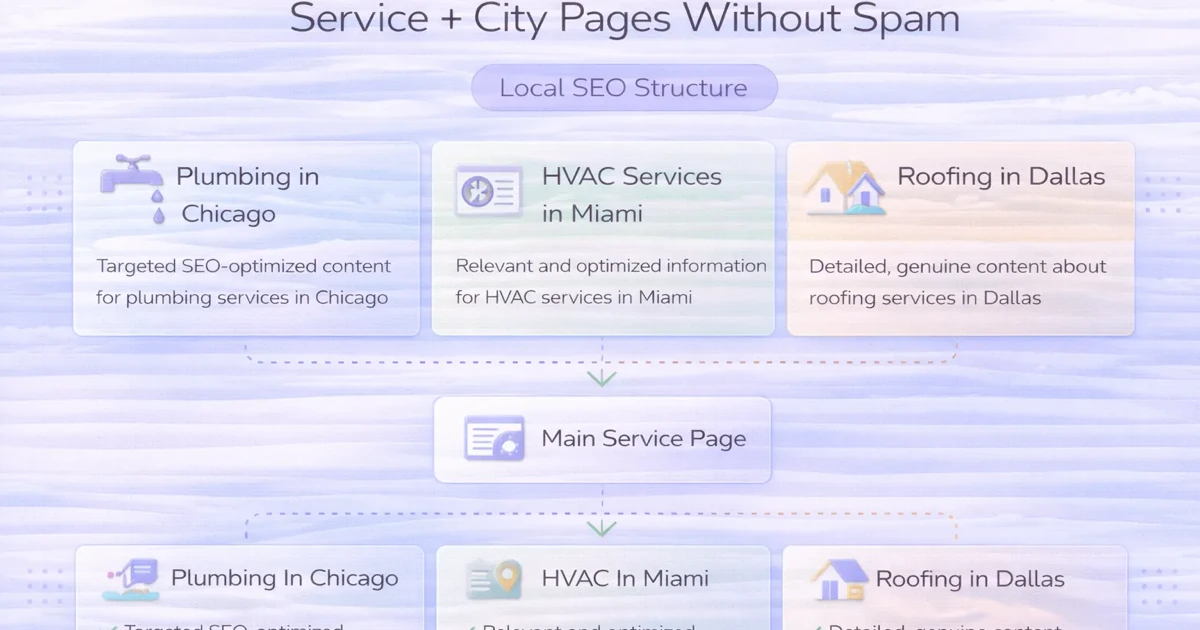
How to Create “Service + City” Pages Without Spam
How to create service plus city pages without spam: avoid doorway abuse, build real local value, and structure pages safely in 2026.
Read articleApril 8, 2026
How to build landing pages for local SEO in 2026 without thin city spam: page structure, proof, internal links, and conversion essentials.
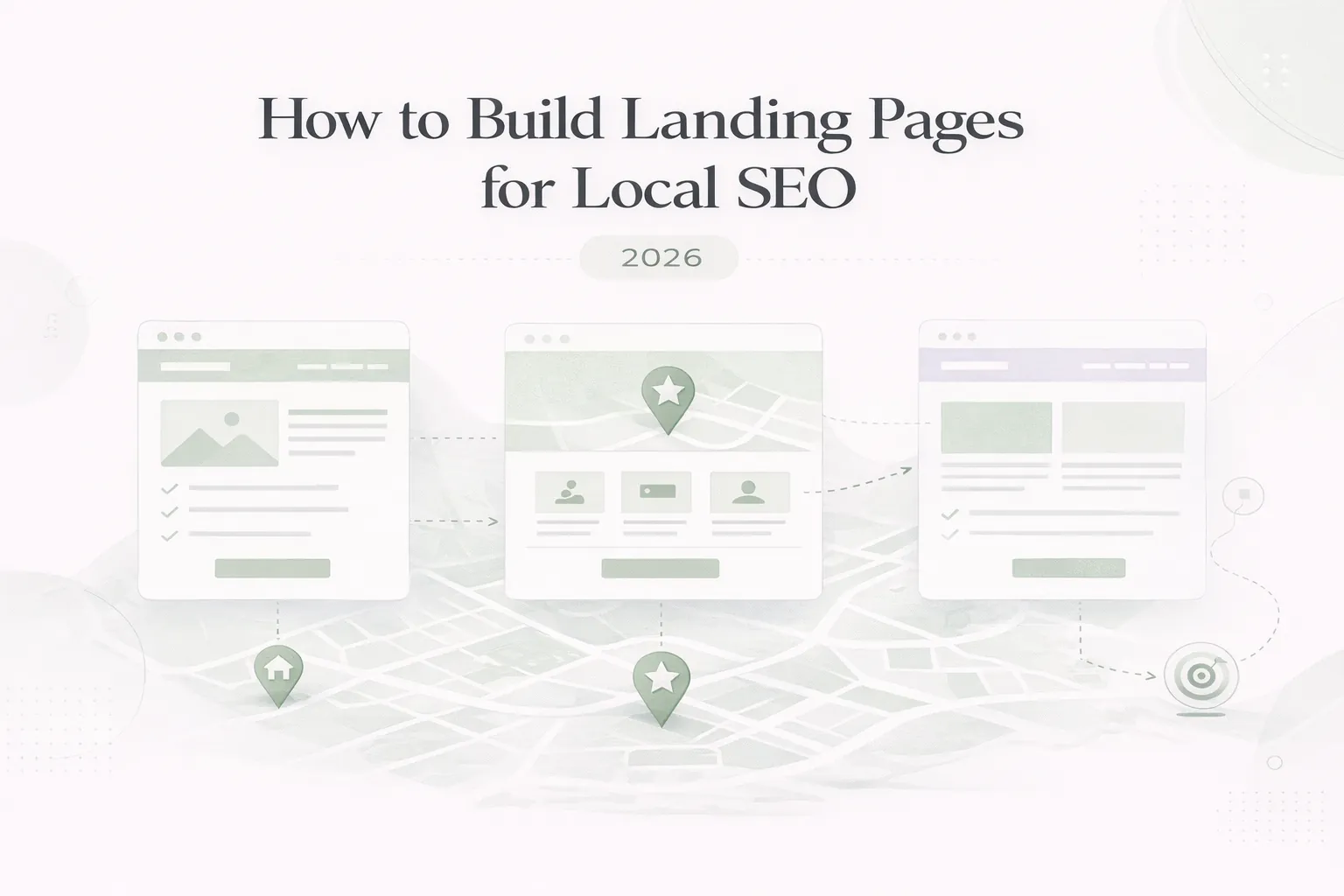
Local landing pages work when they genuinely help the user understand the service in that location. They fail when they are mass-produced city pages with only the city name swapped. That difference is everything.
Businesses often think local SEO means making dozens of city pages as quickly as possible. But thin duplication creates weak pages, poor user experience, and unnecessary SEO risk. A better approach is to create landing pages that combine local relevance, useful detail, trust signals, and clean conversion flow.
This guide explains how to build local SEO landing pages in 2026 without falling into low-value city-page spam.
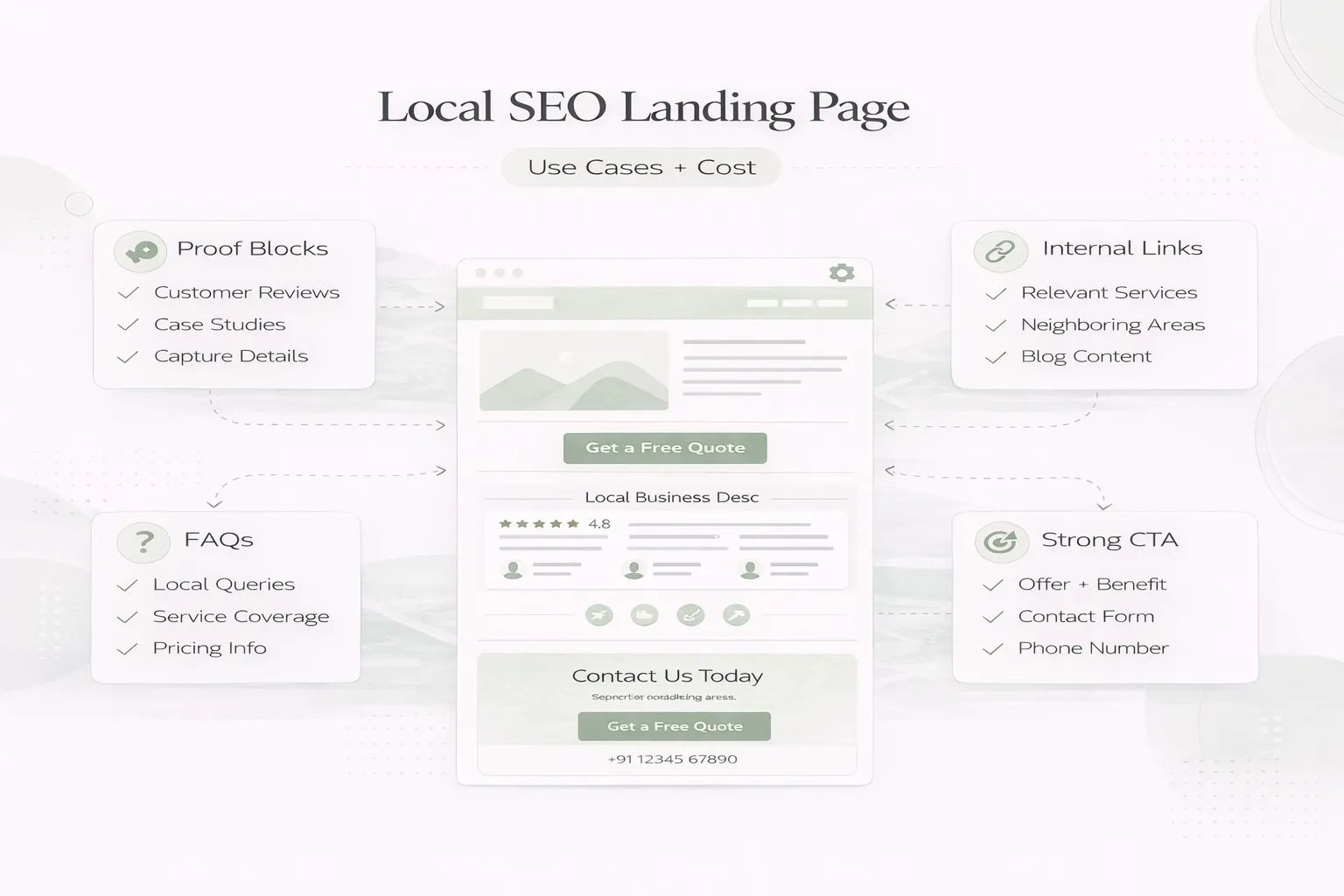
A strong local landing page should have:
Google’s spam guidance makes it clear that doorway abuse includes city or region pages that funnel users to one page without real added value. So local SEO pages should exist because they help the user, not just because they can rank.
Google’s spam policies describe doorway abuse as pages created to rank for similar queries and funnel users to a destination without being as useful as the final page. That is the exact risk with lazy city-page campaigns.
Related reading:
The page should reflect what the searcher wants:
This can include:
The page should make it easy to:
A practical local SEO landing page structure:
Use a clear service + city angle.
Explain what the business helps with in that geography.
List actual scope, not generic filler text.
Add proof, process, or positioning.
Not always exact numbers, but enough clarity to reduce ambiguity.
Answer local buyer concerns.
Keep the next step obvious.
Local landing pages perform better when they are connected properly.
Important links:
Also track:
Typical custom scope:
₹8,000 to ₹20,000₹20,000 to ₹60,000₹60,000 to ₹1.5 lakh+Timeline:
1 to 2 days per well-written page1 to 3 weeks for a proper cluster rolloutIf pages are rushed only for count, quality usually drops.
If you want local SEO pages that actually rank and convert, the goal is not to mass-produce city names. The goal is to create useful pages with real local relevance, clean structure, and strong internal linking.
Yes, but only if each page has real value and clear differentiation.
No. They become risky when they are thin, duplicated, or only funnel pages.
Unique value, local relevance, internal linking, and strong CTA flow.
Not always exact pricing, but some expectation-setting is useful.
Sometimes, but city-specific landing pages often help if the business has real relevance there.
Enough to make the page feel specific and trustworthy, not generic.
Publishing many near-identical pages with only city names changed.
Yes. Otherwise you cannot compare city-page performance properly.
If you want local SEO pages built around actual service intent, proof, internal linking, and conversion instead of low-value city spam, the structure should be planned before publishing at scale.
Related Articles
April 4, 2026
How to create service plus city pages without spam: avoid doorway abuse, build real local value, and structure pages safely in 2026.
Read article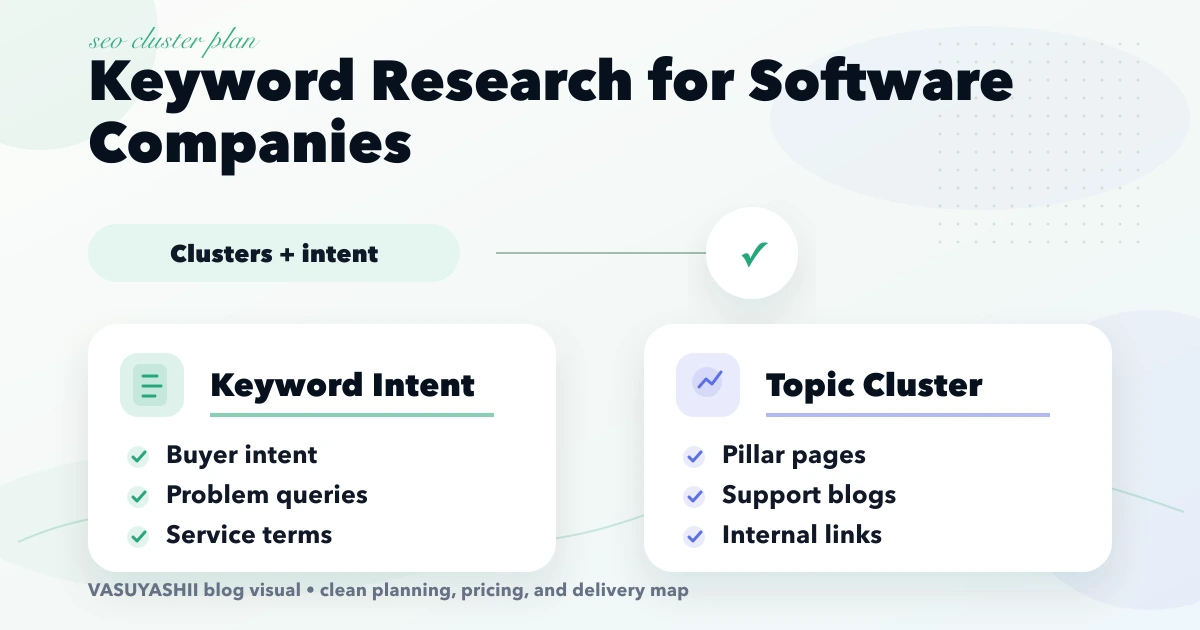
April 20, 2026
Keyword Research for Software Companies (clusters): practical guide with pricing, timeline, features, experience notes, FAQs, and next steps for Indian SMBs.
Read article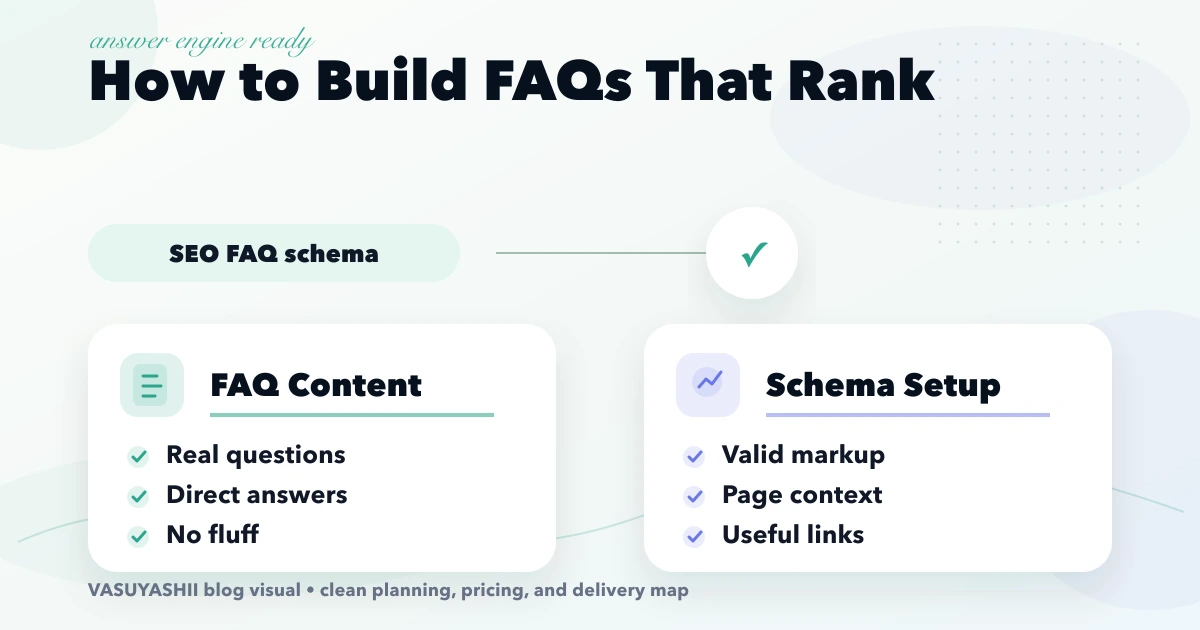
April 18, 2026
How to build FAQs that rank (SEO FAQ schema): practical guide with pricing, timeline, features, experience notes, FAQs, and next steps for Indian SMBs.
Read article