

May 2, 2026
WhatsApp Chatbot vs Live WhatsApp CTA
WhatsApp chatbot vs live WhatsApp CTA: lead quality, response speed, setup cost, tracking, and best use cases for Indian businesses in 2026.
Read articleMay 3, 2026
Best form design to avoid spam in 2026: field choices, honeypots, validation, UX, and lead-quality setup for business websites.
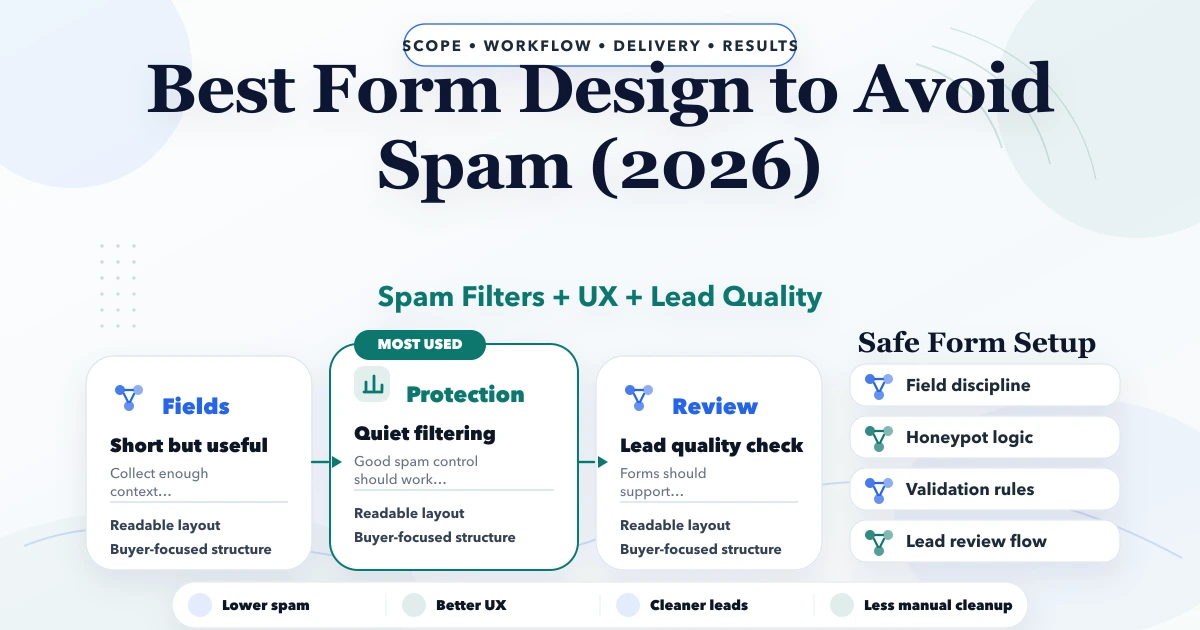
The best form design to avoid spam is not the form with the most security gimmicks. It is the form that quietly filters junk, stays easy for genuine users, and gives the business enough context to qualify the lead. This guide is for service websites, software sites, agencies, local businesses, and SMB landing pages that want fewer junk submissions without hurting conversion.
Many websites solve spam in the wrong direction. They add too many fields, clunky captchas, or confusing validation. That may reduce some junk, but it often also reduces good enquiries. The better approach is silent filtering, stronger validation, cleaner field logic, and better lead-quality review.
By Tushar C. (Founder, VASUYASHII). Reviewed by VASUYASHII Editorial for practical scope, pricing, implementation clarity, and local business relevance.
For most businesses, the right approach is not to overbuild the first release. The stronger move is to define a clear first phase, remove the biggest friction points, and launch with proof, structure, and tracking in place. That keeps scope realistic, improves adoption, and makes later SEO or conversion work far easier.
| Scope | Price range | Timeline | | --- | --- | --- | | Form audit + fixes | ₹10,000 to ₹30,000 | 1 to 4 days | | Tracked form redesign | ₹30,000 to ₹85,000 | 1 to 3 weeks | | Form system + CRM handoff | ₹85,000 to ₹1.8 lakh+ | 3 to 6 weeks |
Spam is not only a technical issue. It is also a conversion and operations issue. When forms are weak, staff waste time reviewing junk, analytics gets polluted, and lead quality becomes harder to judge. When forms are too aggressive, genuine users drop off before submitting.
A good form should feel easy for real users and difficult for automated junk. That means design choices, field decisions, validation, and post-submit review all matter together.
Good execution here usually improves both SEO and conversion because the website stops behaving like a brochure and starts behaving like a serious business asset. The biggest improvement usually comes from clarity: clear messaging, clear proof, clear routing, and clear review discipline.
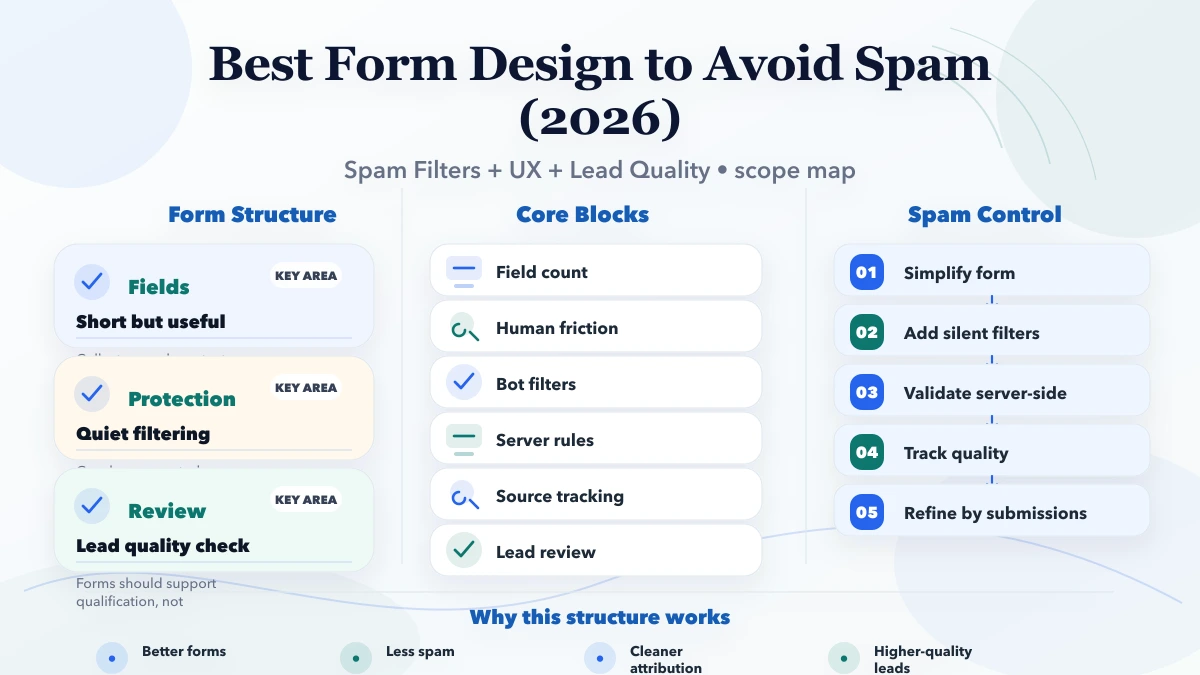
Pricing changes based on how much structure, proof, tracking, content work, and post-launch refinement the business actually needs. Two websites or SEO projects can sound similar at the title level but involve very different effort once page quality, stakeholder review, tracking, and content depth are included.
| Scope | Price range | Timeline | | --- | --- | --- | | Form audit + fixes | ₹10,000 to ₹30,000 | 1 to 4 days | | Tracked form redesign | ₹30,000 to ₹85,000 | 1 to 3 weeks | | Form system + CRM handoff | ₹85,000 to ₹1.8 lakh+ | 3 to 6 weeks |
The practical way to budget is phase-wise. Define what must go live first, what supports SEO later, and what should only be built once real user behaviour gives better input.
A rollout becomes smoother when every phase has one owner, one measurable output, and one review point. When implementation runs without those anchors, even good design or development work starts feeling slow and expensive because the real issue is scope drift.
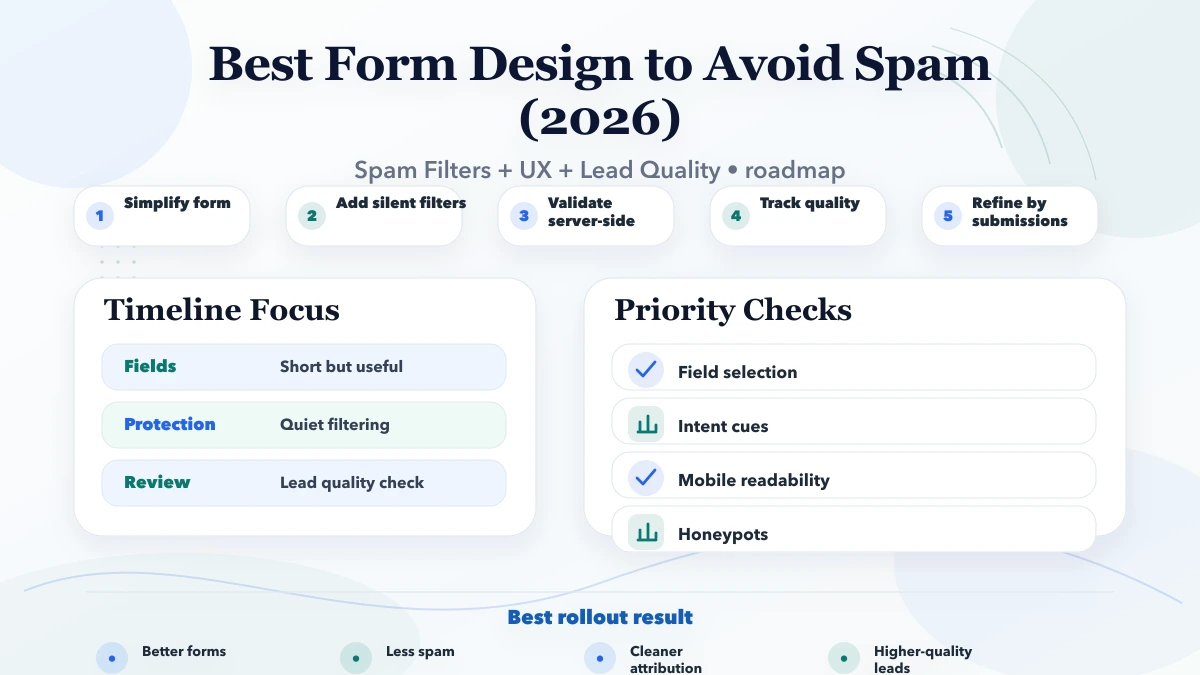
The stack should serve clarity, measurement, and future scale. In most business projects, data structure, content structure, and event visibility matter more than chasing a fashionable tool choice.
If these drivers are defined early, quoting becomes more honest and launch risk drops. If they are ignored, the project usually becomes cheap only on paper and expensive in revision cycles, weak results, or later cleanup.
Long forms often reduce conversion faster than they reduce junk. Many automated submissions can still pass weak forms if the backend logic is poor. Meanwhile, genuine users lose patience and drop off.
The better approach is shorter forms with stronger hidden controls and better review logic. Real users feel less friction, and the system becomes easier to manage.
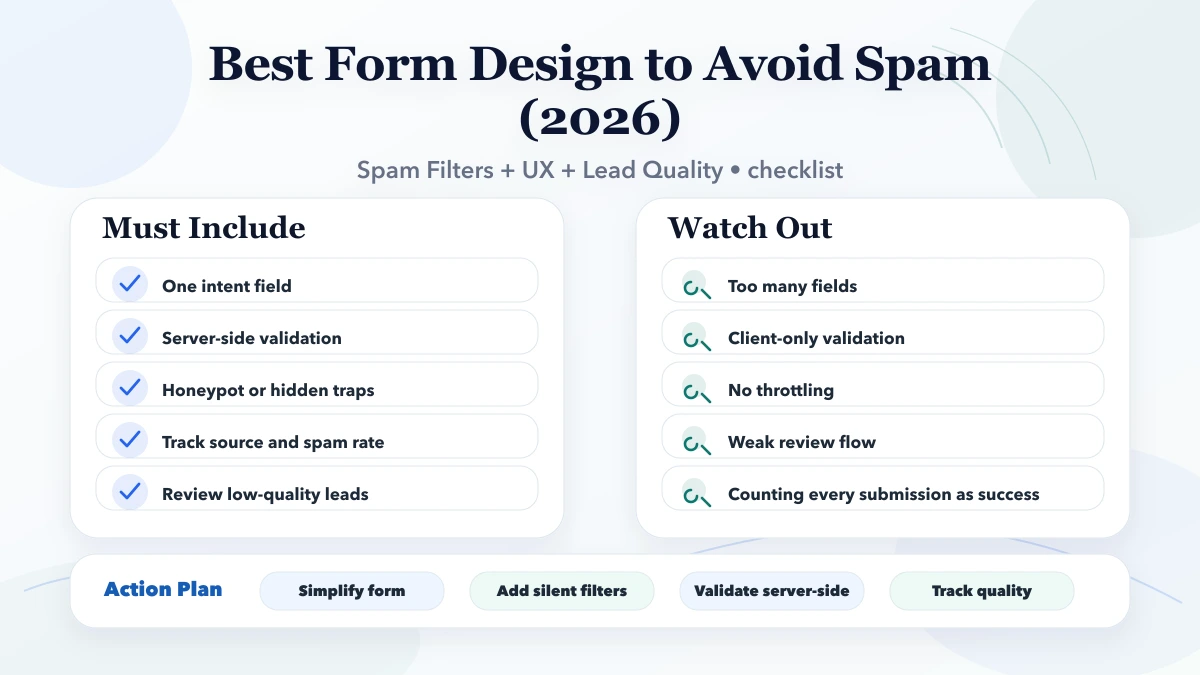
Submission count alone is a weak metric. Track how many submissions become qualified conversations, how many are obvious junk, how fast staff respond, and which pages or sources create low-quality patterns.
This turns spam prevention from a defensive activity into a lead-quality improvement process.
We serve businesses across India from our Delhi NCR base and plan, build, and refine websites with a practical focus on clarity, trust, SEO structure, and lead quality.
If you are comparing vendors or deciding whether this scope is worth doing now, compare the real structure: page quality, proof depth, CTA logic, tracking, and how the plan expands later without rebuilding from scratch.
These mistakes usually hurt twice. They reduce user trust in the short term and weaken SEO or lead quality over time. Avoiding them is often more valuable than adding one more shiny section or feature.
Not always. Many sites do better with honeypots, server validation, and rate limiting before adding visible CAPTCHA friction.
Enough to qualify the next conversation, but not so many that real users hesitate. For many service sites, five or fewer core fields works well.
Only if it materially improves qualification. On some pages it helps, but on others it creates friction. Test based on lead quality, not assumptions.
Usually not 100 percent, but it can be reduced sharply with better form design, server logic, and review process.
Both. The best setup lowers junk while preserving or improving genuine user completion rates.
Yes. Mobile forms need simpler labels, larger spacing, and less friction because many first submissions happen from phones.
Yes. A well-designed form system can later feed CRM, email, WhatsApp, or sales-notification workflows cleanly.
If you want a practical plan instead of vague website promises, share your requirement and we will map the first version, realistic pricing, timeline, and the sections needed to support SEO plus qualified enquiries.
Related Articles
May 2, 2026
WhatsApp chatbot vs live WhatsApp CTA: lead quality, response speed, setup cost, tracking, and best use cases for Indian businesses in 2026.
Read article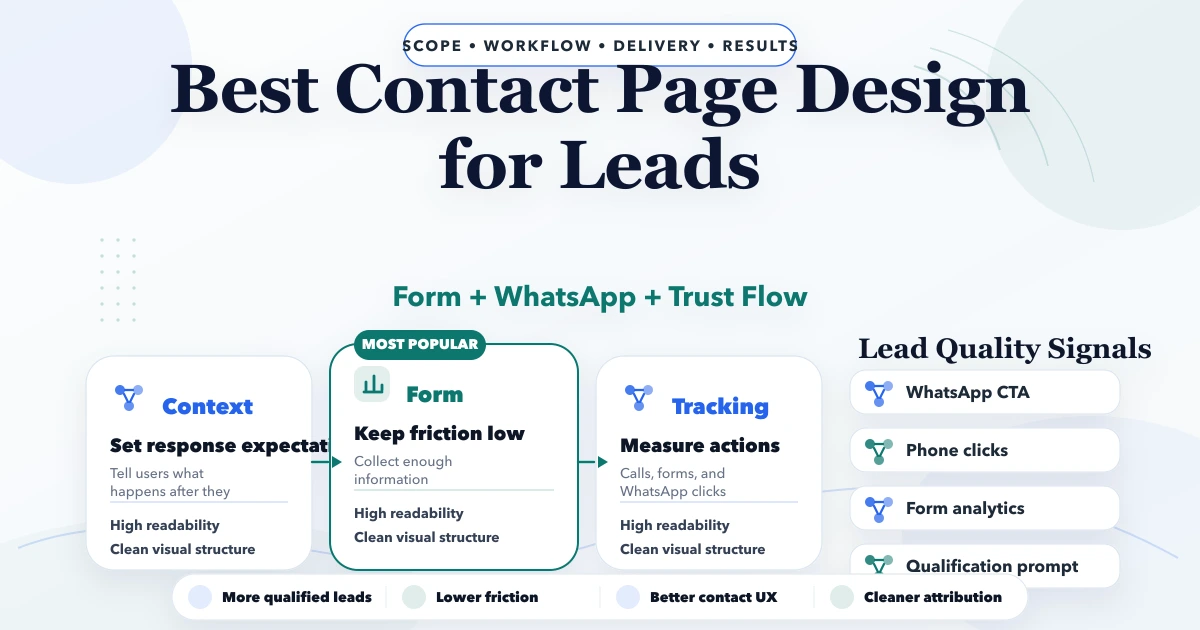
April 27, 2026
Best contact page design for leads with forms, trust blocks, WhatsApp, map choices, pricing, and CRO tips for Indian business websites.
Read article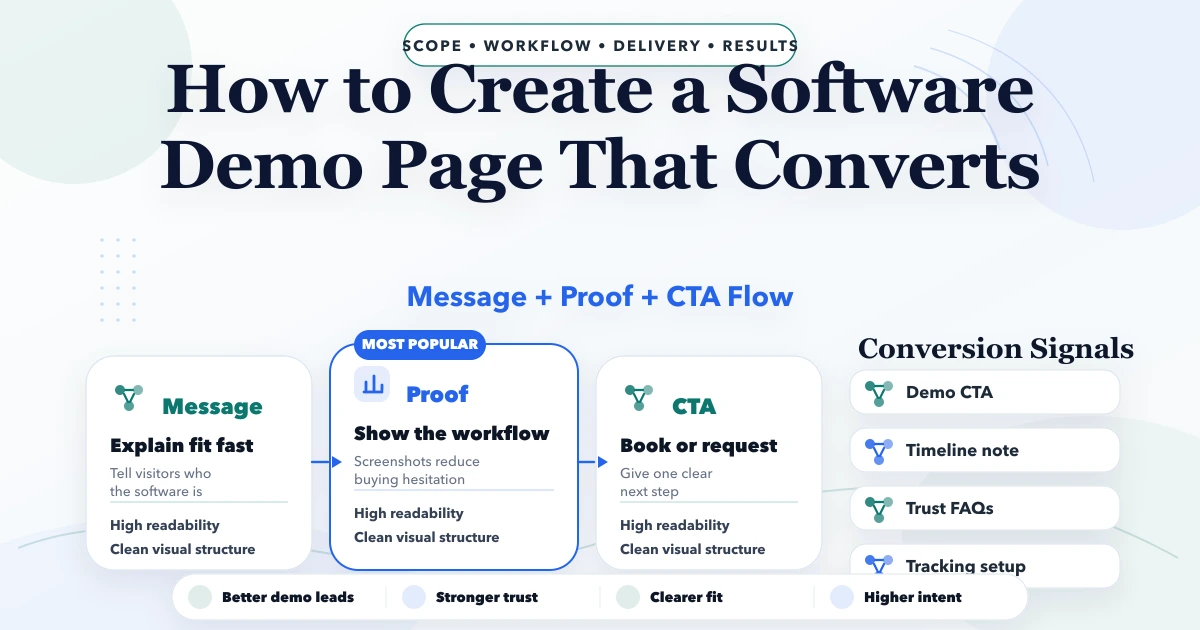
April 26, 2026
Software demo page that converts: page structure, pricing, proof blocks, CTA flow, tech stack, and launch checklist for better leads.
Read article