March 29, 2026
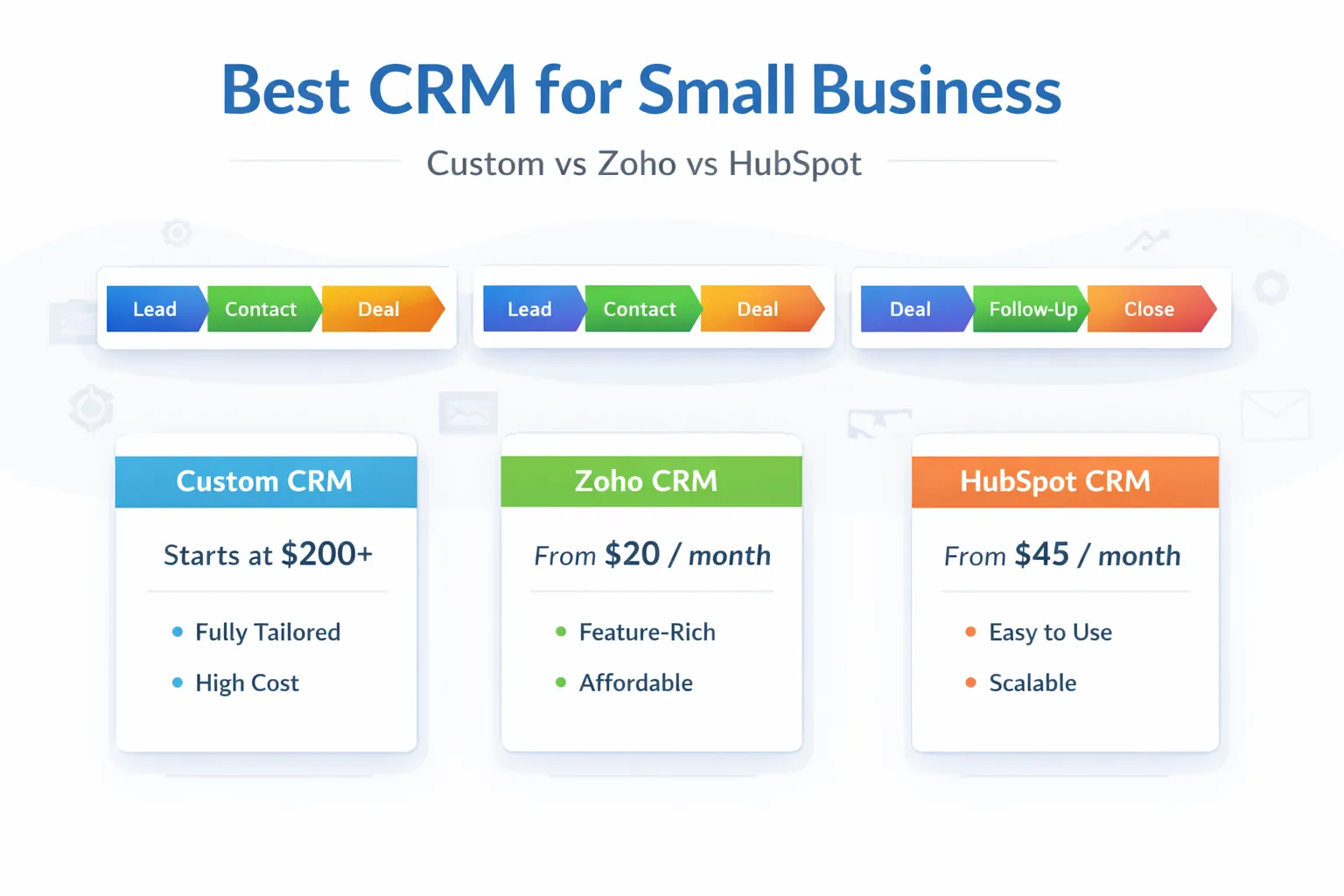
Best CRM for Small Business (India): Custom vs Zoho vs HubSpot (2026)
Best CRM for small business in India: custom CRM vs Zoho vs HubSpot, pricing snapshot, fit by business type, and how to choose in 2026.
Read articleMarch 28, 2026
CRM software cost for small business in India: full 2026 pricing guide covering SaaS, custom CRM, modules, timelines, and cost drivers.
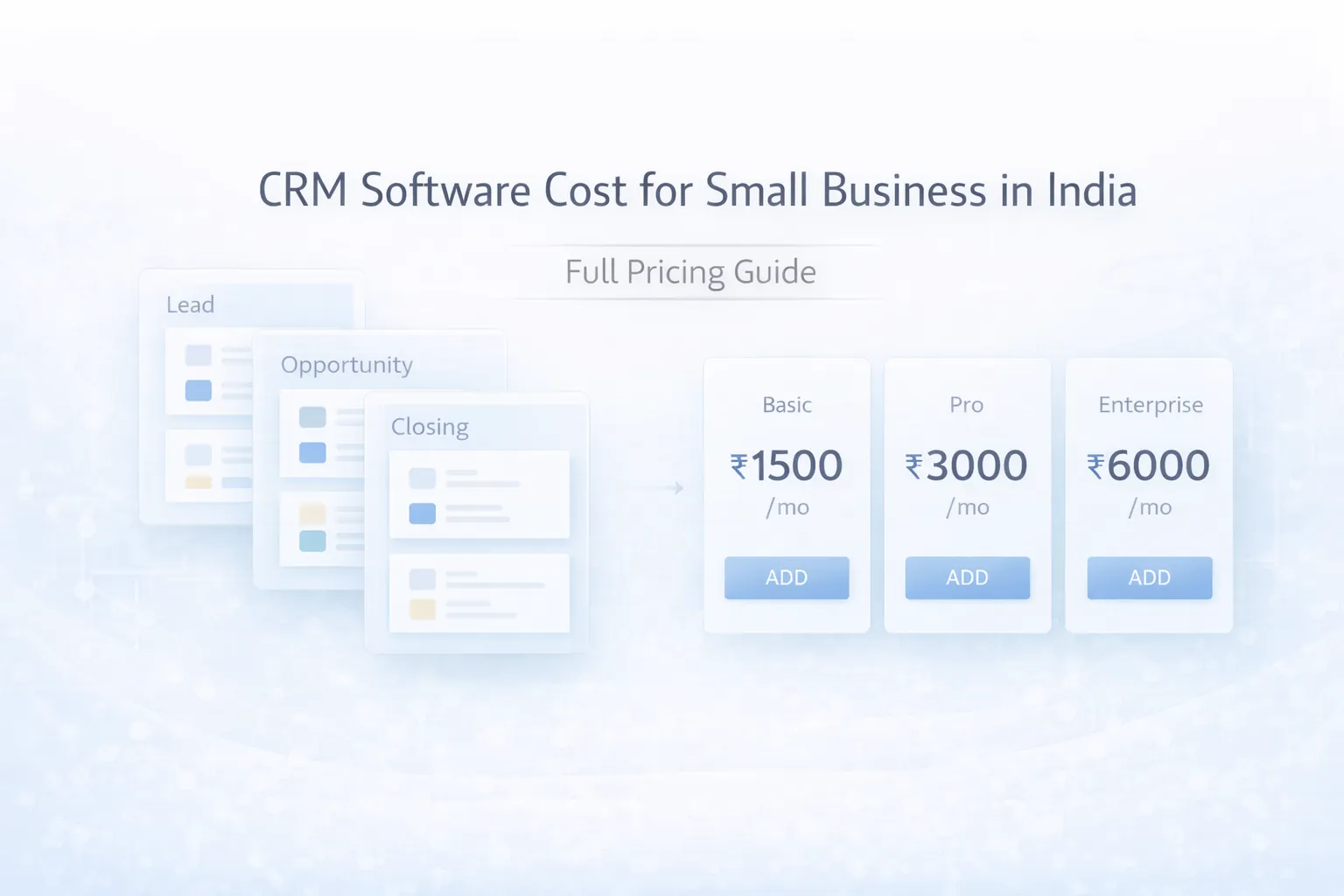
Small businesses in India usually ask about CRM software cost only after the follow-up problem gets painful. Leads are scattered, sales status lives in Excel, reminders sit in WhatsApp chats, and the owner cannot see what the team is really doing. That is when CRM stops feeling optional.
But the cost conversation gets confusing very fast. Some vendors quote a low monthly SaaS plan. Others quote a one-time custom CRM project. Some talk about lead management only, while others include automation, reporting, WhatsApp, proposals, and billing links in the same conversation.
This guide breaks down CRM pricing for Indian small businesses in 2026 in a practical way: SaaS vs custom cost, what features change price, what realistic timelines look like, and when building your own CRM becomes worth it.
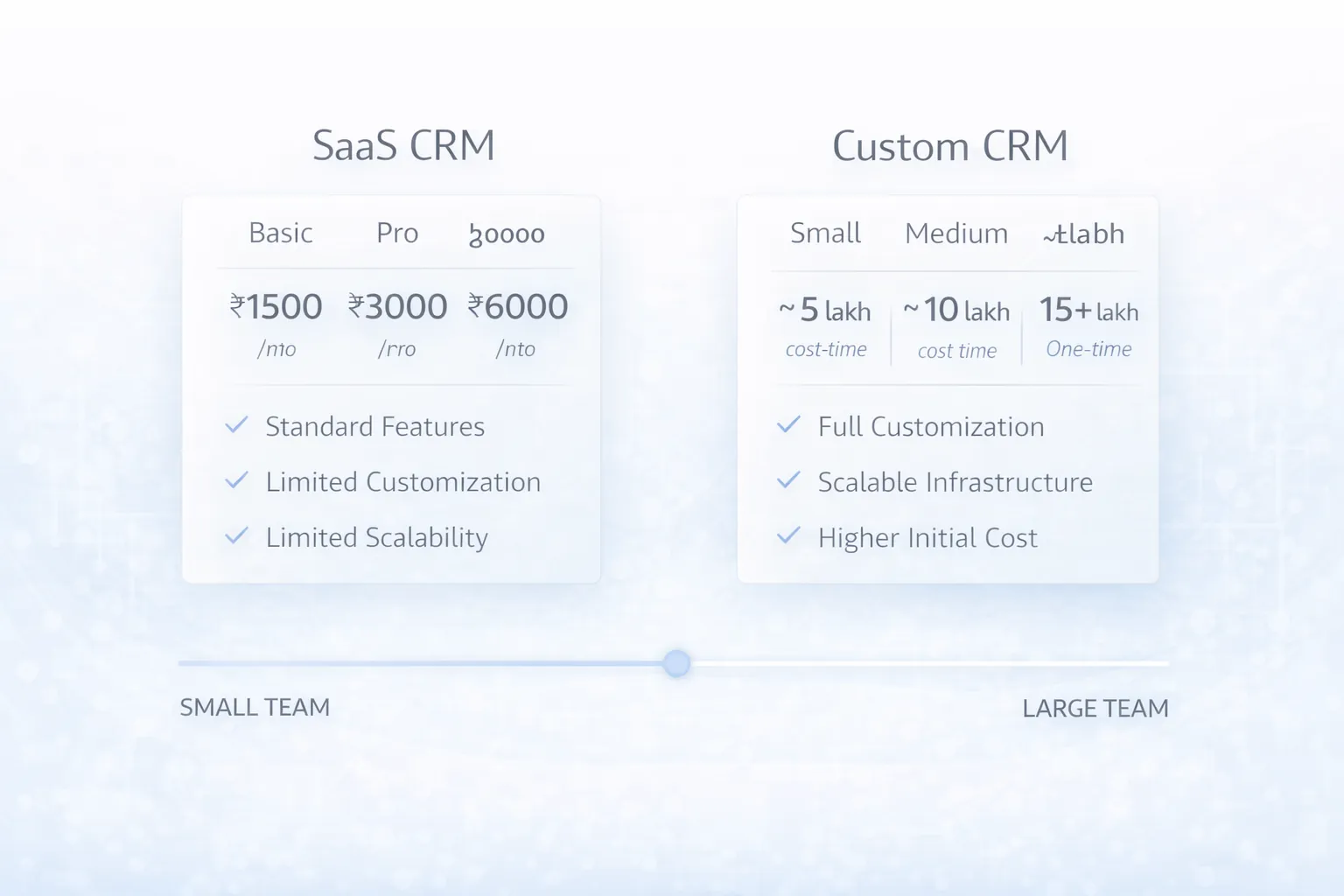
For small businesses in India, CRM cost depends on whether you buy a SaaS product or build a custom system.
₹800 to ₹2,500 per user per month₹2,500 to ₹6,000 per user per month₹2.5 lakh to ₹5 lakh₹5 lakh to ₹10 lakh₹10 lakh to ₹20 lakh+If your workflow is still simple, SaaS can be enough. If your process is highly specific or fragmented, custom CRM may save more time long-term.
This is the first decision every small business should make.
SaaS is easier to start. You pay monthly, configure your pipeline, import leads, and train the team. The upside is low entry cost. The downside is that you must adapt your process to the tool.
SaaS is usually good when:
Custom CRM costs more upfront but gives you process-fit, tighter reporting, and control over how the team works. It becomes useful when the business keeps creating workarounds because available tools do not match reality.
Custom CRM is usually good when:
Related reading:
A lot of CRM projects are over-scoped. Most small businesses do not need everything in version one.
The smartest CRM projects are built around the sales process you already use, not the sales process a generic tool expects.
These are the features that matter most when judging CRM pricing.
For small businesses, owner visibility and follow-up discipline often create the biggest ROI faster than flashy automations do.
CRM cost should be judged by business outcome, not only by the line item.
₹8,000 to ₹25,000 per monthUseful for smaller teams on a standard CRM subscription.
₹25,000 to ₹75,000 per monthCommon when more users, better automation, or higher plans are required.
₹2.5 lakh to ₹5 lakhBest for lead management, basic pipeline, reminders, and dashboard.
₹5 lakh to ₹10 lakhAdds better reports, automations, document handling, and integrations.
₹10 lakh to ₹20 lakh+Includes multi-role processes, deeper integrations, and richer analytics.
The real cost is not only software spend. It is also lost follow-up, weak reporting, low adoption, and manual coordination. That is why a slightly higher-cost but better-fit CRM can still be cheaper overall.
If you are building custom CRM, the stack should support clean data, secure access, and reporting flexibility.
Next.js for dashboards, forms, and role-based workflowsNode.js for business rules, assignment logic, and APIsPostgreSQL for leads, activities, tasks, documents, and reportsTimeline depends on how specific the business workflow is.
Smaller CRM MVPs can launch faster when the sales process is already clear.
If your team is already missing follow-ups or the owner still cannot see sales movement clearly, the right CRM project usually starts with workflow mapping, not feature overload.
These are the biggest drivers behind CRM pricing:
The biggest pricing mistake is asking for "complete CRM" without defining how the team actually sells today.
SaaS may start near ₹800 per user per month. Custom CRM usually starts around ₹2.5 lakh for a practical MVP.
Not always. If the workflow is critical and team adoption is poor in standard tools, custom CRM can be more cost-effective long term.
It depends on process fit, team size, and recurring budget. There is no universal winner.
Lead capture, pipeline, reminders, activity tracking, and basic reports are usually enough for phase one.
Yes, depending on the integration approach and business needs.
Many MVPs take around 6 to 8 weeks. Larger role-based systems take longer.
Poor process design and weak team adoption, not just software quality.
Usually yes, because owner visibility is one of the fastest value drivers in CRM adoption.
If you want to compare SaaS vs custom CRM properly, the next step is to map your sales process, team roles, and reporting needs before you spend on the wrong system.
Related Articles
March 29, 2026
Best CRM for small business in India: custom CRM vs Zoho vs HubSpot, pricing snapshot, fit by business type, and how to choose in 2026.
Read article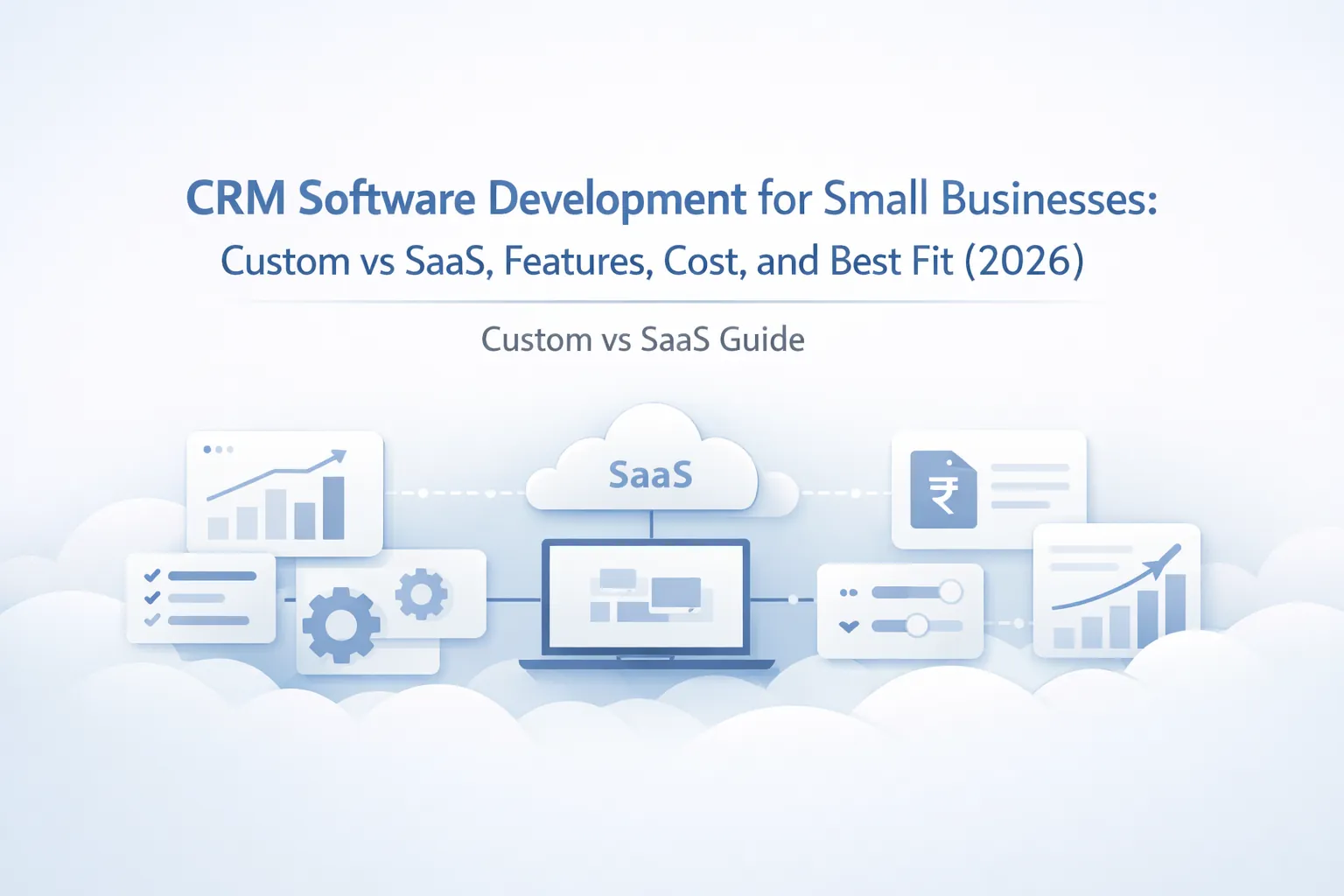
March 26, 2026
CRM software development for small businesses: compare custom CRM vs SaaS, features, pricing in India, timeline, tech stack, and rollout tips for lead tracking.
Read article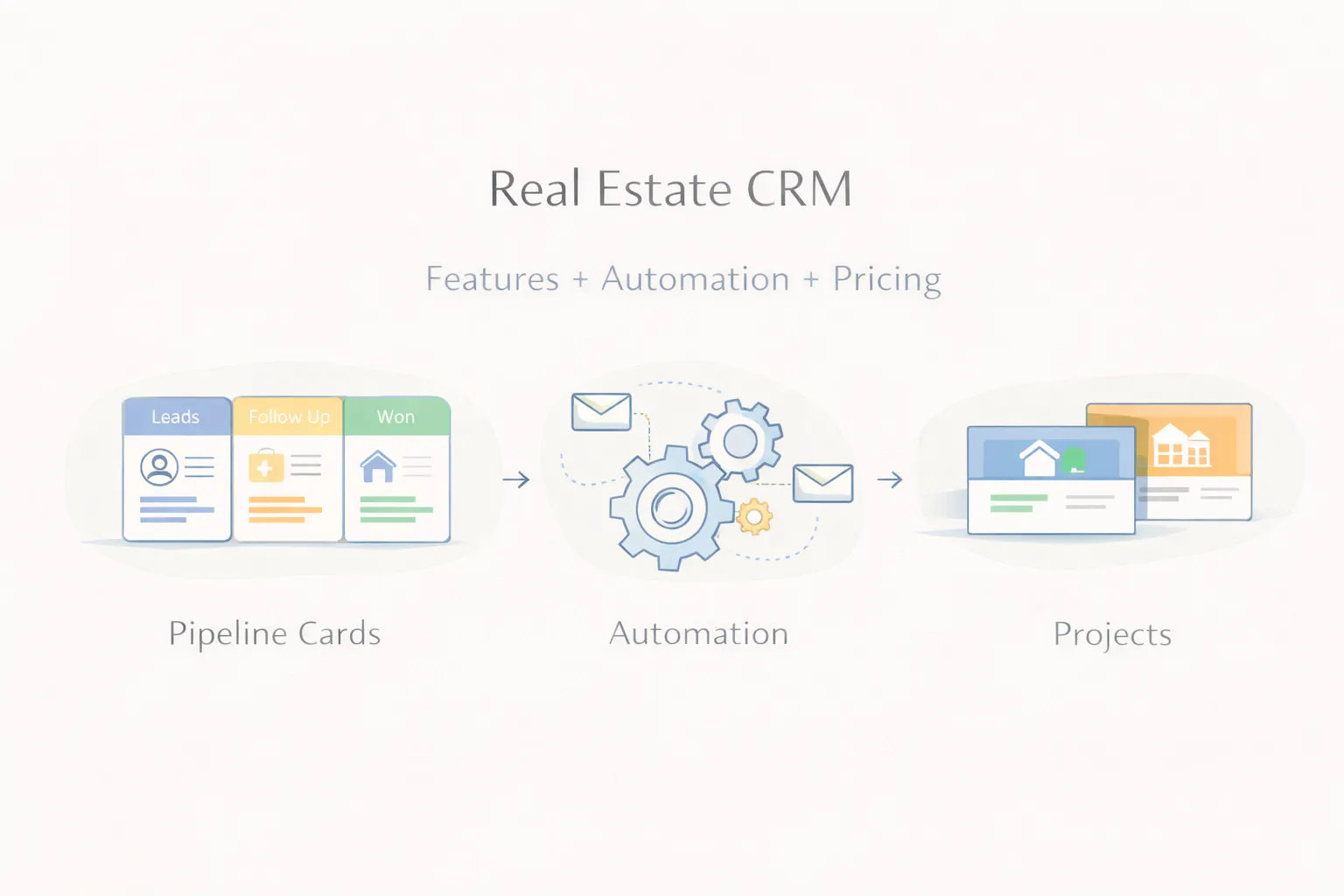
March 30, 2026
Real estate CRM guide covering lead flow, automation, follow-ups, pricing, and what brokers and property firms should build in 2026.
Read article