
April 5, 2026
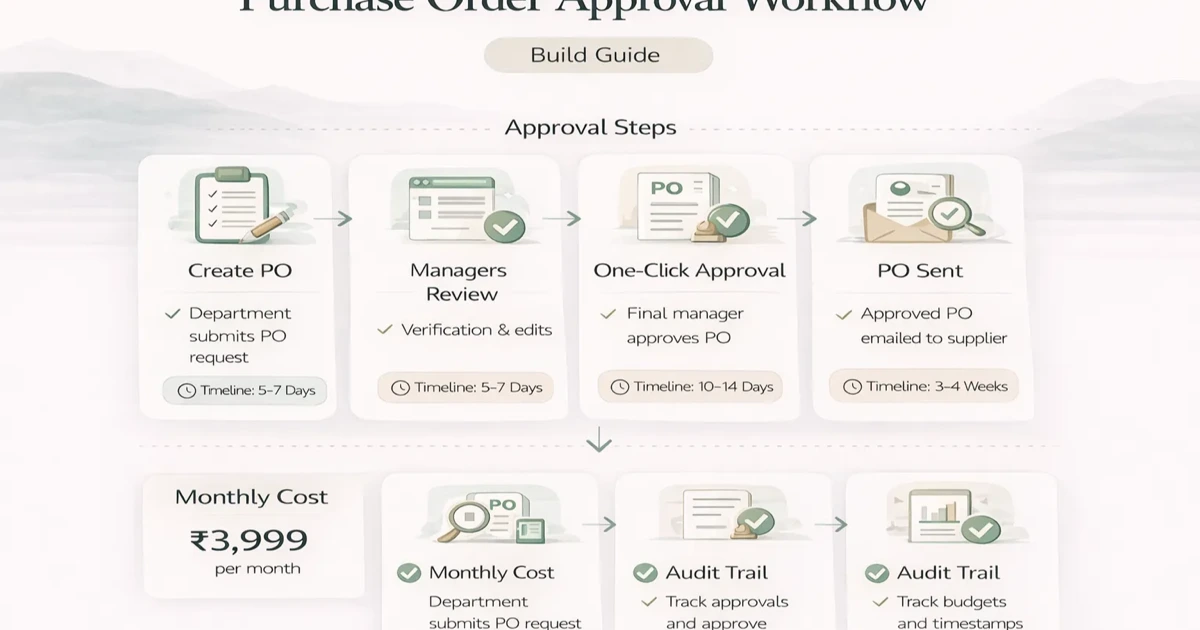
Purchase Order Approval Workflow: Build Guide (2026)
Purchase order approval workflow guide with build scope, pricing, roles, and rollout advice for SME operations in 2026.
Read articleApril 15, 2026
Custom ERP vs Tally + Excel (2026): What’s better: practical guide with pricing, timeline, features, experience notes, FAQs, and next steps for Indian SMBs.
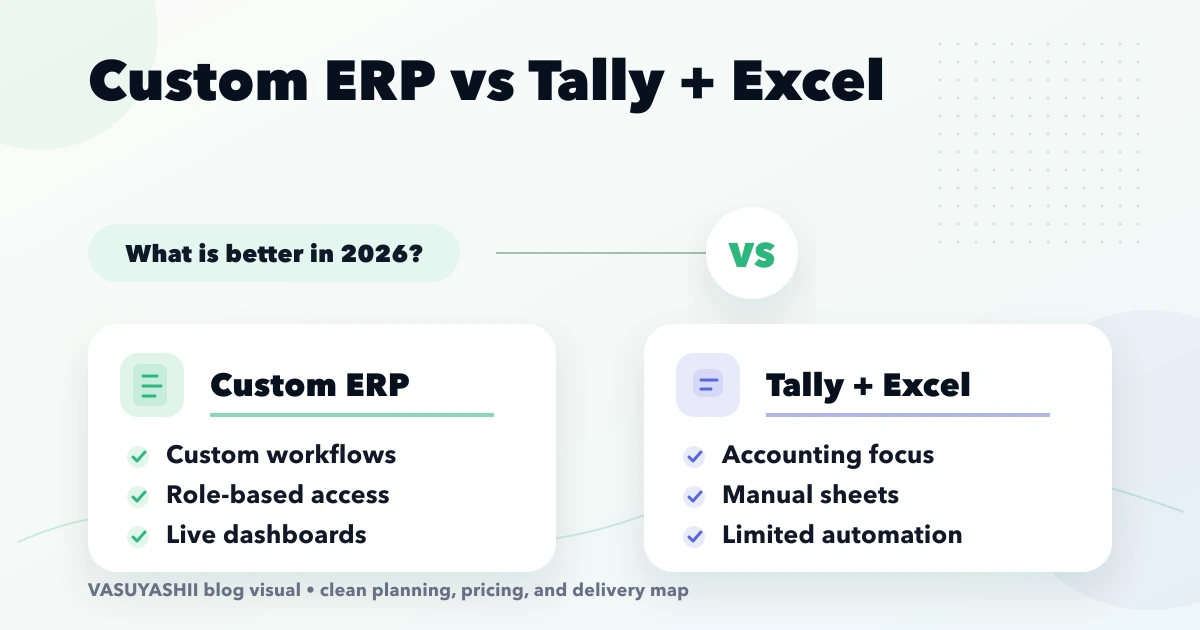
custom ERP vs Tally Excel is important for SME owners who manage accounts in Tally, operations in Excel, and daily approvals on WhatsApp. A business usually reaches this question when accounts are fine but operations are messy. Tally handles accounting well, Excel handles flexible sheets, but neither becomes a full operating system without discipline and manual effort. This guide is written for Indian SMB owners who want practical scope, cost, timeline, and decision clarity without generic theory.
By Tushar C. (Founder, VASUYASHII). Reviewed by VASUYASHII Editorial for practical scope, pricing, implementation clarity, and local business relevance.
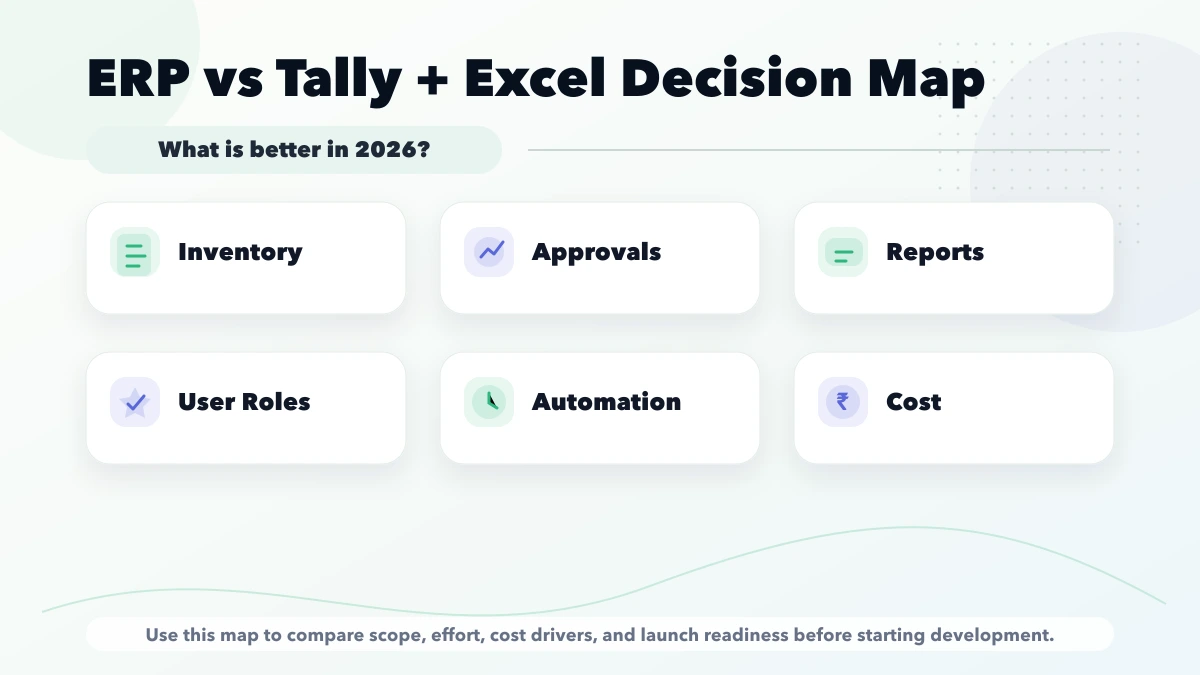
| Scope | Typical range | | --- | --- | | ERP discovery and workflow mapping | ₹25,000 to ₹60,000 | | Phase-one custom ERP | ₹2 lakh to ₹5 lakh | | Multi-module ERP | ₹5 lakh to ₹15 lakh+ |
Serving Delhi NCR and nearby business regions including Ghaziabad, Noida, Delhi, Gurugram, Faridabad, and surrounding localities.
If this topic is part of your current business plan, start with a scoped phase-one version. That keeps cost controlled and makes the next decision based on real usage instead of assumptions.
Start with a short discovery checklist that defines users, workflow, required outputs, and success metric.
Yes. A phased build is usually safer because it keeps cost and adoption under control.
Avoid building too many advanced features before the core workflow is tested with real users.
Compare exact deliverables, timeline, ownership, support, and reporting instead of only the final price.
No. Custom development is useful when workflow, roles, reports, or integrations are specific to your business.
Yes, if the first phase is scoped around one clear business problem.
If you want a practical build plan instead of generic package labels, share your requirement and we will map the scope, timeline, and first phase clearly.
Related Articles
April 5, 2026
Purchase order approval workflow guide with build scope, pricing, roles, and rollout advice for SME operations in 2026.
Read article
March 26, 2026
Order management system development guide with OMS features, pricing in India, tech stack, timeline, and cost drivers for growing SMB operations today.
Read article
March 26, 2026
Purchase and sales management system guide for SMEs with features, pricing in India, timeline, tech stack, and rollout advice for daily operations teams.
Read article