
April 2, 2026
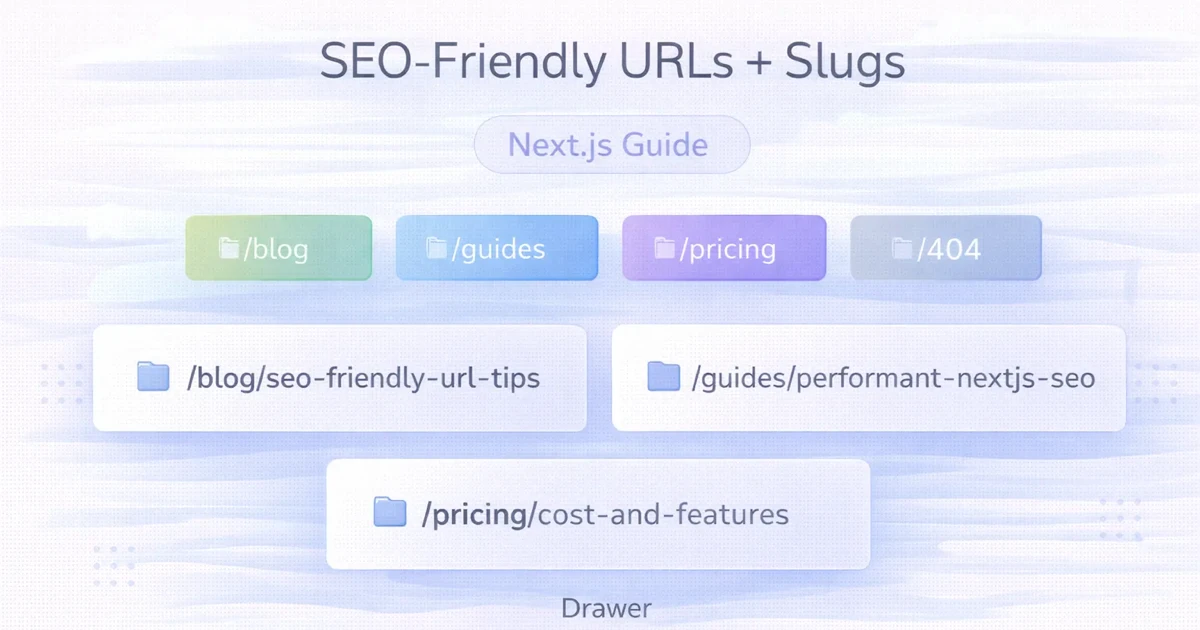
How to Create SEO-Friendly URLs + Slugs (Next.js)
SEO-friendly URLs and slugs in Next.js: clean structure, canonical setup, redirects, and practical implementation guidance for 2026.
Read articleApril 2, 2026
Duplicate without canonical in Next.js: practical causes, fixes, canonical setup, and redirect rules to clean indexing problems in 2026.
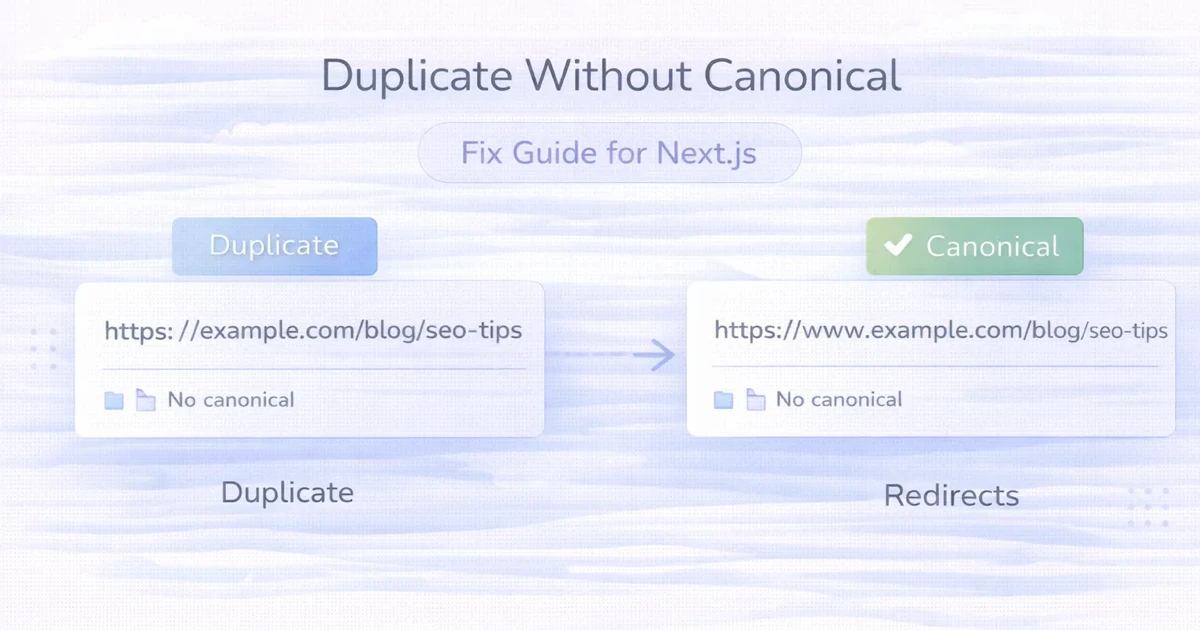
If Google Search Console starts showing duplicate pages without a clear canonical, the problem is usually not mysterious. The site is giving Google more than one live version of essentially the same content, but it is not making the preferred version clear enough.
In Next.js projects, this often happens because of route variants, old URLs still resolving, inconsistent trailing slash behavior, query-based variants, pagination issues, or canonicals missing from metadata. Sometimes the content team thinks the issue is SEO-only, but the real fix is in routing and internal consistency.
This guide explains the common reasons this happens, the fix order that usually works, and how to handle it cleanly in Next.js.
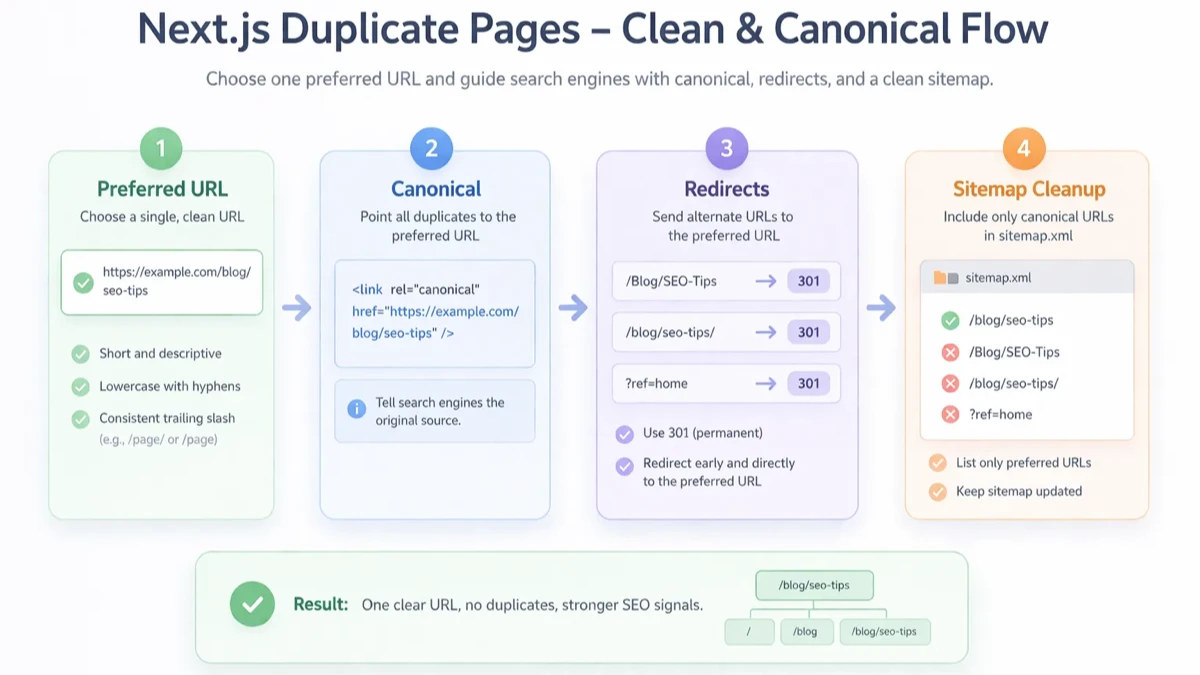
If you have duplicate pages without a clear canonical, check these first:
In most cases, the fix is:
301 redirect unwanted variantsExamples:
/service-page/service-page//Service-PageIf multiple versions stay accessible, Google has to guess.
This happens after content changes or migrations. The new slug exists, but the old URL still returns 200.
Examples:
?utm_source=...?sort=latest?page=1Not all parameter URLs are bad, but many should not compete as primary versions.
If the page has no canonical, or points to the wrong URL, Google may cluster it in ways you do not want.
If some internal links use one version and other links use another, Google receives mixed signals.
Related reading:
Do not start by changing multiple things at once. First decide the one public URL that should represent the page.
In Next.js App Router, this is commonly handled in metadata.
export const metadata = {
  metadataBase: new URL("https://example.com"),
  alternates: {
    canonical: "/blog/duplicate-without-canonical-fix-guide-nextjs",
  },
};If old or alternate URLs are not meant to stay live, redirect them permanently.
module.exports = {
  async redirects() {
    return [
      {
        source: "/blog/old-nextjs-canonical-guide",
        destination: "/blog/duplicate-without-canonical-fix-guide-nextjs",
        permanent: true,
      },
    ];
  },
};Your navigation, related posts, sitemap, and content links should all use the preferred version.
Make sure non-primary URL states do not keep behaving like primary public pages.
These practical checks matter in real projects:
If the site has dynamic routes, make sure slug normalization happens before content is published. That reduces cleanup later.
Typical pricing for a duplicate-and-canonical cleanup:
₹8,000 to ₹18,000₹18,000 to ₹55,000₹55,000 to ₹1.4 lakh+Typical timeline:
1 to 3 days: issue review and URL mapping3 to 7 days: implementation on a normal site1 to 3 weeks: larger route cleanup across many pagesCost drivers:
If Search Console is showing duplicate-without-canonical issues, do not only patch the tag and move on. Check routing, old URLs, sitemap, and internal links together. That is where the real cleanup happens.
No. Canonical is a strong signal, not an absolute command. Internal consistency still matters.
Only if there is a valid reason. In many cases, redirects are cleaner.
Not always. But many parameter variants should not act like separate indexable pages.
Yes, if they are no longer the preferred version.
Yes. Mixed internal links send mixed signals.
One preferred URL, one canonical, one sitemap entry, and redirects for the rest.
Yes. Duplicate variants can waste crawl attention and weaken indexing clarity.
It usually takes time after fixes because Google has to recrawl and reprocess the URLs.
If your Next.js site has duplicate variants, old slugs, or mixed internal linking, the safest approach is to fix preferred URLs, canonicals, redirects, and sitemap entries together instead of treating them as separate SEO tasks.
Related Articles
April 2, 2026
SEO-friendly URLs and slugs in Next.js: clean structure, canonical setup, redirects, and practical implementation guidance for 2026.
Read article
March 30, 2026
How to fix Discovered - Currently Not Indexed in GSC: practical checks, crawl issues, content fixes, and what actually helps in 2026.
Read article
March 31, 2026
Cold start SEO guide for new domains: indexing, structure, publishing order, and how to go from zero traffic to early rankings cleanly.
Read article