
March 28, 2026
Google Search Console Indexing Guide (2026): Fast Index Without Spam
Google Search Console indexing guide for 2026: how to get pages indexed faster without spam, common issues, checks, and practical workflow.
Read articleMay 3, 2026
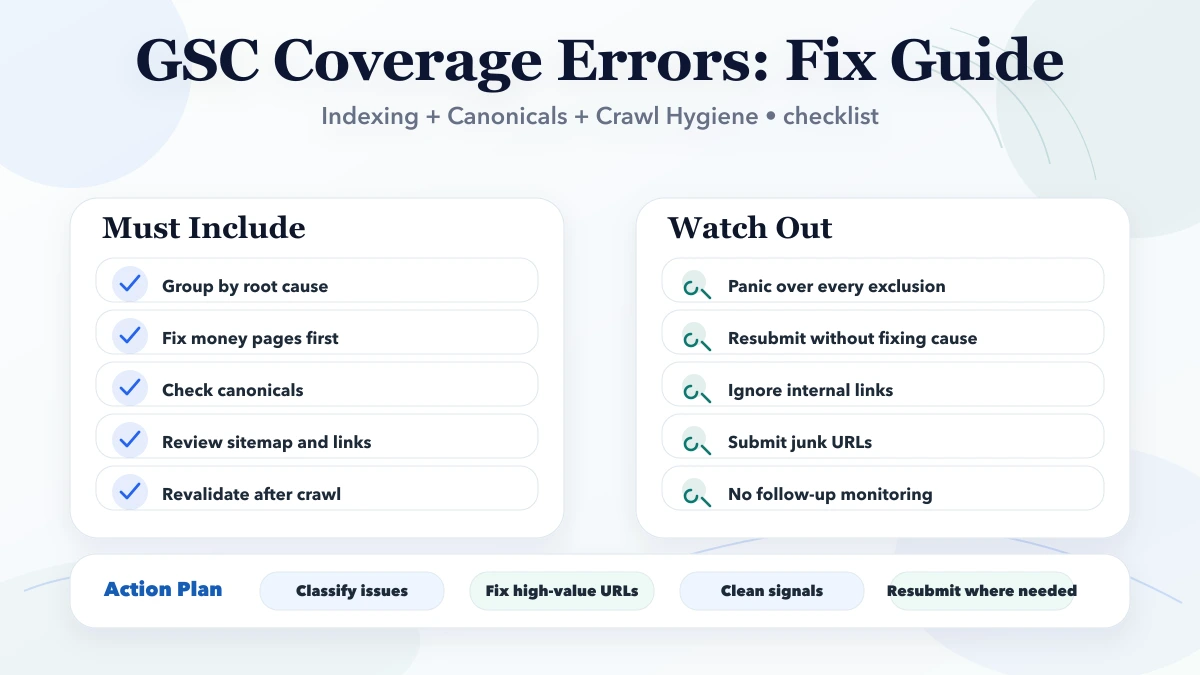
GSC Coverage errors fix guide: excluded pages, crawl issues, canonicals, noindex, sitemap fixes, and practical troubleshooting steps for 2026.
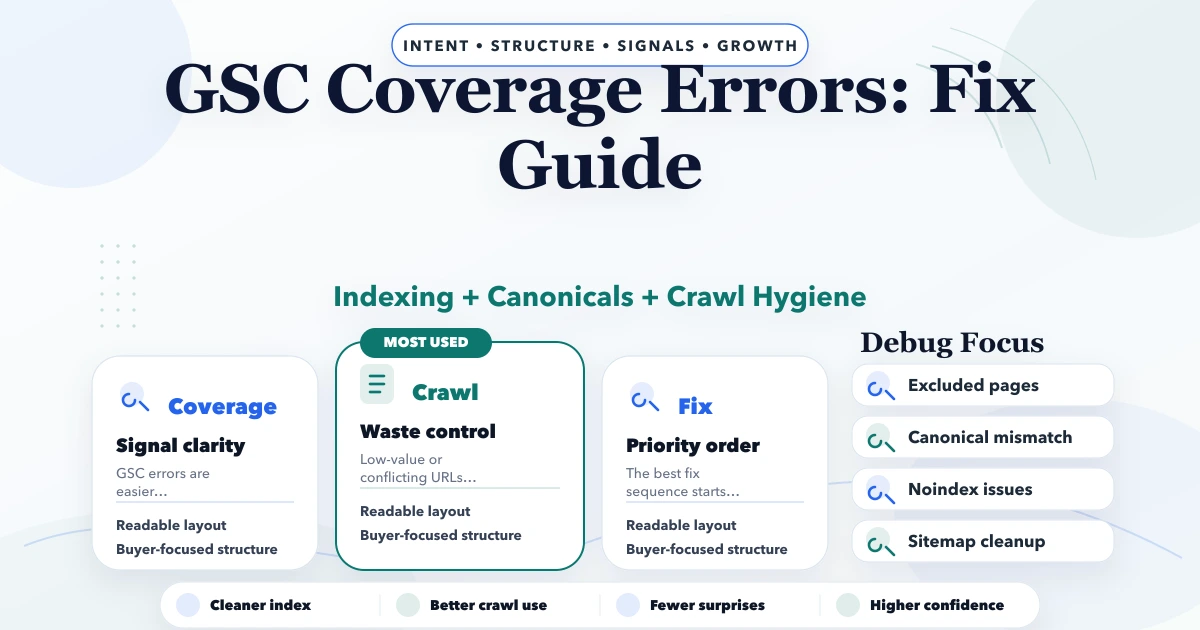
A GSC Coverage errors fix guide is for website owners, SEO teams, developers, and SMB businesses that want to understand why pages are excluded, conflicting, or failing to index properly in Google Search Console. The goal is not to chase every warning blindly. The goal is to understand page roles, signal conflicts, and which fixes actually matter for revenue pages first.
Coverage reports become stressful when businesses treat every excluded page as a crisis. In reality, some exclusions are expected. The work is deciding which pages should be indexed, which should not, and where the site is sending mixed signals through canonicals, sitemaps, redirects, or internal links.
By Tushar C. (Founder, VASUYASHII). Reviewed by VASUYASHII Editorial for practical scope, pricing, implementation clarity, and local business relevance.
For most businesses, the right approach is not to overbuild the first release. The stronger move is to define a clear first phase, remove the biggest friction points, and launch with proof, structure, and tracking in place. That keeps scope realistic, improves adoption, and makes later SEO or conversion work far easier.
| Scope | Price range | Timeline | | --- | --- | --- | | Coverage audit | ₹20,000 to ₹55,000 | 3 to 7 days | | Audit + fixes | ₹55,000 to ₹1.5 lakh | 2 to 5 weeks | | Technical SEO cleanup + monitoring | ₹1.5 lakh to ₹3.5 lakh+ | 5 to 10 weeks |
Indexing quality matters more than raw page count. If important service pages, blogs, or landing pages are excluded incorrectly, the business loses visibility. If low-value filters, duplicates, or staging URLs are being surfaced in Search Console, the site wastes crawl attention and confuses reporting.
A clear coverage-fix process helps teams prioritise correctly. It reduces panic, improves communication between SEO and development, and creates a more reliable search footprint over time.
Good execution here usually improves both SEO and conversion because the website stops behaving like a brochure and starts behaving like a serious business asset. The biggest improvement usually comes from clarity: clear messaging, clear proof, clear routing, and clear review discipline.
Pricing changes based on how much structure, proof, tracking, content work, and post-launch refinement the business actually needs. Two websites or SEO projects can sound similar at the title level but involve very different effort once page quality, stakeholder review, tracking, and content depth are included.
| Scope | Price range | Timeline | | --- | --- | --- | | Coverage audit | ₹20,000 to ₹55,000 | 3 to 7 days | | Audit + fixes | ₹55,000 to ₹1.5 lakh | 2 to 5 weeks | | Technical SEO cleanup + monitoring | ₹1.5 lakh to ₹3.5 lakh+ | 5 to 10 weeks |
The practical way to budget is phase-wise. Define what must go live first, what supports SEO later, and what should only be built once real user behaviour gives better input.
A rollout becomes smoother when every phase has one owner, one measurable output, and one review point. When implementation runs without those anchors, even good design or development work starts feeling slow and expensive because the real issue is scope drift.
The stack should serve clarity, measurement, and future scale. In most business projects, data structure, content structure, and event visibility matter more than chasing a fashionable tool choice.
If these drivers are defined early, quoting becomes more honest and launch risk drops. If they are ignored, the project usually becomes cheap only on paper and expensive in revision cycles, weak results, or later cleanup.
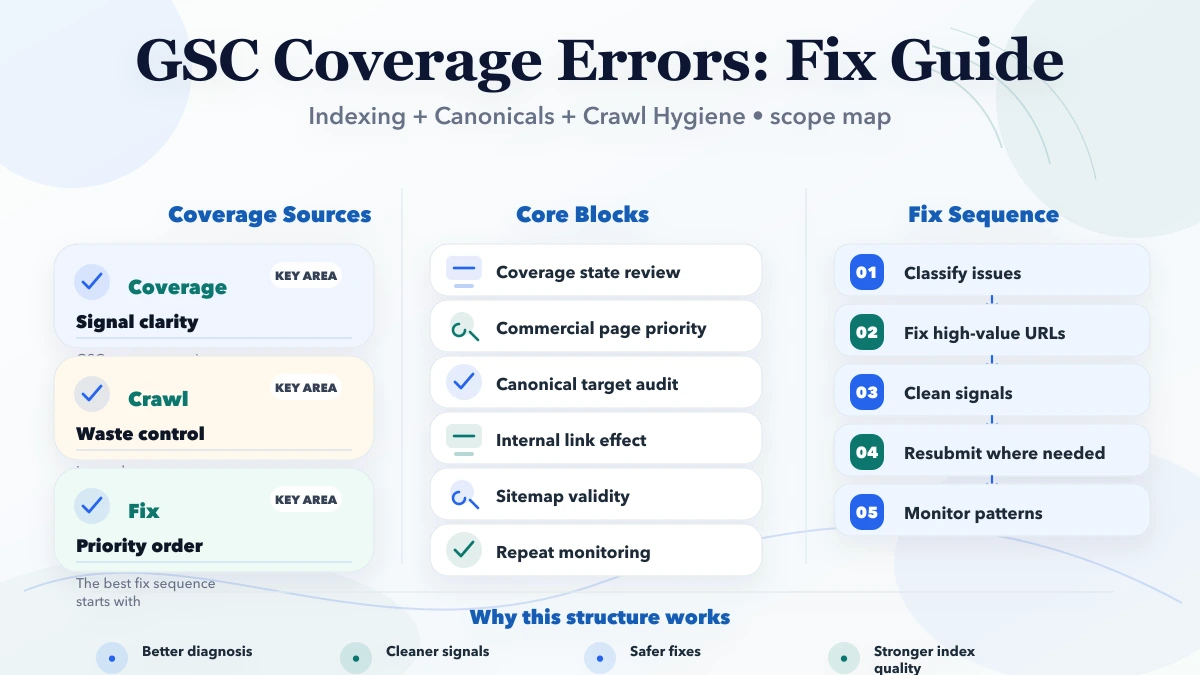
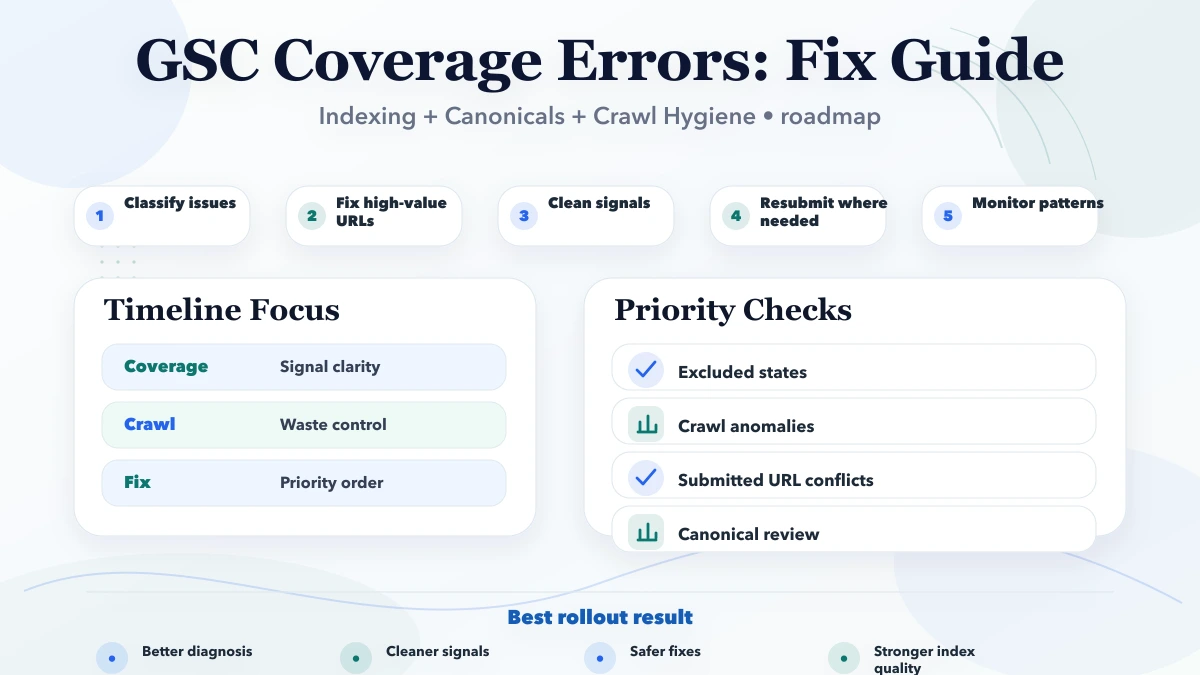
Fix the errors affecting high-value pages first. If a service page, category page, demo page, or strategic blog is excluded incorrectly, that deserves attention before low-value utility URLs.
This priority mindset keeps the work tied to business impact. Search Console can list many states, but not every state is a real problem.
Many teams resubmit URLs in Search Console without fixing the underlying signal conflict. If the canonical, internal links, redirects, or sitemap are still wrong, Google usually returns to the same conclusion.
That is why root-cause analysis matters more than repeated manual requests.
We serve businesses across India from our Delhi NCR base and plan, build, and refine websites with a practical focus on clarity, trust, SEO structure, and lead quality.
If you are comparing vendors or deciding whether this scope is worth doing now, compare the real structure: page quality, proof depth, CTA logic, tracking, and how the plan expands later without rebuilding from scratch.
These mistakes usually hurt twice. They reduce user trust in the short term and weaken SEO or lead quality over time. Avoiding them is often more valuable than adding one more shiny section or feature.
No. Some exclusions are expected. The real issue is when pages that should rank are excluded for avoidable reasons.
Start with the highest-value commercial or traffic-driving pages, then move to lower-priority patterns.
No. Canonicals help, but they must align with page content, internal links, sitemap entries, and overall site logic.
Not always immediately, but the sitemap should generally list URLs you want Google to crawl and index.
Yes. Pages with weak or conflicting internal links may struggle to look important even if they are technically indexable.
Allow time for recrawl and validation. The exact timing varies, but the key is to monitor pattern resolution rather than expecting instant changes.
Yes. Even smaller business sites can lose important visibility if money pages are sending mixed indexing signals.
If you want a practical plan instead of vague website promises, share your requirement and we will map the first version, realistic pricing, timeline, and the sections needed to support SEO plus qualified enquiries.
Related Articles
March 28, 2026
Google Search Console indexing guide for 2026: how to get pages indexed faster without spam, common issues, checks, and practical workflow.
Read article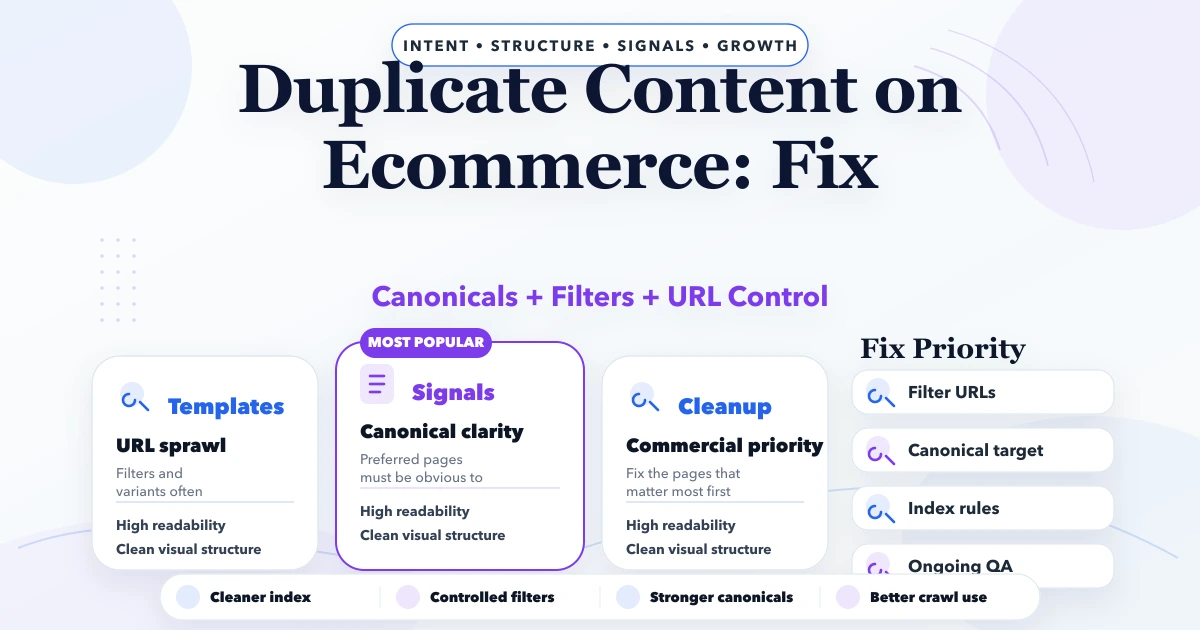
April 30, 2026
Duplicate content on ecommerce fix guide with canonicals, filters, product variants, timelines, pricing, and cleanup strategy for stores.
Read article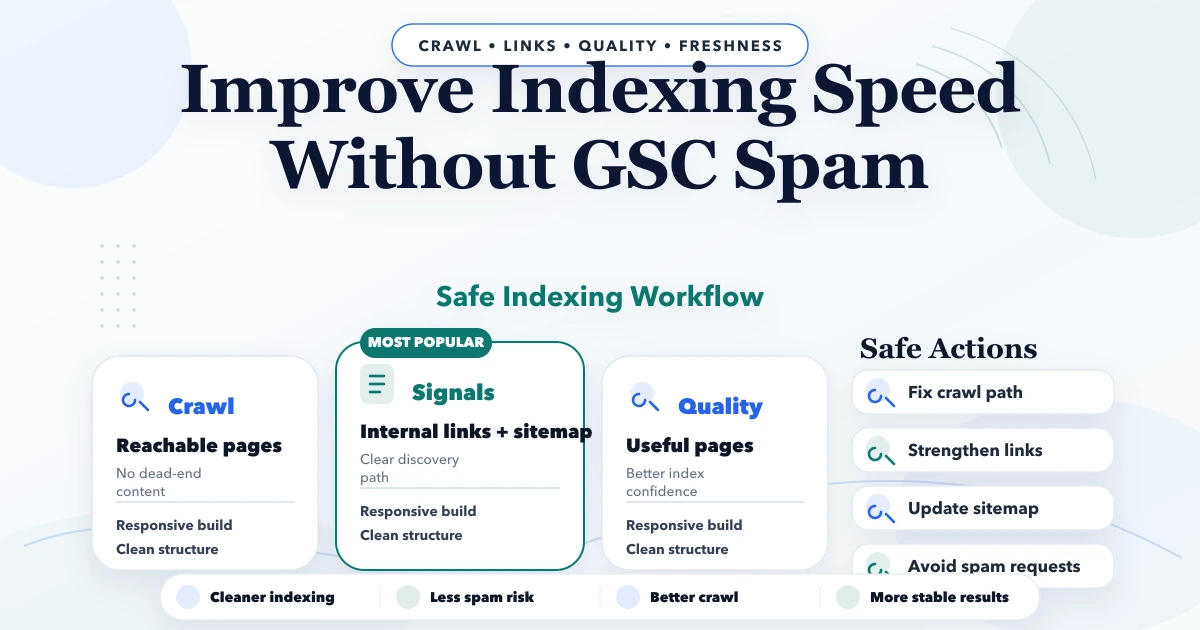
April 21, 2026
Improve indexing speed without GSC spam: practical features, cost, timeline, implementation checklist, and real-world guidance for Indian SMBs in 2026.
Read article