How to Build Trust on Website (Proof, reviews, demos)
Most websites do not lose conversions because the visitor dislikes the design. They lose conversions because the visitor is not convinced yet. Trust is the missing layer. People ask themselves basic questions: is this business real, is it experienced, will they deliver, is there proof, and what happens after I contact them?
That is why trust-building is not one testimonial block at the bottom of the page. It is the overall experience of clarity, proof, credibility, and reduced risk.
This guide explains how to build trust on a website using the elements that actually help visitors move from doubt to action.
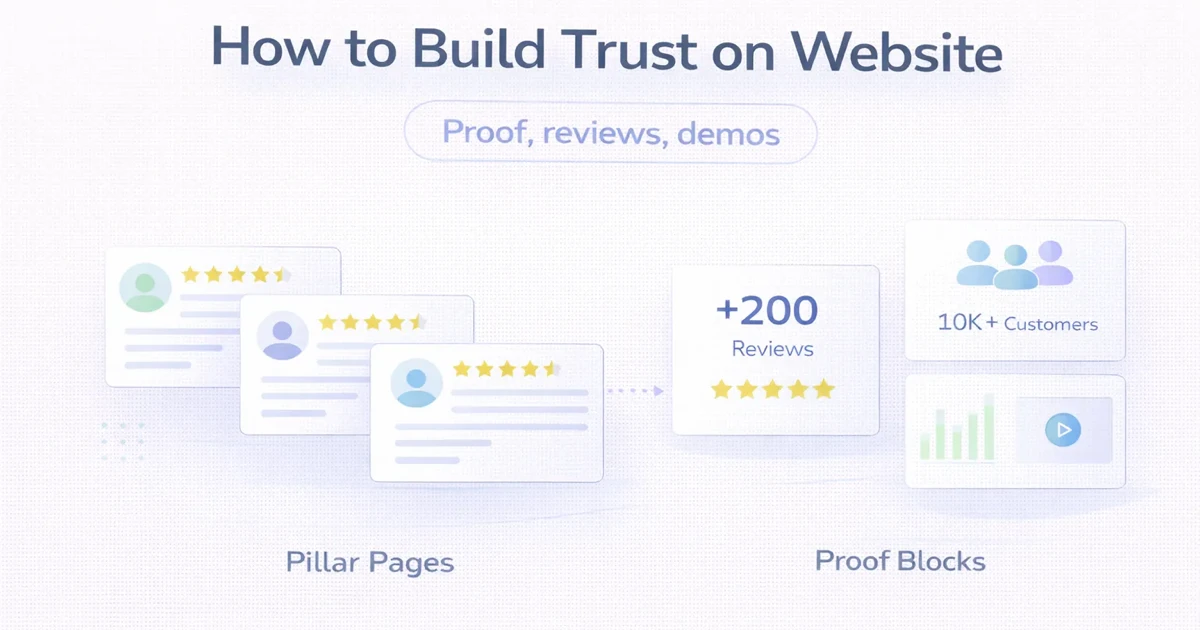
Table of Contents
- Quick answer
- What trust looks like on a website
- Proof hierarchy
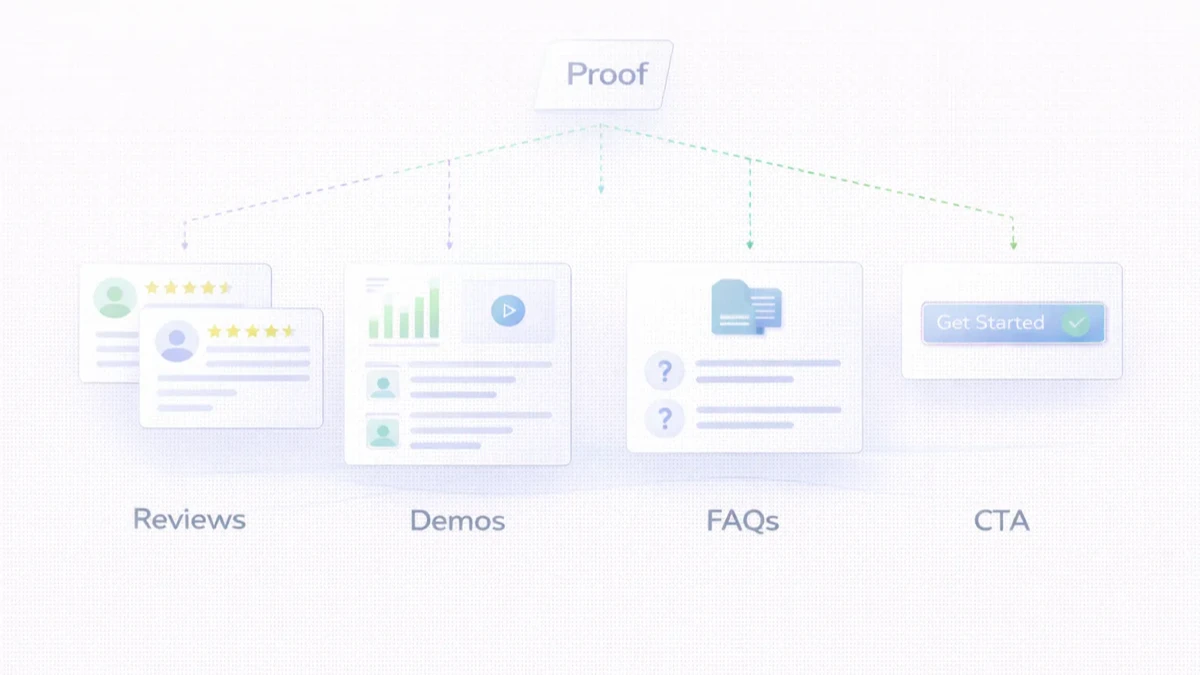
- Reviews and demos
- Copy and layout signals
- Common mistakes
- FAQs
Quick Answer
Strong website trust usually comes from a combination of:
- clear positioning
- real proof
- visible process
- low-friction contact options
- transparent FAQs
- a website that feels maintained and serious
Visitors do not trust a page because it says "trusted." They trust what the page shows.
What Trust Looks Like on a Website
Trust starts with clarity:
- what you do
- who it is for
- what outcome you help with
- what happens next
If the headline, offer, and CTA are vague, trust drops before reviews even matter.
Related reading:
Proof Hierarchy
1. Outcome proof
This is strongest:
- results
- delivered projects
- before and after impact
- business outcomes
2. Experience proof
- years of work
- niche knowledge
- process maturity
3. Social proof
- reviews
- testimonials
- client mentions
- case studies
4. Process proof
Show people how the work moves forward. A visible process reduces fear.
Reviews and Demos
Reviews
Use reviews that feel specific, not generic praise. The best reviews mention:
- what was built
- how the experience felt
- what changed after the project
Demos
Demos are powerful because they reduce imagination gap. People can see the quality instead of guessing it.
Portfolio examples
Relevant examples are often more convincing than a long paragraph about capability.
Copy and Layout Signals
- clear above-the-fold promise
- simple CTA language
- visible contact methods
- FAQs that answer real objections
- clean section hierarchy
- no outdated or broken-looking elements
Common Mistakes
- using fake-looking testimonials
- hiding pricing logic completely when buyers expect guidance
- talking only about the company, not the customer outcome
- not showing any live examples or demos
- making contact feel high-friction
Soft CTA
If your website gets traffic but not enough enquiries, the problem may be trust, not only traffic. Start by checking what proof the visitor actually sees before the first CTA.
FAQs
What is the fastest way to improve website trust?
Clarify the offer and add strong proof near key CTAs.
Are testimonials enough?
No. Testimonials help, but process clarity and visible examples matter too.
Do demos increase trust?
Yes. Demos reduce uncertainty and make the offer feel more real.
Should pricing be shown?
Sometimes full pricing, sometimes ranges. But total opacity can reduce trust for some buyers.
Can trust signals improve SEO too?
Indirectly yes, because stronger pages often improve engagement and content quality.
What if I am a newer business?
Use process clarity, specific examples, founder credibility, and clean communication.
Where should proof appear?
Not only at the bottom. Put proof close to key decision points.
What is the biggest mistake?
Making the page sound polished without actually proving anything.
Related Reading
Need a Website That Feels More Convincing to Serious Buyers?
If you want better enquiries from the traffic you already have, the next step is to strengthen proof, reviews, demos, and CTA clarity instead of only changing colours or layout blocks.