
March 29, 2026
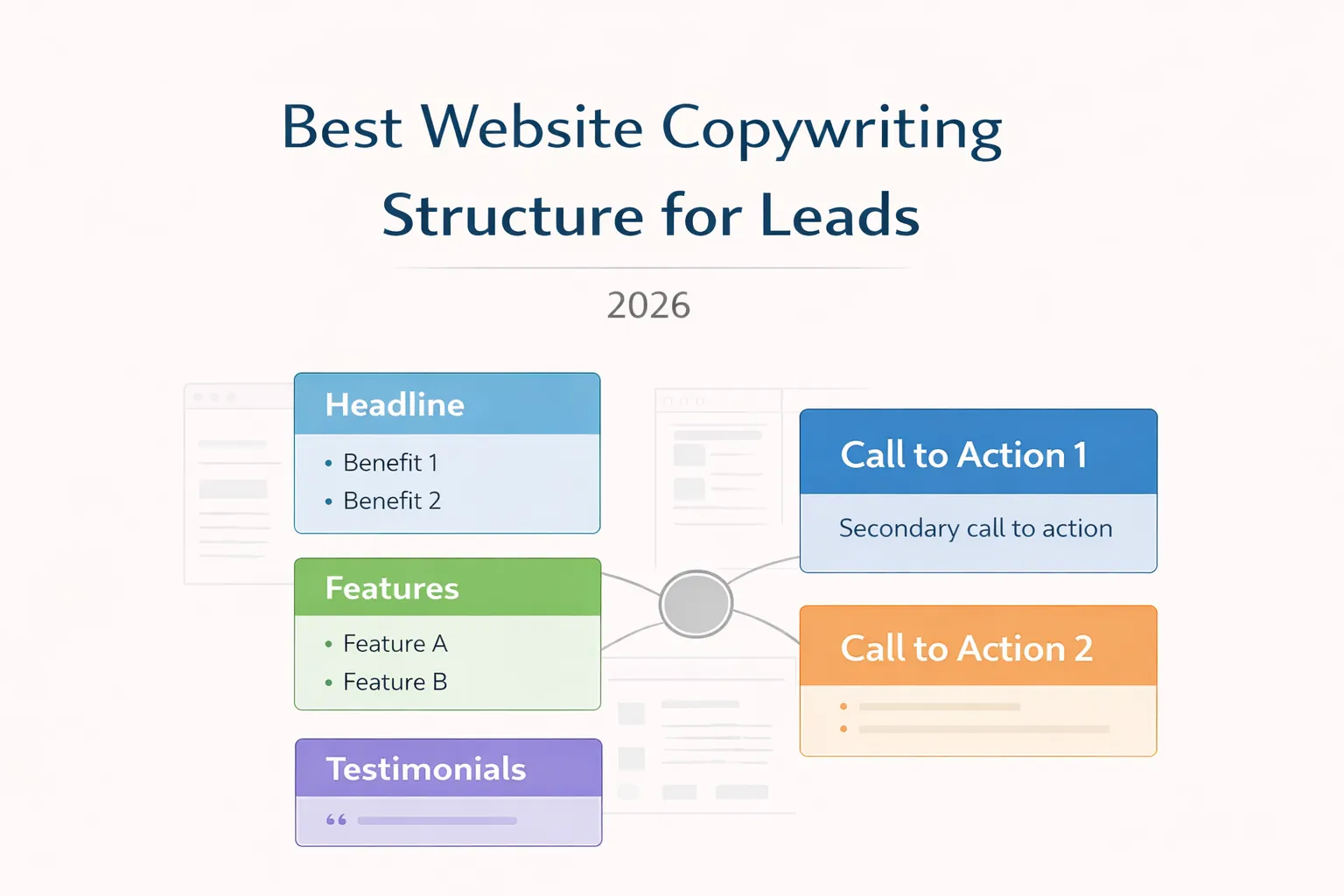
Best Website Copywriting Structure for Leads (2026)
Best website copywriting structure for leads in 2026: page flow, sections, proof blocks, CTA order, and how to improve enquiry quality.
Read articleMarch 28, 2026
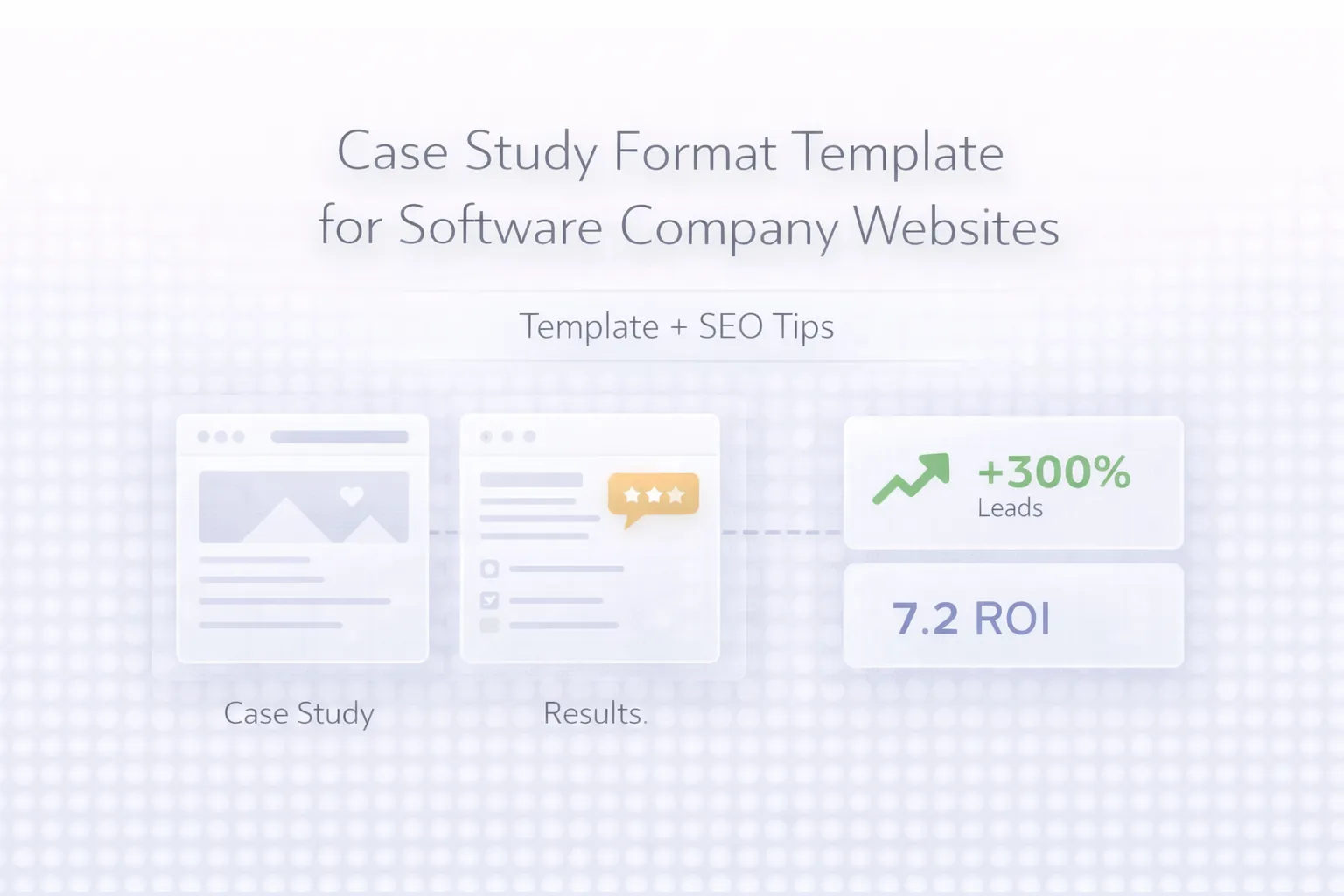
Case study format template for software company websites: structure, sections, examples, SEO tips, and how to turn projects into proof pages.
Many software company websites say the same things: custom solutions, scalable systems, expert team, quality delivery. But visitors do not trust those phrases by default. What they trust is proof. And the strongest proof page on most B2B software websites is a well-written case study.
The problem is that many companies either do not publish case studies at all or publish weak ones. They show a few screenshots, write two paragraphs, and call it a success story. That leaves a lot of conversion value on the table.
This guide explains a practical case study format template for software company websites: what sections to include, how to make the story credible, how to improve SEO value, and how to turn completed projects into strong sales assets.
A strong software case study usually includes:
The goal is not to write a brag post. The goal is to make future buyers think, "This team can probably solve my problem too."
Case studies reduce buyer uncertainty. In software projects, uncertainty is usually high because the buyer cannot fully judge quality from visuals alone.
Many teams finish projects and move on. They do not pause to structure the story, capture proof, and publish it in a way that future clients can understand quickly.
Related reading:
Here is a practical template that works for most software company websites.
Start with a clear headline. Example:
How We Built a CRM Dashboard for a Service Business That Reduced Follow-up Delays
This instantly makes the page more useful than a vague title like "CRM Project."
Explain who the client is without oversharing sensitive details. Mention industry, team size, or business type if possible.
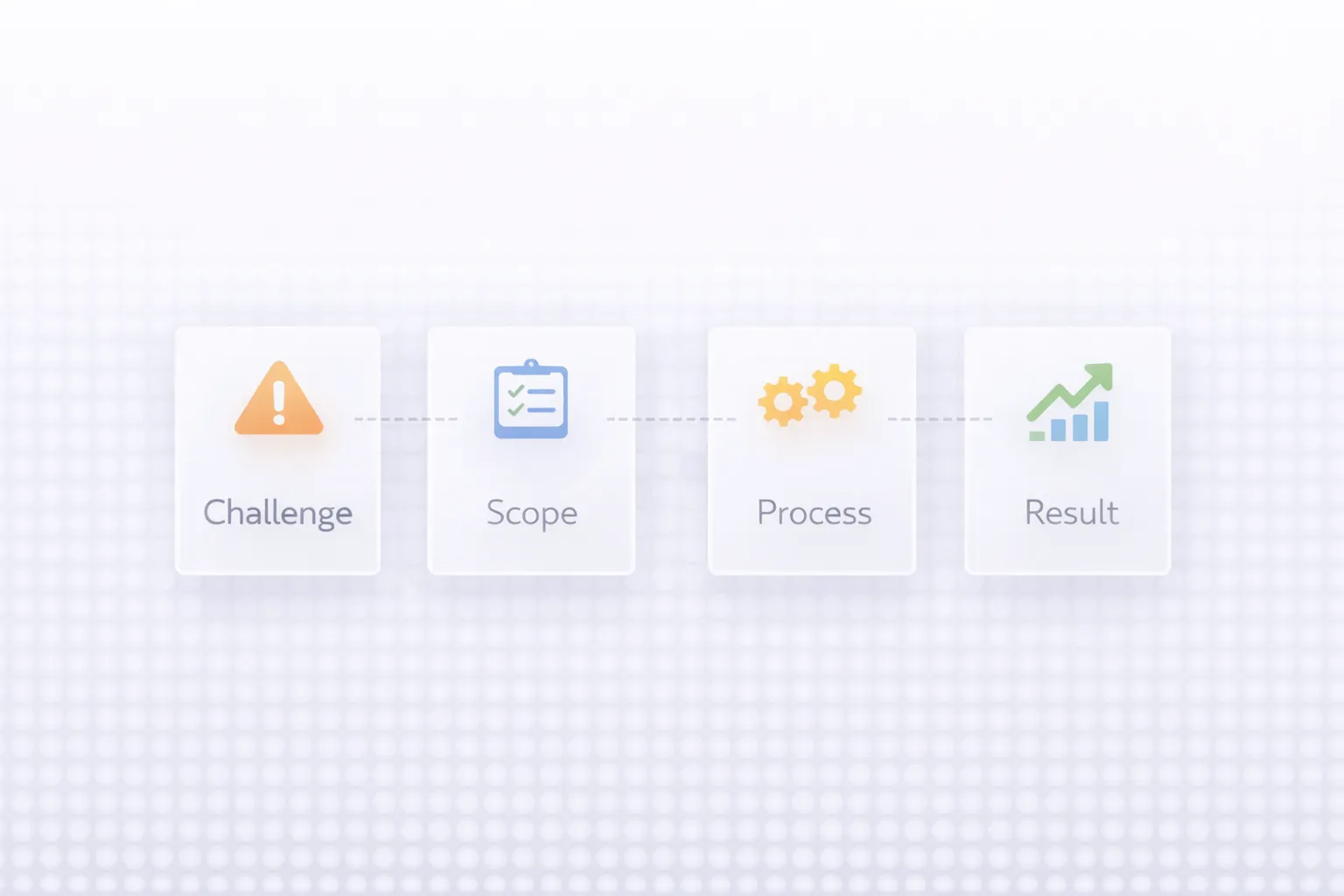
What was broken, slow, manual, or confusing before the project started? This is where future buyers start seeing themselves in the story.
List what the project needed to achieve. Better reporting, faster order handling, cleaner approvals, improved lead tracking, and so on.
Explain what was actually built. Modules, roles, dashboards, integrations, customer portal, mobile flow, or admin system.
Describe discovery, wireframes, development, testing, and rollout in a concise way. This shows maturity.
Good case studies do not pretend the project was magically easy. Mention real implementation challenges and how they were handled.
Use clear outcomes where possible: time saved, reporting clarity, reduced manual work, better lead response, improved user adoption, or fewer errors.
Include screenshots, workflow diagrams, or section visuals. Visual proof improves trust quickly.
Finish with a CTA that connects the reader to a relevant service or contact step.
Case studies can also become valuable search assets if written properly.
Buyers often search by outcome or problem, not only by technology.
Link to services, related blogs, portfolio, and contact. This helps both discovery and conversion.
Clear headings improve readability and help search engines understand the structure.
Most buyers will scan. Use sections, bullets, short paragraphs, and proof blocks.
Screenshots without business explanation do not carry enough value.
These are the mistakes that make software case studies weak:
If you hire someone to convert completed projects into polished case studies, typical pricing depends on research depth and asset quality.
₹6,000 to ₹15,000₹15,000 to ₹40,000₹40,000 to ₹1 lakh+If the project also requires design, screenshots, layout updates, and page development, total cost goes beyond content alone.
The publishing setup matters more than many teams think.
A good case study can usually be built in a few days if the project details are available.
The biggest delay is often not writing. It is collecting accurate proof and approvals.
If your software website still relies mostly on generic claims, one strong case study page can improve trust faster than several weak marketing paragraphs.
Case study production cost depends on:
The biggest blocker is often weak documentation after project delivery. Good projects become great case studies only if proof is captured properly.
Because case studies show real proof of problem-solving, which builds trust faster than generic service claims.
Even 3 to 5 strong case studies can add major credibility if they cover different use cases well.
Usually business outcome first, with technology supporting the story where relevant.
Yes, especially when they target problem-driven queries and are internally linked properly.
You can still publish anonymized case studies with industry context and proof structure.
No. Choose the ones that are strongest in relevance, clarity, or business impact.
Writing a vague success story with no real challenge, scope, or outcome.
Yes. That is one of its biggest strengths. Good case studies help both website conversion and sales trust-building.
If you want your completed projects to work harder for sales and trust, the next step is to turn them into structured case studies with clearer story, proof, and CTA flow.
Related Articles
March 29, 2026
Best website copywriting structure for leads in 2026: page flow, sections, proof blocks, CTA order, and how to improve enquiry quality.
Read article
March 28, 2026
How to write a service page that ranks: SEO and conversion structure, page sections, proof blocks, internal links, and mistakes to avoid.
Read article
March 30, 2026
Best hosting for business websites in India in 2026: shared vs managed cloud, pricing ranges, practical advice, and what small businesses should choose.
Read article