Best Hosting for Business Websites in India (2026): What to Choose and Why
Many business owners compare hosting only on the lowest price shown on a sales page. That usually creates the wrong decision. Hosting is not only about storage and bandwidth. It affects speed, uptime, update safety, email expectations, scaling, and how smoothly your team can manage the website after launch.
For Indian business websites in 2026, the right hosting choice depends on traffic, update frequency, site complexity, and how serious the company is about leads. A simple brochure site does not need the same hosting as a lead-focused site, a portal, or a content-heavy business website.
This guide explains what hosting types matter, what realistic pricing looks like, and which type usually fits small and mid-sized businesses best.
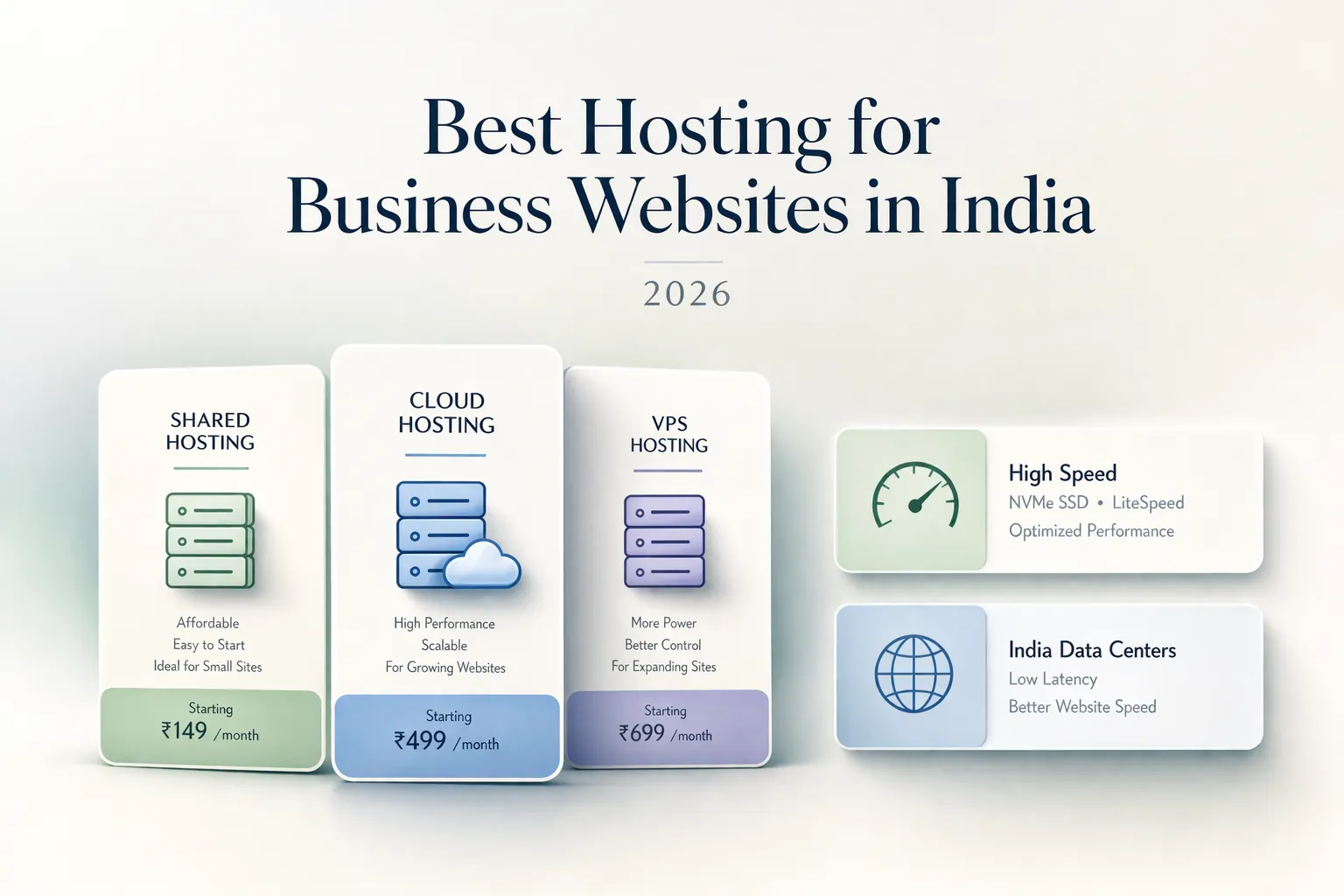
Table of Contents
- Quick answer
- Shared vs managed cloud
- What most businesses should choose
- Pricing ranges
- Key features
- Tech considerations
- Cost drivers
- FAQs
Quick Answer
For most Indian business websites, the best options are:
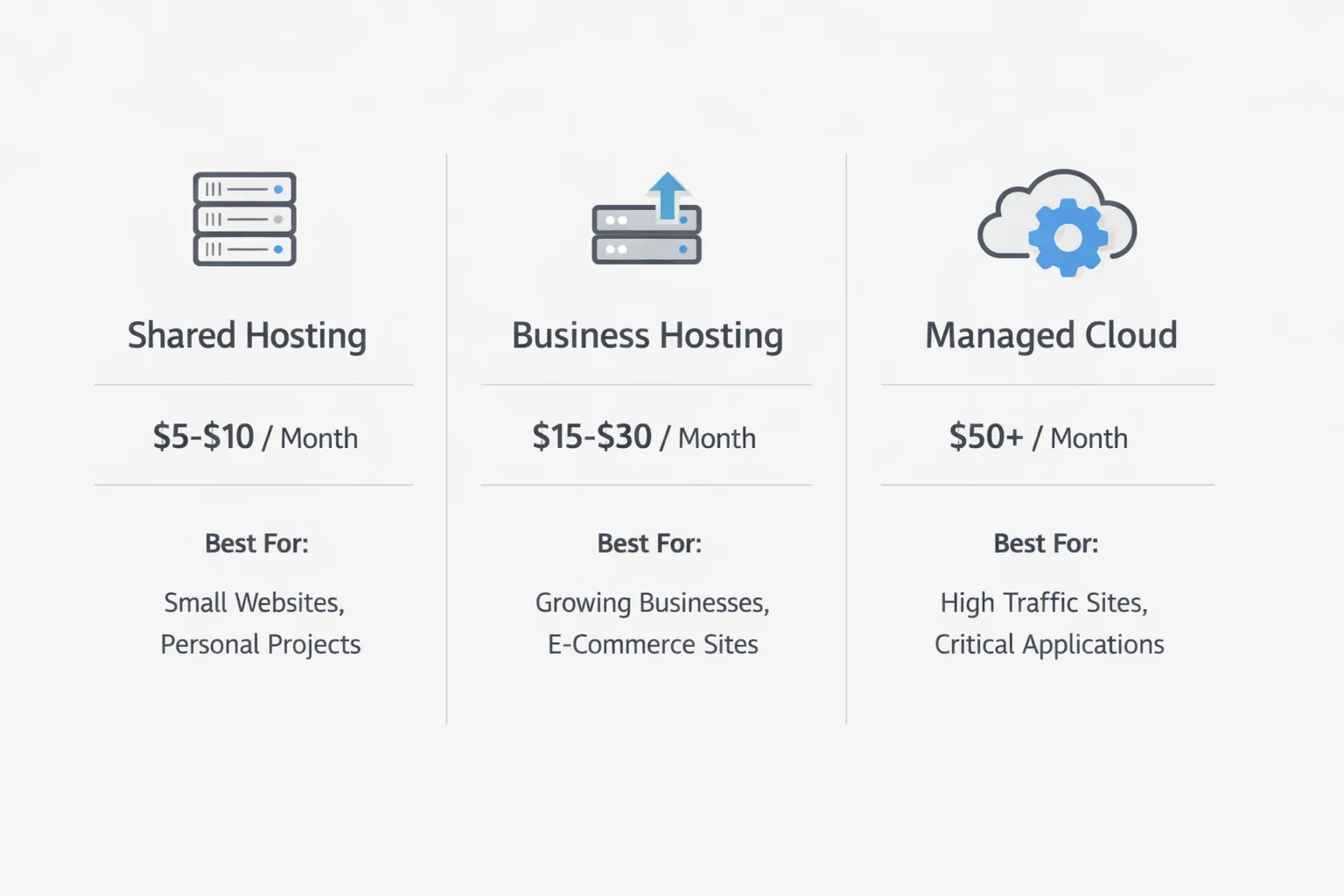
- shared hosting for very small starter websites
- stronger business hosting for active company sites
- managed cloud hosting for custom sites, portals, and lead-focused websites
Typical pricing ranges:
- entry shared hosting:
₹3,000 to ₹8,000 per year - better business-grade hosting:
₹8,000 to ₹20,000 per year - managed cloud hosting:
₹900 to ₹4,000 per month
If the website is important for leads, custom features, or long-term SEO, managed cloud hosting is usually a better decision than the cheapest shared plan.
Shared Hosting vs Managed Cloud
Shared hosting
Shared hosting is budget-friendly and usually enough for:
- basic company websites
- low traffic sites
- early-stage brochure setups
Main limitation:
Your website shares resources with many others, so performance and flexibility are limited.
Managed cloud hosting
Managed cloud hosting is usually better for:
- custom websites
- faster-loading business sites
- websites with forms, portals, or integrations
- businesses that care about stable growth
Main advantage:
You get stronger performance, easier scaling, and more predictable technical handling.
What Most Businesses Should Choose
Choose shared hosting if
- the site is simple
- updates are infrequent
- traffic is low
- budget is the main concern
Choose better business hosting if
- the site has multiple pages
- SEO matters
- the site collects leads regularly
- you want better backup and support options
Choose managed cloud if
- the site is custom-built
- speed and reliability matter
- the site supports campaigns, integrations, or logged-in workflows
- you expect to scale
Related reading:
Pricing Ranges
Starter shared hosting
₹3,000 to ₹8,000 per year
Good for:
- compact company websites
- early-stage local businesses
Better business-grade hosting
₹8,000 to ₹20,000 per year
Good for:
- stronger WordPress or CMS sites
- multi-page business websites
- sites where support matters more
Managed cloud hosting
₹900 to ₹4,000 per month
Good for:
- custom builds
- higher performance requirements
- agency-managed business websites
- lead-focused websites where downtime hurts enquiries
Key Features to Check Before Buying
- server location and real-world speed
- backup quality and recovery ease
- SSL support
- staging or safe update options
- performance under traffic spikes
- support quality
- upgrade path when traffic grows
- email expectations, because many hosting plans limit or separate email features now
Tech Considerations
WordPress websites
A stronger managed WordPress or business-grade plan is usually enough in early stages.
Custom websites
If the site is built with Next.js, Node.js, or custom backend logic, managed cloud or proper application hosting is usually safer.
Lead-focused sites
If campaigns run regularly, stability matters more than the cheapest first-year offer.
Cost Drivers
Hosting cost usually goes up due to:
- traffic levels
- application complexity
- storage and backup needs
- staging or deployment workflow
- premium support
- CDN, security, or monitoring add-ons
Soft CTA
If you are comparing hosting for a business website, start by deciding whether the site is only for presence or for leads, campaigns, and long-term growth. That single decision removes most confusion.
FAQs
What is the best hosting type for a small business website?
For simple websites, shared hosting can work. For stronger performance and growth, managed cloud is usually better.
Is cheap hosting bad?
Not always, but low-cost plans often limit speed, support, and upgrade flexibility.
Do I need Indian hosting only?
Not necessarily. What matters is actual performance for your audience and site stack.
Is managed cloud worth it for lead-generation sites?
Usually yes, because uptime, speed, and safer deployments matter more when leads depend on the website.
Can I change hosting later?
Yes, but migration takes time and is easier when planned early.
Does hosting include maintenance?
Sometimes partially, but hosting and ongoing website maintenance are not the same thing.
What matters more, hosting price or speed?
For business sites, performance and stability usually matter more than the cheapest sticker price.
Should I host email and website together?
Not always. Many businesses now keep website hosting and professional email as separate decisions.
Related Reading
Need Hosting Advice Based on Your Actual Website, Not Generic Sales Pages?
If you want a hosting setup that fits your traffic, stack, and business goals, the right next step is to evaluate the site scope before choosing a low-cost plan blindly.