
April 18, 2026
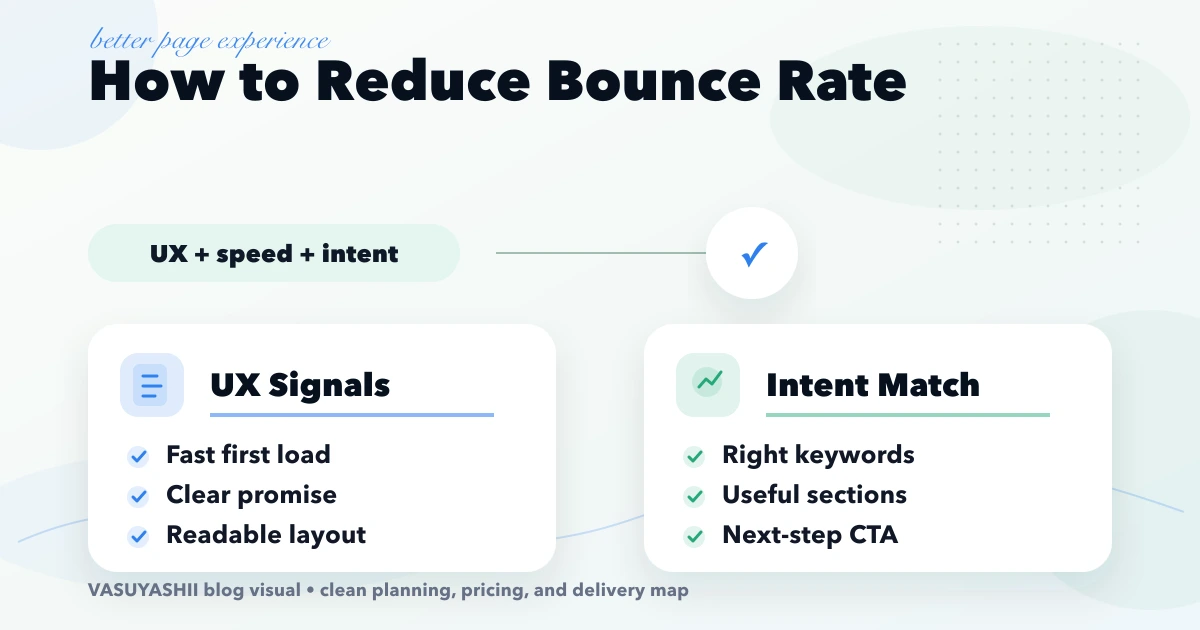
How to reduce bounce rate (UX + speed + intent)
How to reduce bounce rate (UX + speed + intent): practical guide with pricing, timeline, features, experience notes, FAQs, and next steps for Indian SMBs.
Read articleApril 30, 2026
Conversion rate optimization for service pages with copy, UX, trust, CTA, pricing, and implementation guidance for better leads in 2026.
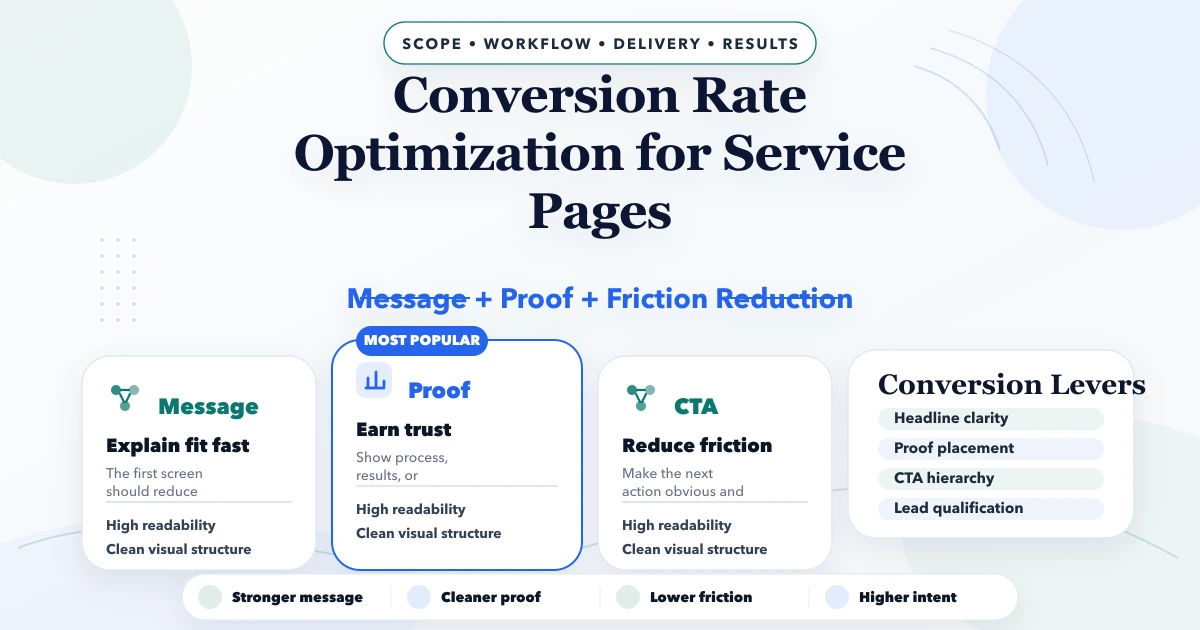
A strong guide on conversion rate optimization for service pages should help service business owners and marketing teams who already get traffic but need more calls, forms, and WhatsApp leads make better decisions with less guesswork. This is not just about theory. It is about how the SEO affects enquiries, conversions, trust, and long-term website performance when implemented on a real business website.
The fastest way to waste time is to copy generic best practices without checking intent, analytics, and buyer behaviour. The better approach is to understand where friction appears, what users need to see next, and which technical or content changes actually improve the outcome.
By Tushar C. (Founder, VASUYASHII). Reviewed by VASUYASHII Editorial for practical scope, pricing, implementation clarity, and local business relevance.
Conversion rate optimization for service pages is usually about clarity, trust, and friction reduction more than flashy design. If the page gets the right visitor but does not answer their doubt fast enough, conversion suffers.
| Scope | Price range | Timeline | | --- | --- | --- | | CRO audit for service pages | ₹15,000 to ₹45,000 | 3 to 7 days | | Copy + UX + tracking improvement | ₹45,000 to ₹1.2 lakh | 1 to 4 weeks | | Full service-page conversion rebuild | ₹1.2 lakh to ₹3 lakh+ | 4 to 8 weeks |
The important point is that this topic becomes more valuable when it is implemented with tracking and real business intent in mind. Otherwise it stays as content theory with little operational impact.
This topic matters because website performance is not only about ranking. It is about whether the right user sees the page, trusts the page, understands the page, and takes the next step. If one of those steps breaks, traffic alone does not create business value.
In practice, the page or SEO problem usually connects to other systems too. Contact flow, tracking, content structure, internal links, and owner reporting often influence whether the fix improves actual enquiries or just makes a dashboard look cleaner.
Once these basics are clear, improvement becomes more repeatable. You stop treating every issue like a random tactic and start treating the page or SEO setup like an operational system with inputs, outputs, and measurable quality.
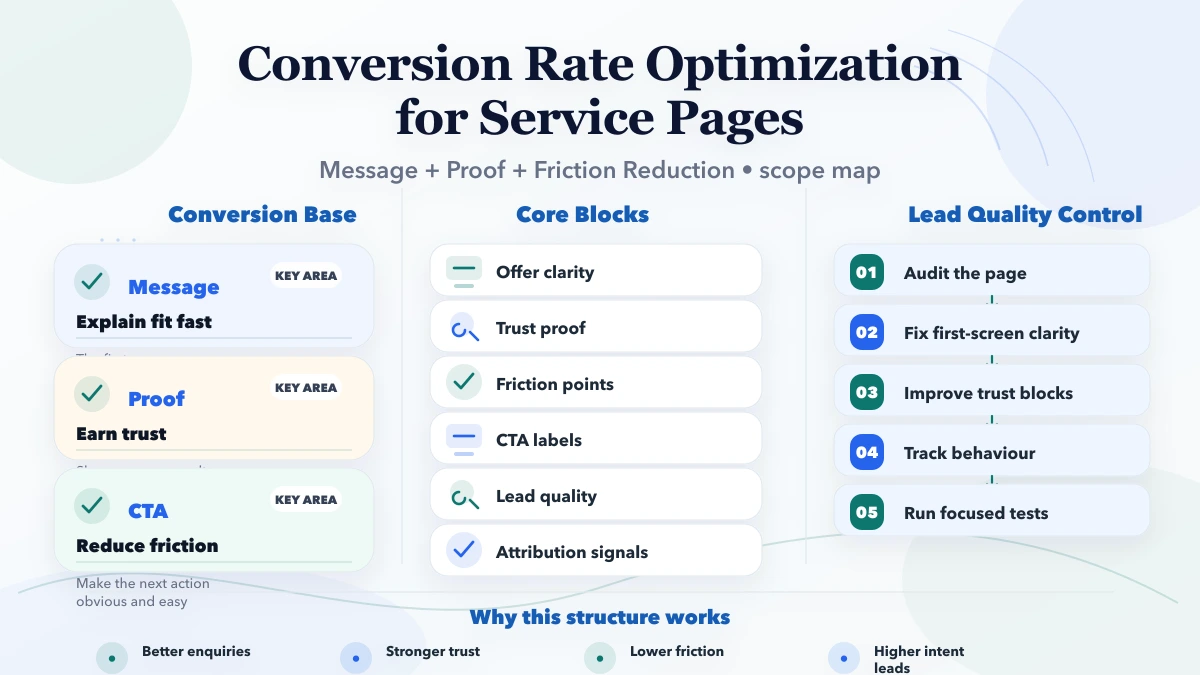
Pricing depends on whether the need is audit-only, implementation-only, or a wider content plus technical fix. Many teams underestimate the effort because the visible change looks small while the real work sits in structure, testing, copy, analytics, and technical cleanup.
| Scope | Price range | Timeline | | --- | --- | --- | | CRO audit for service pages | ₹15,000 to ₹45,000 | 3 to 7 days | | Copy + UX + tracking improvement | ₹45,000 to ₹1.2 lakh | 1 to 4 weeks | | Full service-page conversion rebuild | ₹1.2 lakh to ₹3 lakh+ | 4 to 8 weeks |
If the page is business-critical, it is usually smarter to scope the implementation properly than to keep making tiny isolated changes without a clear framework.
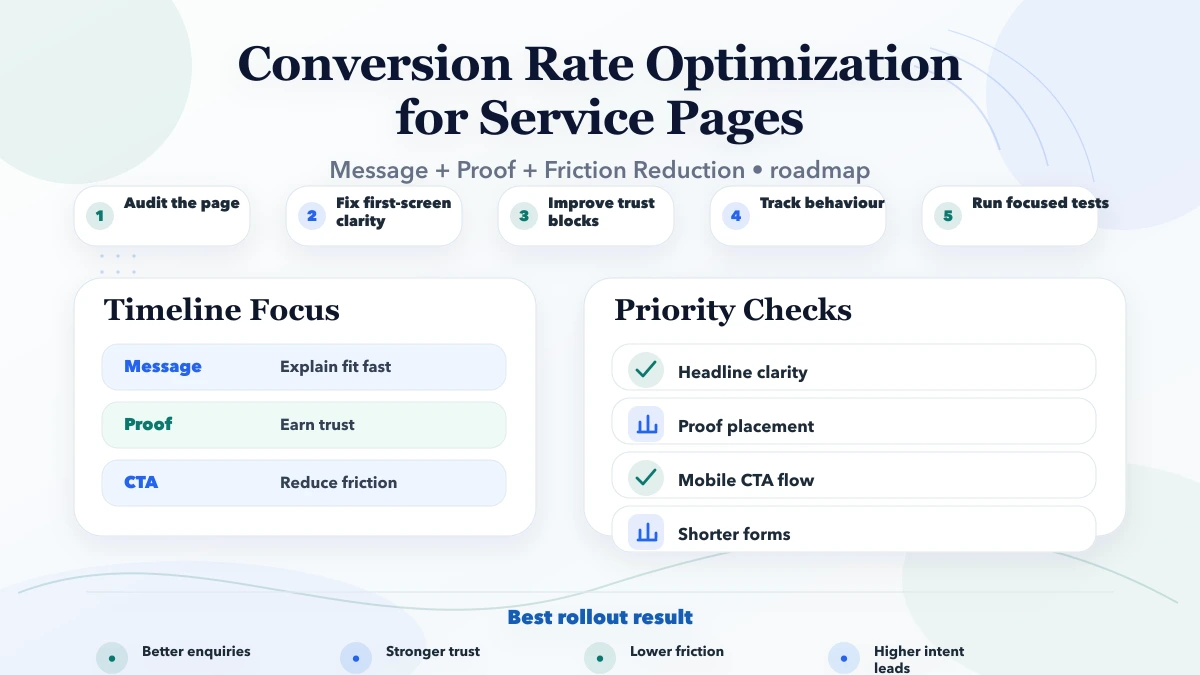
A good timeline keeps diagnosis, implementation, and validation separate. That matters because many websites “change” often but do not really “improve” because the team never checks whether the change solved the actual bottleneck.
The right tools do not replace thinking. They help teams see what is happening faster, fix it more safely, and measure whether the result actually improved conversion or visibility.
When these drivers are acknowledged early, implementation decisions become much more rational. The team can then prioritise based on business impact rather than chasing every idea at once.
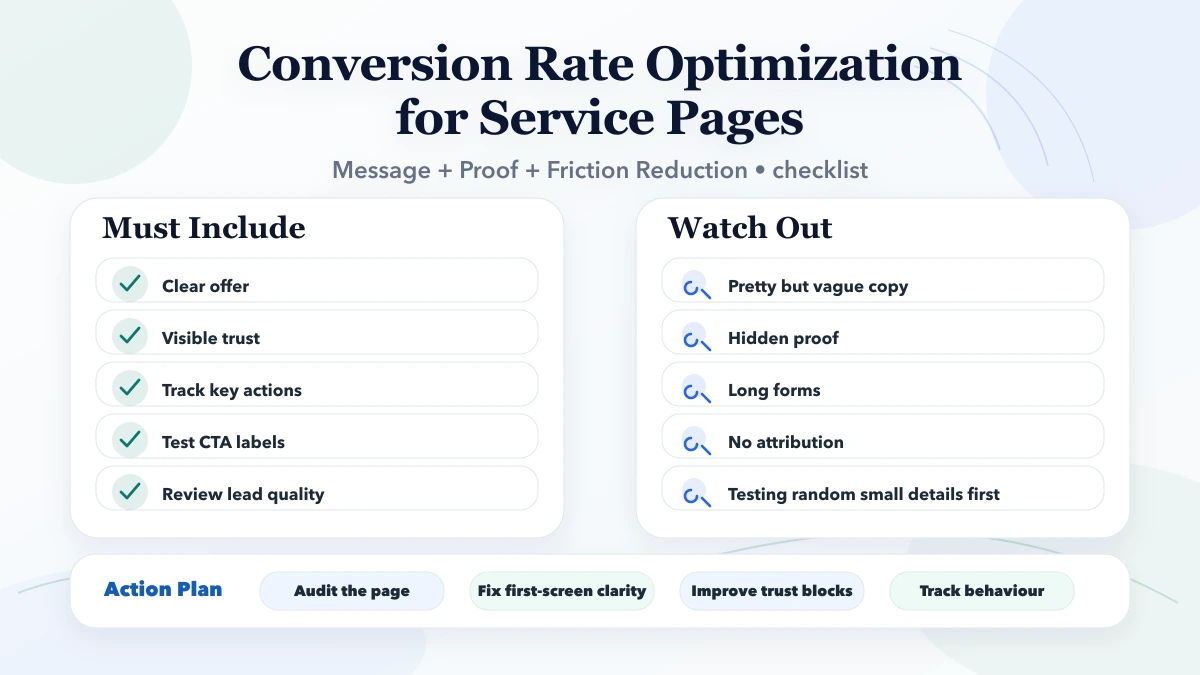
Service-page CRO should start with message clarity before design tweaks. First check whether the headline, subheading, and first CTA explain the offer clearly. Then review trust: does the page show proof, process, screenshots, results, or realistic delivery notes? After that, review friction: are forms too long, are CTAs vague, and does mobile layout make the page harder to use? Only once these basics are working should the team spend time on smaller visual experiments.
This audit order matters because many service pages lose leads in the first 20 seconds. If the visitor does not understand fit, outcome, and next step quickly, later improvements rarely compensate.
The first tests should be simple and high-signal. Try headline variations, CTA label changes, proof placement, shorter forms, and stronger first-screen positioning for WhatsApp or consultation actions. Test whether pricing guidance or timeline guidance reduces hesitation. For high-intent pages, an FAQ block near the CTA often helps because it answers objections without making users scroll back up.
Track changes through click events, form completion, WhatsApp clicks, and enquiry quality. A page with slightly fewer but better leads is often more useful than a page that inflates top-level conversions with poor-fit enquiries.
A successful CRO pass should improve not only clicks and form submissions, but also lead quality. Better service pages usually produce enquiries that are more specific, better informed, and easier for the sales team to qualify. That is a strong sign that the page is clarifying the offer instead of only attracting more low-intent traffic.
After optimisation, check whether the sales team is hearing fewer basic questions, whether visitors are choosing the right service more often, and whether WhatsApp or form conversations start with more context. Those are some of the clearest signs that CRO is actually helping the business.
Most underperformance comes from fragmented execution. The page, tracking, copy, technical layer, and user path must support each other.
If you want better results, do not start with a redesign or a tool purchase blindly. Start by documenting the current path: where the visitor lands, what they see, what they do next, and where the drop happens.
The first fix is usually clarifying the first screen: who the page is for, what result it promises, and what action the visitor should take next. Many service pages fail at that first job.
Yes. Trust signals often make the difference between a visitor leaving and a visitor contacting. Screenshots, process notes, proof, reviews, and realistic scope guidance matter a lot.
Sometimes. Even if exact pricing cannot be shown, ranges, scope examples, or implementation logic can reduce uncertainty and improve lead quality.
The best service pages usually need both. SEO brings the right visitor, and CRO helps that visitor convert. Treating them separately often creates pages that rank but do not generate business.
Yes. CTA placement, copy, and trust context affect WhatsApp leads strongly. Many pages get more qualified WhatsApp leads simply by reducing uncertainty before the click.
Some changes help immediately, but stronger insight comes after enough traffic and lead data is collected. CRO is usually iterative, not one final design change.
Measure CTA click rate, form completion, lead quality, booked calls, and service-page contribution to revenue. Surface-level metrics alone are not enough.
If you want this implemented properly instead of as another generic checklist, share the current website, traffic source mix, and business goal. We can then map the right fix, timeline, and rollout clearly.
Related Articles
April 18, 2026
How to reduce bounce rate (UX + speed + intent): practical guide with pricing, timeline, features, experience notes, FAQs, and next steps for Indian SMBs.
Read article
April 8, 2026
How to build landing pages for local SEO in 2026 without thin city spam: page structure, proof, internal links, and conversion essentials.
Read article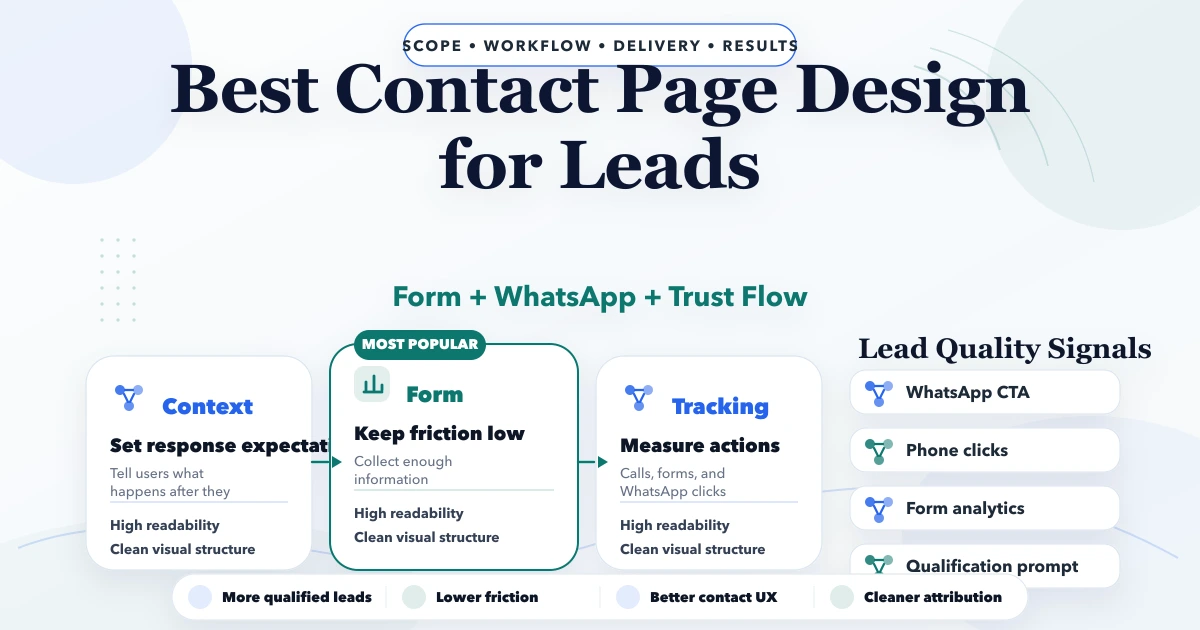
April 27, 2026
Best contact page design for leads with forms, trust blocks, WhatsApp, map choices, pricing, and CRO tips for Indian business websites.
Read article