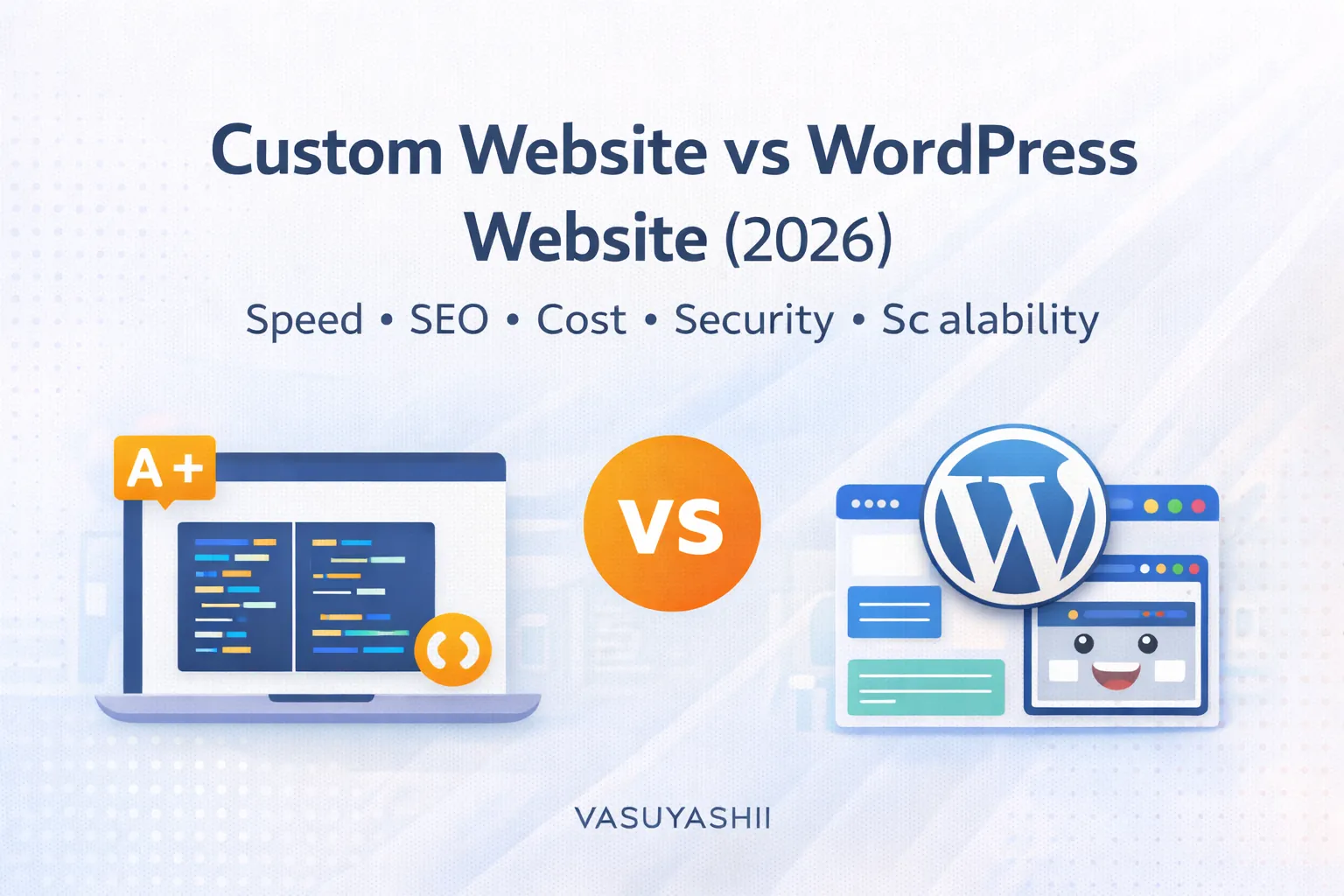
Custom Website vs WordPress Website (2026): Which One Is Best for Your Business?
If you’re confused between a custom website and a WordPress website, you’re asking the right question. In India, many businesses start with WordPress because it’s fast and budget-friendly. But as competition grows in 2026, businesses also want websites that are faster, more premium, more secure, and SEO-ready—and that’s where custom websites come in.
The truth is: WordPress is not “bad” and custom is not “always better.” The best choice depends on your goals:
- Do you want a quick basic website?
- Do you want high-speed performance + premium look?
- Do you want easy content editing without a developer?
- Do you want a platform that can later become a portal/dashboard?
This guide explains the difference in a practical way—so you can choose the right option without wasting money.
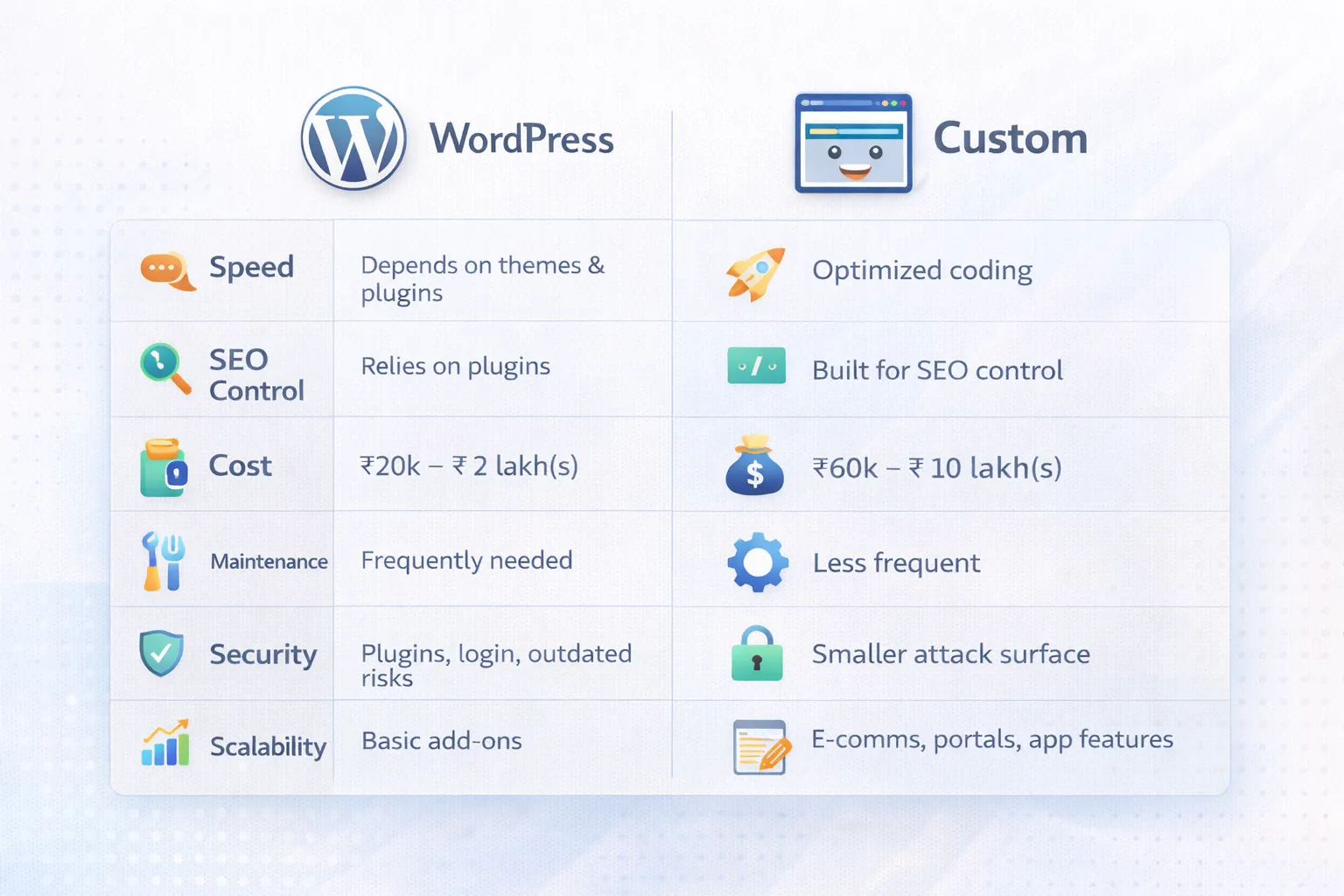
Quick Answer (If You Want a One-Line Decision)
✅ Choose WordPress if:
- you want a website quickly
- budget is limited
- you want to update pages/blog yourself
- the site is mostly informational (5–15 pages)
✅ Choose Custom Website if:
- you want premium UI/UX + best speed
- you care about long-term SEO growth
- you want advanced features later (portal, dashboards, automation)
- you don’t want plugin conflicts and security headaches
If you want a high-performance website or custom portal, see: Web Applications Services
What Is a WordPress Website?
WordPress is a CMS (Content Management System) where you build websites using:
- themes
- plugins
- page builders (Elementor, WPBakery, etc.)
It’s popular because it allows non-tech users to:
- edit pages
- publish blogs
- manage basic content easily
WordPress can be a great starting point—if built properly.
What Is a Custom Website?
A custom website usually means:
- custom UI/UX
- custom frontend code (often Next.js/React in 2026)
- optimized performance (Core Web Vitals)
- clean structure for SEO
Custom doesn’t mean “complicated.” It means:
- your site is built like a product, not like a plugin stack.
Custom websites are best when you want:
- speed
- premium feel
- scalable architecture
- freedom to add features later
1) Speed & Performance (Biggest Difference)
In 2026, performance matters because:
- faster websites convert better
- Google prefers fast pages (Core Web Vitals)
- users leave slow pages quickly
WordPress speed reality
WordPress speed depends on:
- theme quality
- page builder usage
- plugin load
- hosting quality
Many WordPress sites become slow because:
- too many plugins
- heavy page builders
- unoptimized images
Custom website speed reality
Custom Next.js/React websites can be extremely fast because:
- less unnecessary code
- better image handling
- caching + CDN support
- clean HTML output
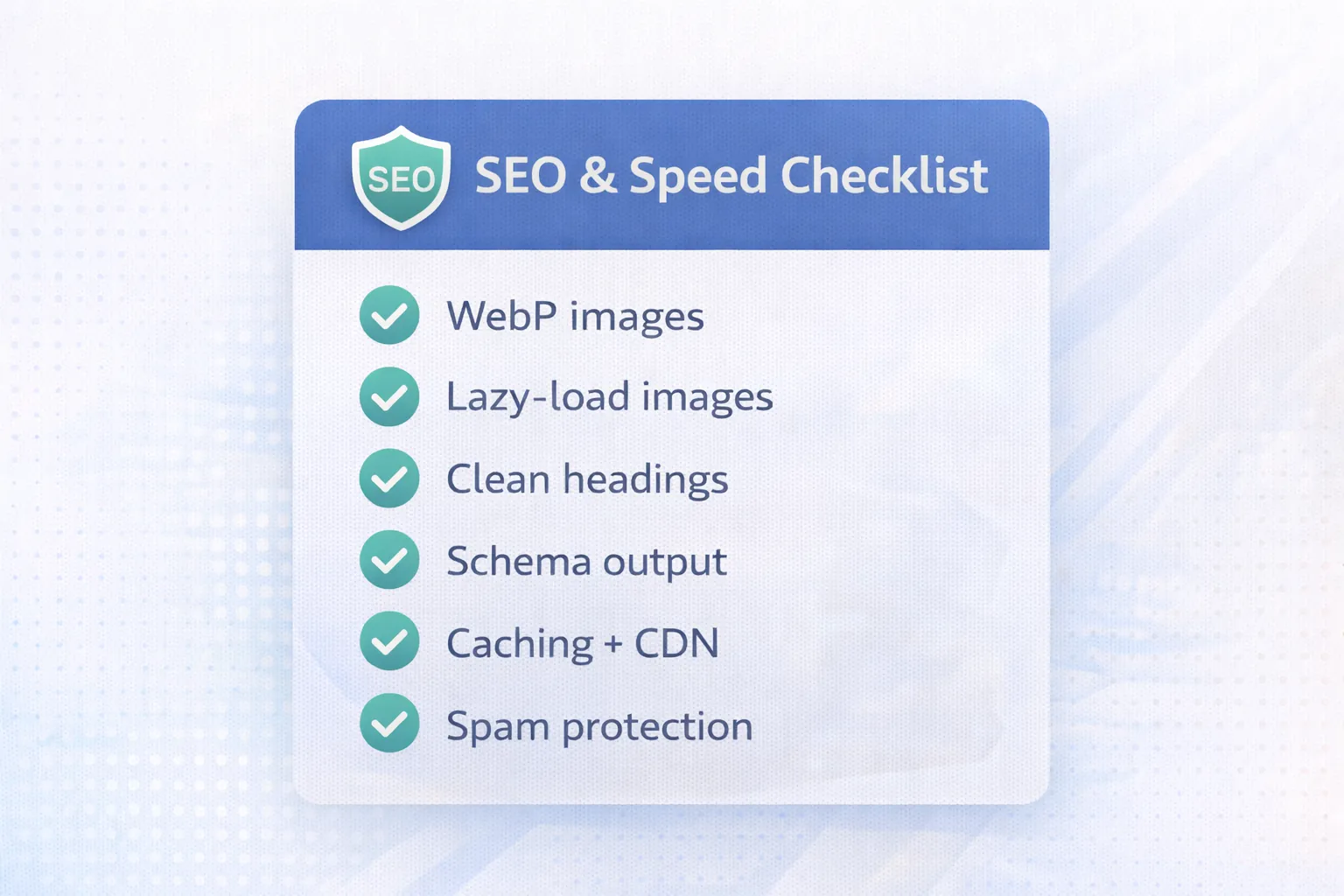
If you are targeting SEO + lead generation seriously, speed is a major advantage for custom websites.
2) SEO (Ranking on Google)
Both WordPress and custom websites can rank—but the approach differs.
WordPress SEO pros
- easy blogging
- plugins like RankMath / Yoast
- quick sitemap generation
WordPress SEO risks
- messy HTML output from page builders
- slow pages reduce rankings
- duplicate pages/tags/categories can create thin content
Custom website SEO pros
- clean headings (H1/H2/H3)
- faster load speed
- better control over schema, metadata, internal linking
- better technical SEO structure
Custom website SEO consideration
- you need a proper blog setup (MDX/CMS)
- content updates often require a developer unless CMS is added
If your plan is 3–4 SEO blogs daily, both can work. WordPress is easier to manage content-wise, but custom is stronger on performance + structure.
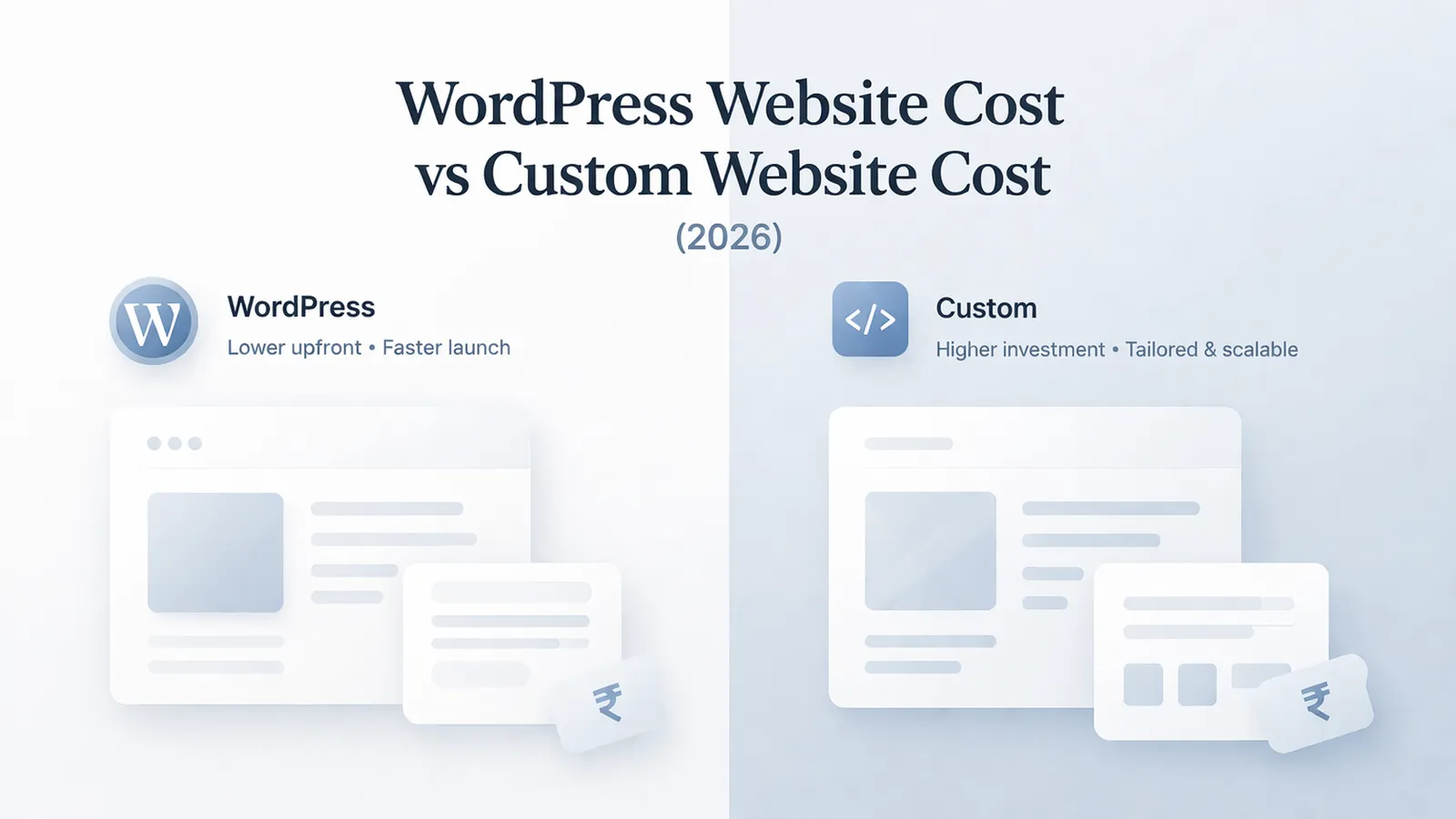
3) Cost Comparison in India (2026)
This is where most business owners decide quickly.
WordPress typical cost
- Basic business WP website: ₹20,000 – ₹80,000
- Premium WP + custom design: ₹80,000 – ₹2,00,000
Custom typical cost
- Custom business website: ₹60,000 – ₹2,50,000
- Custom with CMS + premium UI: ₹1,50,000 – ₹4,00,000
- Custom portal/dashboard: ₹1,50,000 – ₹10,00,000+
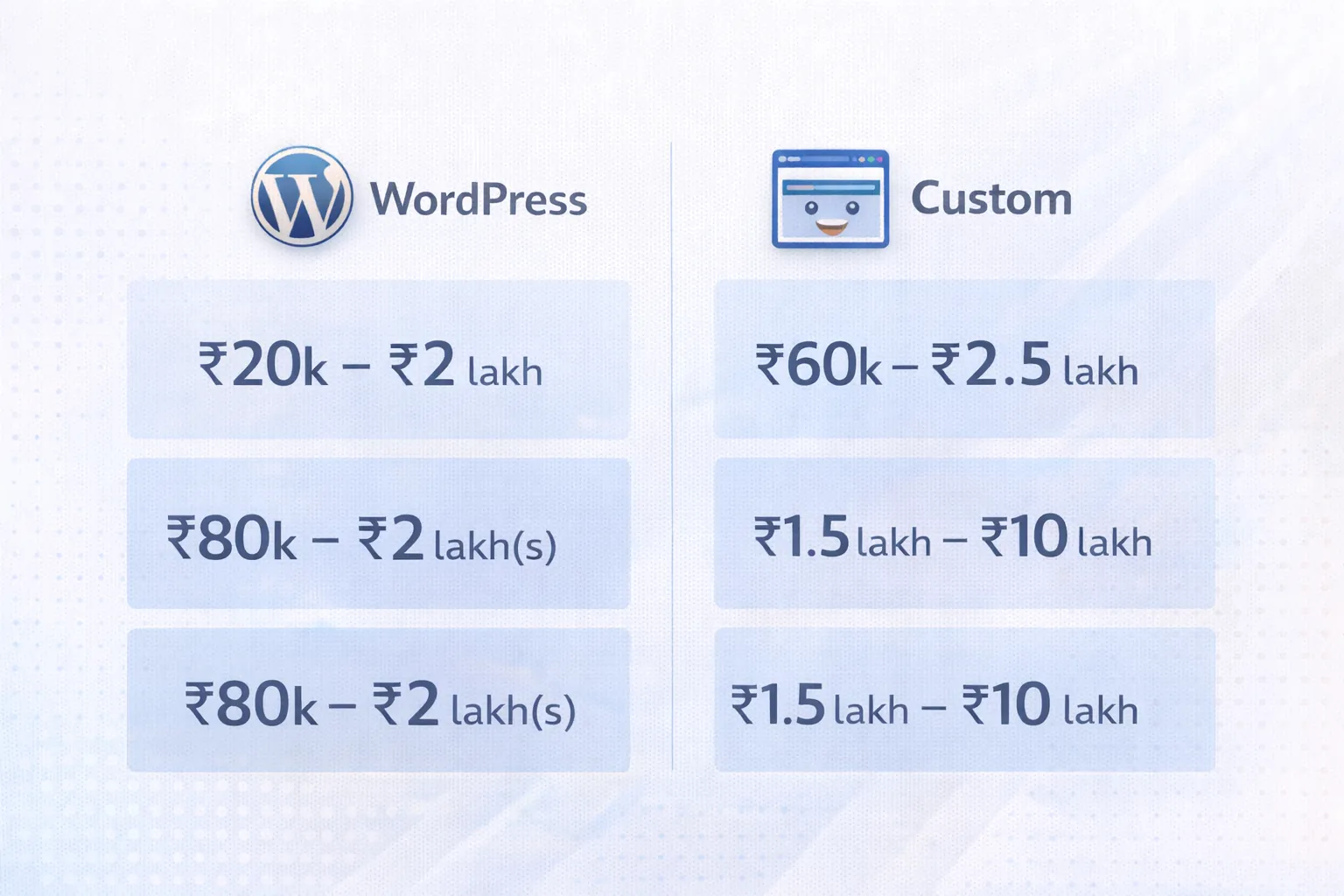
Reality: WordPress is usually cheaper to start, custom is usually better long-term for performance and scaling.
If you want detailed Indian pricing ranges, see our blog: Cost of Website Development in India (2026)
4) Maintenance & Long-Term Stability
WordPress maintenance
WordPress needs regular:
- plugin updates
- theme updates
- security patches
- backup management
Many WordPress sites break because:
- plugin conflicts after updates
- outdated plugins
- hacked admin panels
Custom website maintenance
Custom websites usually need:
- code updates occasionally
- dependency updates (less frequent)
- hosting renewal
But the structure is stable because:
- no plugin conflicts
- fewer moving parts
If you want “set it and forget it” stability, custom often wins—provided your codebase is clean.
5) Security
Security matters more in 2026 because bots and spam are increasing.
WordPress security risks
- login panel attacks
- vulnerable plugins
- outdated themes/plugins
WordPress can be secure, but it requires:
- good hosting
- security plugins
- limited plugins
- strong admin practices
Custom website security
Custom websites have a smaller attack surface because:
- no generic WP admin login page
- fewer third-party plugin vulnerabilities
If you collect leads on WhatsApp/forms and care about trust, security is a strong argument for custom.
6) Editing Content: Which One Is Easier?
WordPress wins here
Because it’s built for content editing.
If you want:
- your team to update pages
- publish blogs quickly
- edit images and text anytime
WordPress is easier.
Custom website content editing
Custom sites can also be easy—if you add a CMS like:
But without a CMS, edits often need a developer.
If you’re publishing daily blogs, either:
- use WordPress
- or use custom website with CMS/MDX workflow (like your current setup)
7) Scalability: Can You Build Bigger Features Later?
This is the biggest long-term decision factor.
WordPress scalability
You can add:
- forms
- landing pages
- basic ecommerce
But building true portals (dashboards, roles, automation) becomes messy with plugins.
Custom scalability
Custom websites can evolve into:
- web applications
- dashboards
- admin panels
- portals
- automation systems
If your business plan is to build tools like:
- school/hotel systems
- restaurant ordering
- business automation
Custom is the right foundation.
You can also show demos like:
Decision Guide (Choose in 30 seconds)
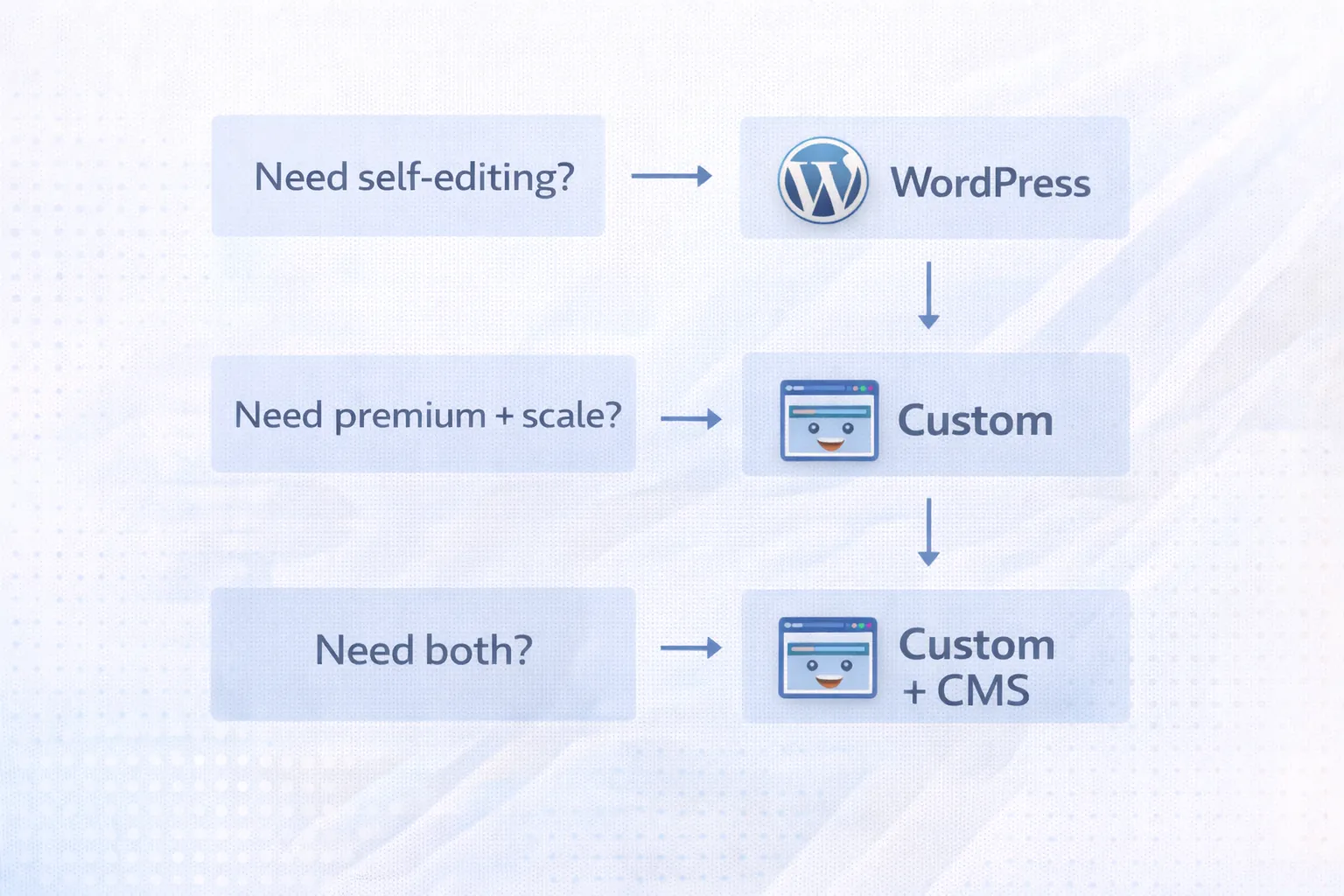
Choose WordPress if:
- your website is mainly informational
- you want self-editing
- you want fast launch
- budget is limited
Choose Custom if:
- you want premium look & best speed
- you want strong long-term SEO
- you want future portal/app features
- you want stability without plugin issues
Best Hybrid Option (Most Businesses Should Do This)
In 2026, many businesses choose a hybrid approach:
✅ Custom website + CMS
- premium UI/UX
- fast performance
- easy editing like WordPress
- scalable for future features
This gives you the best of both worlds.
If you want this type of setup, explore: Web Applications Services
What We Recommend for Delhi / Noida / Ghaziabad Businesses
If you’re in Delhi NCR and want leads:
- WhatsApp CTA
- fast mobile performance
- SEO-ready structure
- portfolio proof
A premium custom site usually converts better for service businesses.
You can also showcase work:
Final Recommendation (Simple)
- If you want a good website fast + you want to manage content yourself → WordPress
- If you want a premium website that ranks + scales into apps/portals → Custom
- If you want both (best choice) → Custom + CMS
Need Help Choosing the Right Website?
If you tell us your business type and goals, we can recommend the best option (WordPress, custom, or hybrid) and give you a clear roadmap.
👉 WhatsApp: Chat on WhatsApp 👉 Services: Web Applications Services 👉 Portfolio: View our work 👉 Contact: Contact page
FAQs
1) Is WordPress good for SEO in 2026?
Yes, if built properly with fast hosting and minimal plugins. But custom websites often have an edge in speed and clean structure.
2) Which is cheaper: WordPress or custom website?
WordPress is usually cheaper to start. Custom is usually more expensive initially but can be better long-term.
3) Can a WordPress website be fast?
Yes, but it requires good hosting, a lightweight theme, minimal plugins, and optimized images.
4) Can a custom website be edited easily?
Yes—if you add a CMS (Sanity/Strapi/Contentful). Without CMS, edits require a developer.
5) Which is better for lead generation?
Both can work. But custom websites often convert better because they can be faster and more premium on mobile.