
April 18, 2026
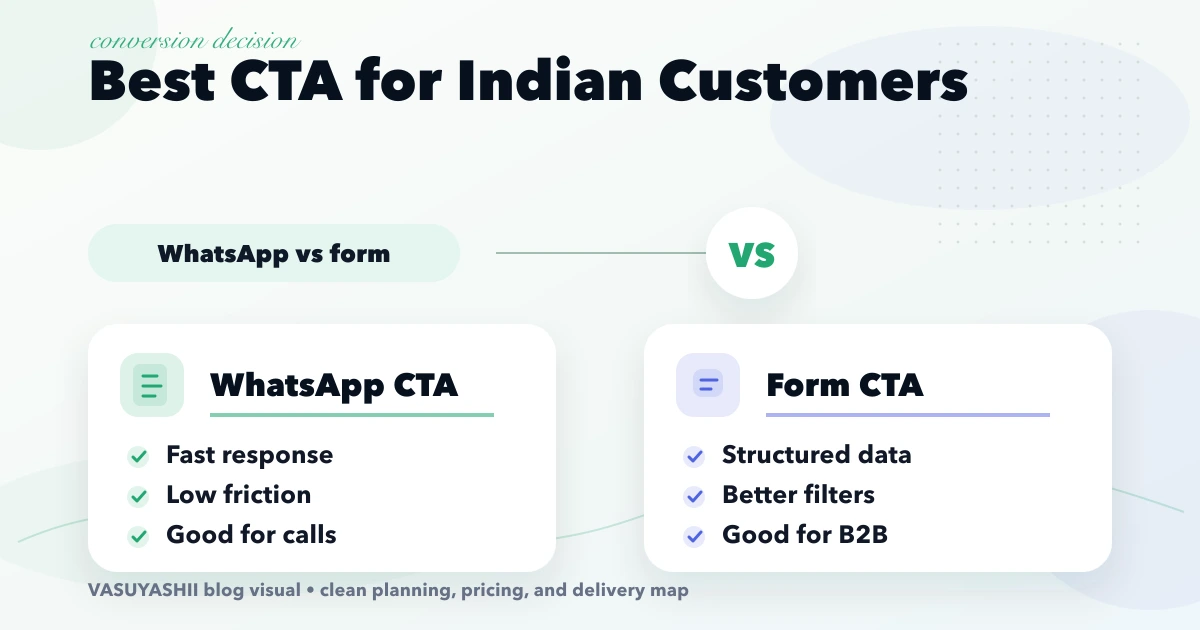
Best CTA for Indian customers (WhatsApp vs form)
Best CTA for Indian customers (WhatsApp vs form): practical guide with pricing, timeline, features, experience notes, FAQs, and next steps for Indian SMBs.
Read articleApril 7, 2026
Ecommerce order flow optimization guide: cart, checkout, payment, key friction points, metrics, and practical fixes for higher conversions.
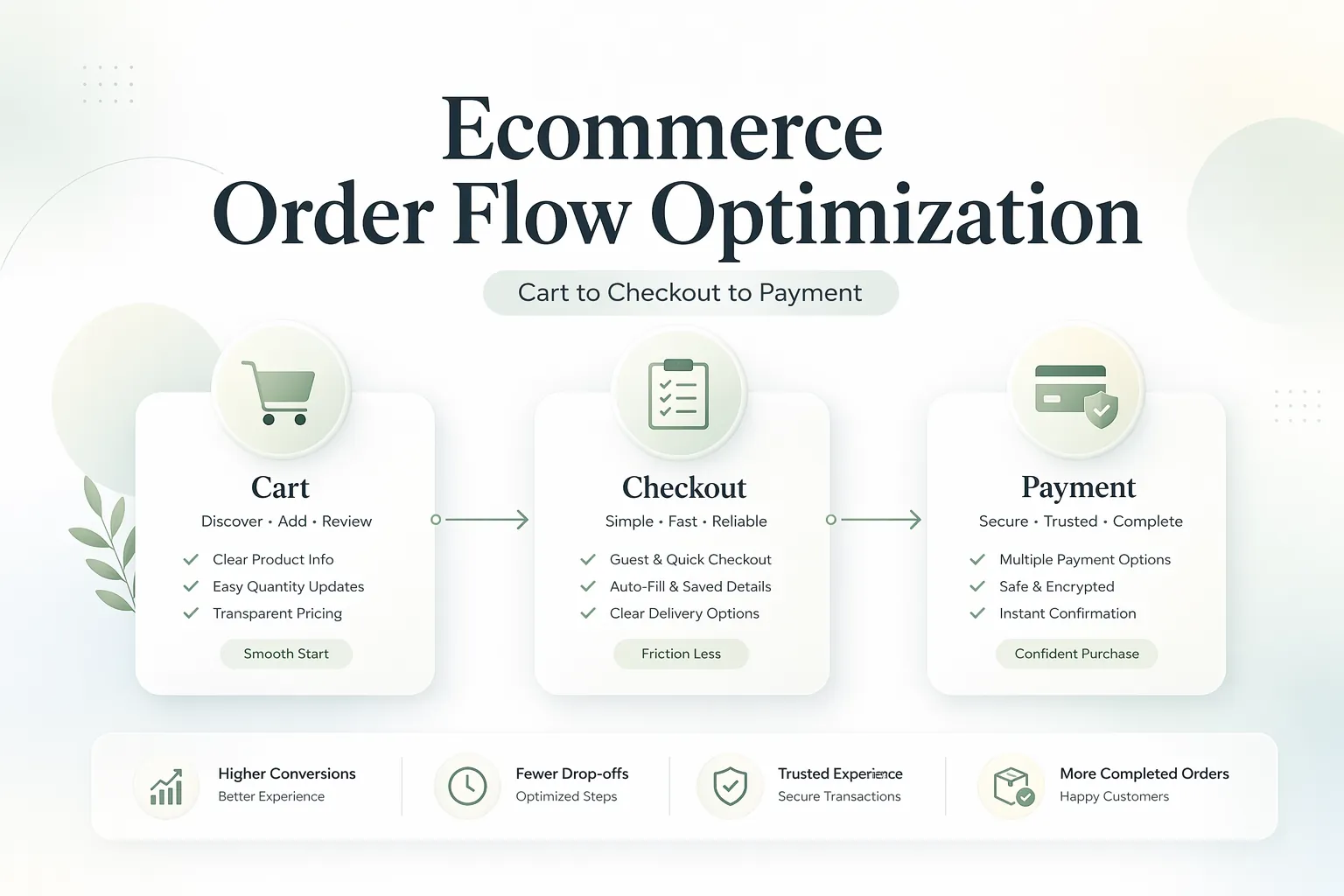
Many ecommerce stores lose revenue in the same place: after product interest is already there. The user adds to cart, starts checkout, and then disappears. That usually means the store does not have a traffic problem first. It has an order-flow problem.
Order flow optimization is not only about design polish. It is about removing friction between cart, address collection, shipping clarity, payment confidence, and order confirmation. Small issues in these steps create major conversion loss.
This guide explains how to optimize the ecommerce flow from cart to payment, what metrics to track, and which fixes usually create the fastest impact.
The highest-impact ecommerce flow improvements usually come from:
Do not try to fix checkout only by changing button color. In many stores, the real issues are hidden in delivery surprises, weak trust signals, payment friction, or unclear validation errors.
The common leak points are:
On desktop, users tolerate more friction. On mobile, even small delay or confusion can kill the purchase. That is why order flow optimization should be tested mobile-first.
Related reading:
The cart should clearly show:
If the user reaches checkout and suddenly sees extra charges, drop-off risk rises fast.
Remove or control distractions such as:
Cross-sell is useful only if it does not interrupt the purchase path.
The cart should guide users clearly to the next step. Weak CTA visibility creates hesitation.
Ask only what is necessary for order fulfillment. Long forms create fatigue.
Forced account creation is still a major conversion killer for many stores.
Good checkout UX includes:
Important reassurance blocks:
Payment friction is often treated as a gateway problem only. In reality, it can also come from weak communication before the payment step.
If payment fails, the store should not simply drop the customer. There should be:
Track the order flow as events, not as one final sale only.
Useful checkpoints:
That event visibility tells you where the actual drop-off is happening.
Typical custom optimization scope:
₹15,000 to ₹35,000₹35,000 to ₹90,000₹90,000 to ₹2.5 lakh+Timeline:
3 to 5 days for audit1 to 2 weeks for targeted improvements2 to 5 weeks for broader checkout and payment changes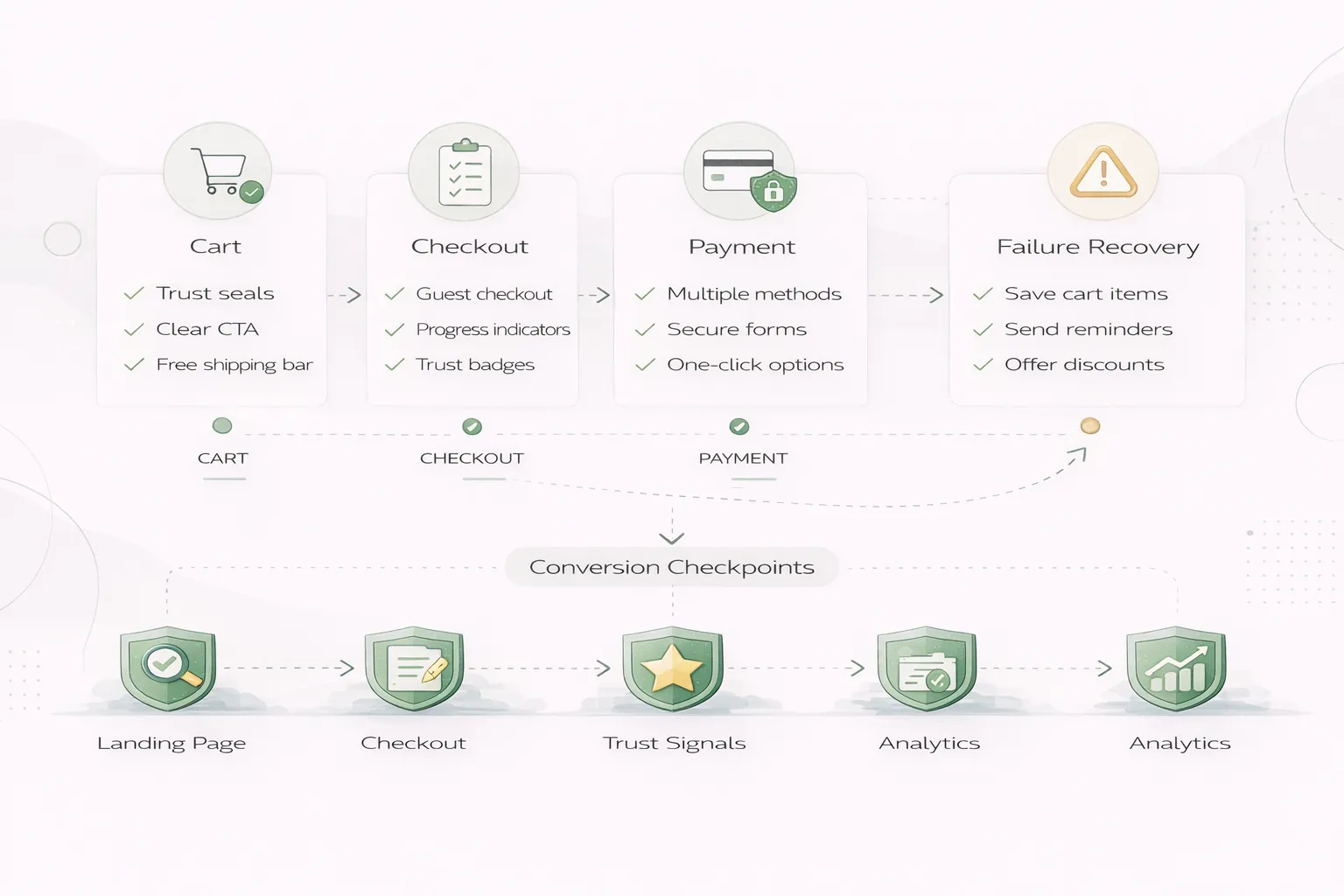
If your ecommerce store gets traffic but checkout conversion feels weak, do not redesign everything first. Map the exact drop-off points from cart to payment. That is where the real gain usually sits.
Usually the cart-to-checkout transition and the clarity of final payable cost.
No. Often it is a UX, pricing clarity, or payment confidence issue.
In many stores, yes. Forced account creation adds friction.
If COD is part of the offering, yes. Users should know it before the last step.
Start by comparing add-to-cart, begin-checkout, payment-start, and purchase completion.
Sometimes. They can encourage users to leave and search for discounts.
Simple improvements can start in days. Deeper checkout changes take longer.
Not automatically. It depends on clarity, speed, and mobile usability.
If your store already gets traffic but the order journey feels leaky, the right move is to audit cart, checkout, payment, and tracking together instead of treating them as separate issues.
Related Articles
April 18, 2026
Best CTA for Indian customers (WhatsApp vs form): practical guide with pricing, timeline, features, experience notes, FAQs, and next steps for Indian SMBs.
Read article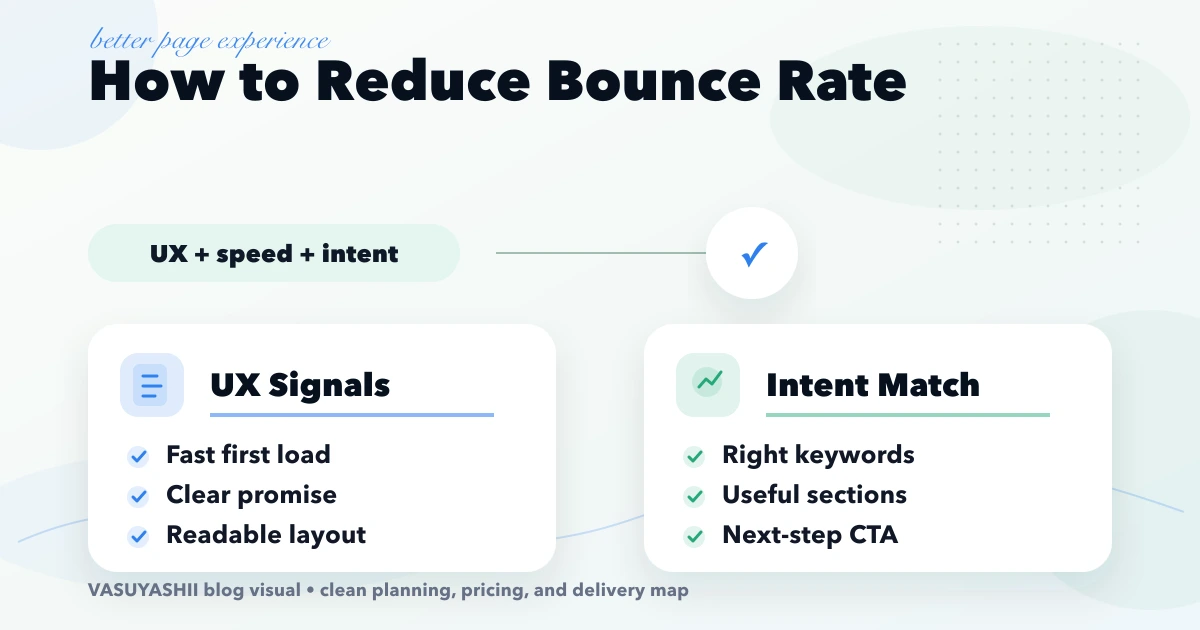
April 18, 2026
How to reduce bounce rate (UX + speed + intent): practical guide with pricing, timeline, features, experience notes, FAQs, and next steps for Indian SMBs.
Read article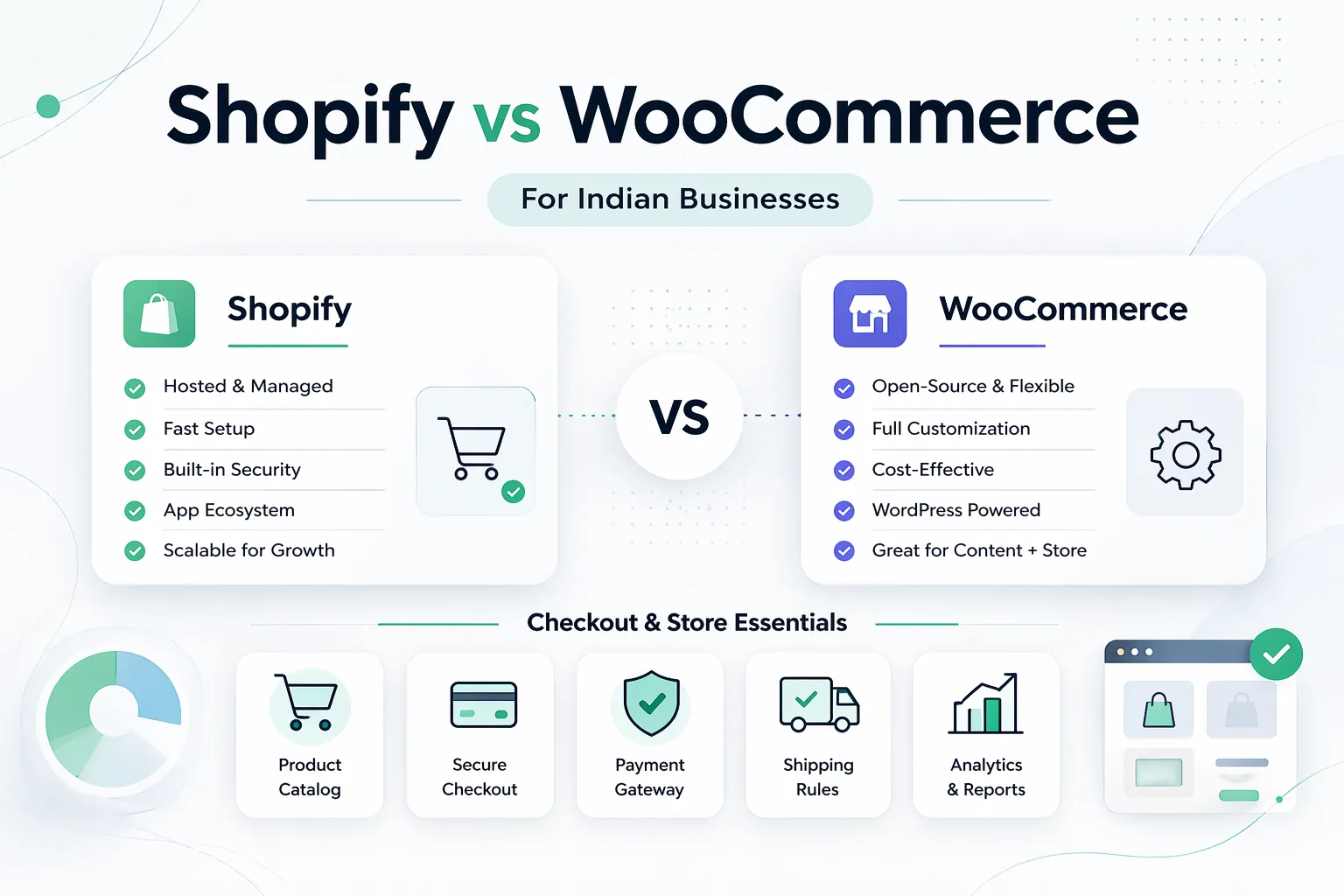
April 7, 2026
Shopify vs WooCommerce for Indian businesses in 2026: pricing, control, costs, operations, and which platform fits your growth stage.
Read article