Ecommerce Website Developer in Delhi NCR (2026): Packages, Setup, and What to Launch First
Delhi NCR has no shortage of ecommerce developers, agencies, freelancers, and low-package offers. But most store owners are not actually looking for code in isolation. They want a store that can load fast, look trustworthy, handle products properly, and turn traffic into real orders.
That is why choosing an ecommerce website developer should not start with theme screenshots only. It should start with the business model. Are you launching D2C? Are you selling a limited catalog? Are you handling custom pricing, wholesale, subscriptions, COD, or city-based delivery? The answers change the project.
This guide explains what ecommerce developers in Delhi NCR usually offer, what realistic packages look like in 2026, how setup should happen, and which features matter most in phase one.
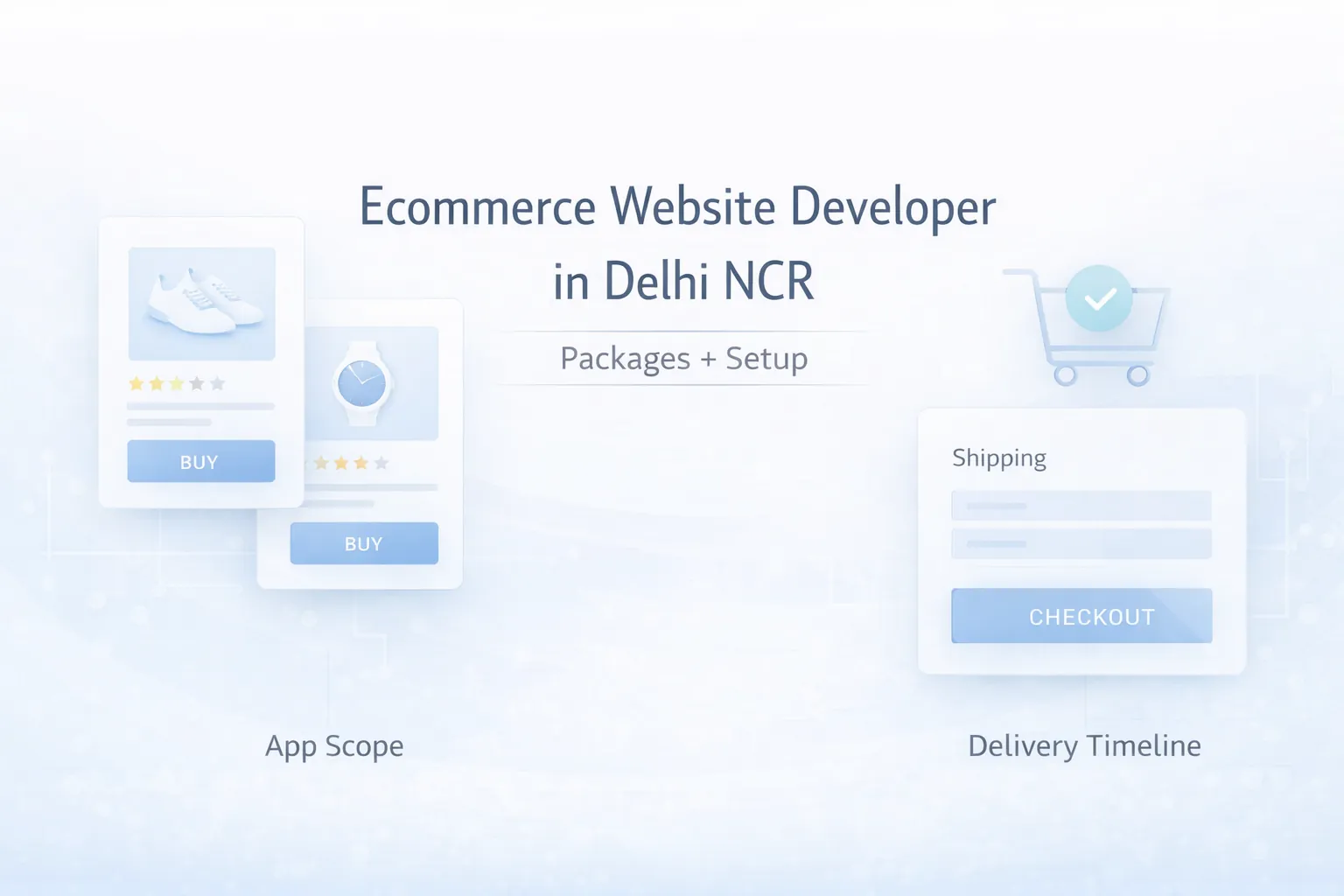
Table of Contents
- Quick answer
- Who needs which type of ecommerce setup
- Features
- Packages in Delhi NCR
- Setup process
- Tech stack
- Timeline
- Cost drivers
- FAQs
Quick Answer
The right ecommerce developer is the one who can match store architecture to your business stage. A small catalog brand does not need the same build as a multi-category, multi-role commerce platform.
Typical 2026 ranges:
- basic branded store:
₹25,000 to ₹70,000 - growth ecommerce website:
₹70,000 to ₹2 lakh - advanced custom ecommerce build:
₹2 lakh to ₹8 lakh+
The best first launch usually includes product catalog, payment, shipping setup, mobile-first UX, and conversion basics before adding complex features.
Who Needs Which Type of Ecommerce Setup
Not every store should start the same way.
Small catalog brands
If you sell 10 to 100 products, the goal is clarity and conversion. You need speed, product detail quality, trust elements, and checkout simplicity more than complicated feature depth.
Growth D2C stores
If you expect ads, repeat traffic, offers, or category expansion, you need stronger collection pages, analytics, filters, and backend hygiene from the start.
Wholesale or hybrid businesses
If you need MOQ rules, role-based pricing, request quotes, or B2B plus B2C, a basic plug-and-play setup may not be enough. This is where custom work begins to matter.
Service plus product businesses
Some NCR businesses sell services and products together. In that case, the developer should think about content SEO and lead flow as well, not only cart features.
Related reading:
Features
These are the features that matter most in a practical ecommerce launch.
- Homepage structure: hero, categories, featured products, trust, and offers
- Collection and category pages: clean sorting, filtering, and product discovery
- Product detail pages: photos, pricing, variants, delivery info, and purchase trust
- Cart and checkout: minimal friction, COD clarity, and secure payment flow
- Admin product management: easy updates for price, stock, and categories
- Coupons and offers: useful for launch campaigns and retention
- Shipping and tax setup: especially important for Indian operations
- Mobile optimization: most buyers browse and compare on phones first
- Analytics and tracking: GA4, purchase events, funnel visibility, and ad readiness
- WhatsApp or support flow: helpful for high-consideration purchases
Useful phase-two features
Wishlists, subscriptions, advanced personalization, loyalty, abandoned cart automations, review systems, and wholesale modules can come later.
Packages in Delhi NCR
Packages are useful only when scope is clear. Here is a practical benchmark.
Starter ecommerce package
₹25,000 to ₹70,000
Best for:
- low to moderate product count
- one payment setup
- standard product pages
- essential policy and trust pages
Growth ecommerce package
₹70,000 to ₹2 lakh
Best for:
- stronger brand presentation
- better mobile UX
- analytics setup
- shipping, tax, offers, and conversion improvement
- better admin workflow
Advanced custom ecommerce build
₹2 lakh to ₹8 lakh+
Best for:
- custom catalog logic
- B2B or wholesale features
- ERP, inventory, or CRM integrations
- role-based pricing
- large-scale operational requirements
What changes price the most
- number of products and variant logic
- CMS or platform choice
- custom design depth
- shipping and payment complexity
- integrations and reporting
- custom checkout or role logic
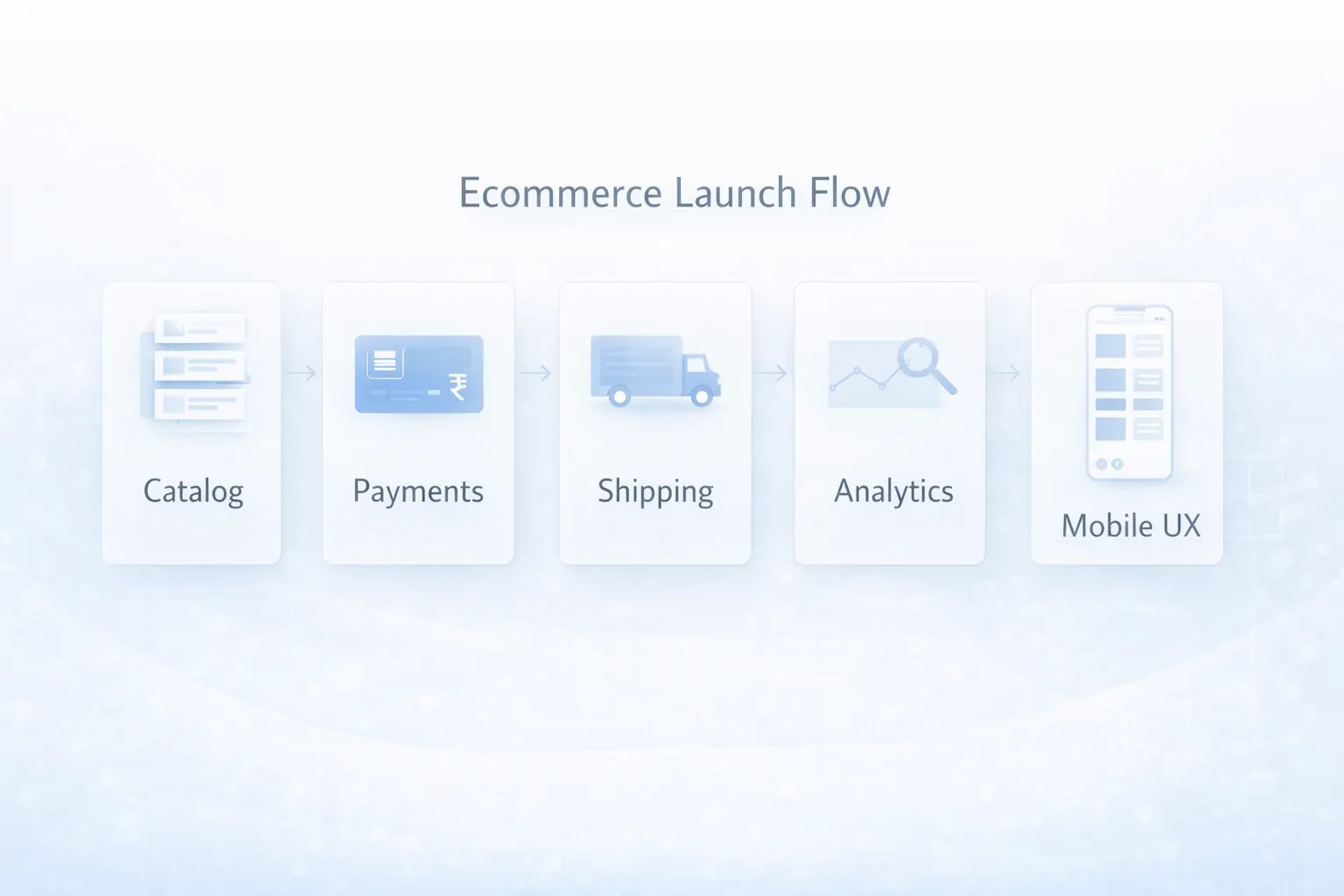
Setup Process
An ecommerce project should not begin with theme selection only. The right process starts earlier.
1. Store structure planning
The developer should understand your categories, catalog size, product data quality, shipping logic, and what kind of buyers you expect.
2. Platform decision
Depending on the project, this could be Shopify, WooCommerce, or a custom stack. The right answer depends on operations, not trend alone.
3. Product and content preparation
Images, titles, descriptions, SKU logic, pricing, policies, and shipping details should be prepared properly. Weak content slows every launch.
4. Design and build
This stage includes layout, collection structure, product detail behavior, checkout support, and tracking setup.
5. Payment, shipping, and testing
Orders should be tested end-to-end before launch. Many ecommerce projects fail at this boring but important step.
6. Launch and optimization
A store is not really finished at launch. Data from the first users usually shows what needs to improve next.
Soft CTA
If you are about to launch an online store, the smartest move is to lock your product structure, payment flow, and growth priorities before development starts.
Tech Stack
The right stack depends on whether you want speed to launch or deeper customization.
- Shopify: excellent for faster D2C launches and smoother store management
- WooCommerce: useful when WordPress familiarity and content flexibility matter
- Custom stack:
Next.js, Node.js, and PostgreSQL for more tailored commerce workflows - Payments: Indian payment gateway integration with order status support
- Analytics: GA4, purchase tracking, funnel tracking, and ad-event readiness
- Image optimization: critical for mobile speed and product browsing
- CRM or support hooks: useful for high-consideration products and repeat leads
Timeline
Launch timeline depends heavily on how ready your product data and decisions are.
- Week 1: catalog, platform, pages, and policy planning
- Week 2: UI direction and content organization
- Week 3 to 4: store build, product setup, and payment integration
- Week 5: shipping rules, QA, and analytics setup
- Week 6: launch preparation and first optimization pass
Basic stores move faster. Custom logic or large catalogs take longer.
Cost Drivers
The biggest ecommerce budget drivers are:
- product count and image workload
- variants and category depth
- platform choice
- custom design vs theme adaptation
- shipping and COD logic
- multi-language or multi-city rules
- integrations with inventory, ERP, or CRM
- custom checkout or quote flows
A very common mistake is trying to make version one support every future business model. That slows launch and weakens focus.
What to Launch First
Phase one should answer one question clearly: can users browse, trust, and buy smoothly?
Launch priorities
- fast mobile browsing
- clean product detail pages
- reliable payments
- basic shipping clarity
- WhatsApp or support option
- analytics and conversion tracking
Features you can add later
- subscription plans
- advanced bundles
- loyalty systems
- custom recommendations
- complex vendor dashboards
- multi-role B2B access
FAQs
How much does an ecommerce website cost in Delhi NCR?
It can start around ₹25,000, but serious branded stores usually fall in the ₹70,000 to ₹2 lakh range depending on scope.
Which is better: Shopify, WooCommerce, or custom?
There is no single answer. Shopify is fast for many D2C stores, WooCommerce works well for content-heavy stores, and custom is better for unusual workflows.
How long does it take to launch?
Many standard stores can launch in 4 to 6 weeks if the product data is ready.
Can I start with a smaller package and scale later?
Yes, and that is often the smartest way to launch.
What matters more: design or backend setup?
Both matter, but poor product structure, payments, or tracking will hurt growth faster than minor design differences.
Do I need GA4 from day one?
Yes. You should know which pages users view, where they drop, and which channels generate actual orders.
Should an ecommerce developer also help with setup decisions?
Yes. A strong developer or agency should guide platform choice, catalog logic, and rollout priorities.
What is the biggest launch mistake?
Rushing design while ignoring product data quality, mobile speed, and testing.
Related Reading
Need an Ecommerce Developer in Delhi NCR Who Understands Growth Too?
If you want an online store that is not only live but also easier to scale, the project should start with the right platform choice, clean setup, and a conversion-focused launch plan.