
May 1, 2026
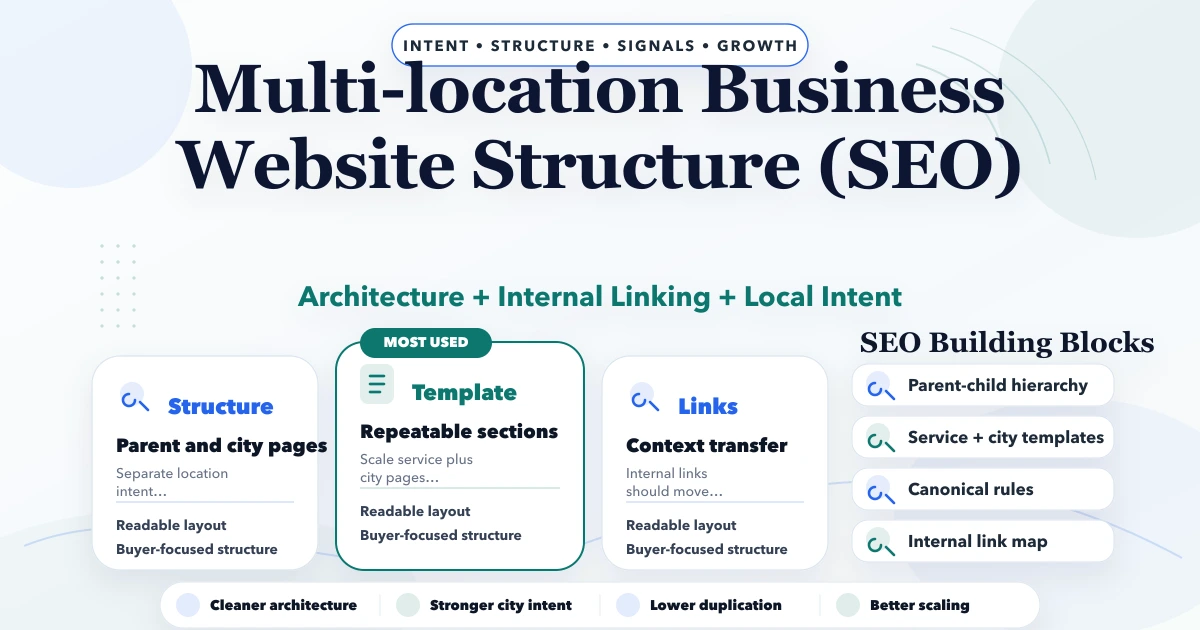
Multi-location Business Website Structure (SEO)
Multi-location business website structure for SEO: city-page architecture, internal links, canonicals, content rules, and rollout plan for 2026.
Read articleMay 2, 2026
Franchise website SEO strategy with branch pages, local proof, governance, internal links, and rollout planning for multi-location brands in 2026.
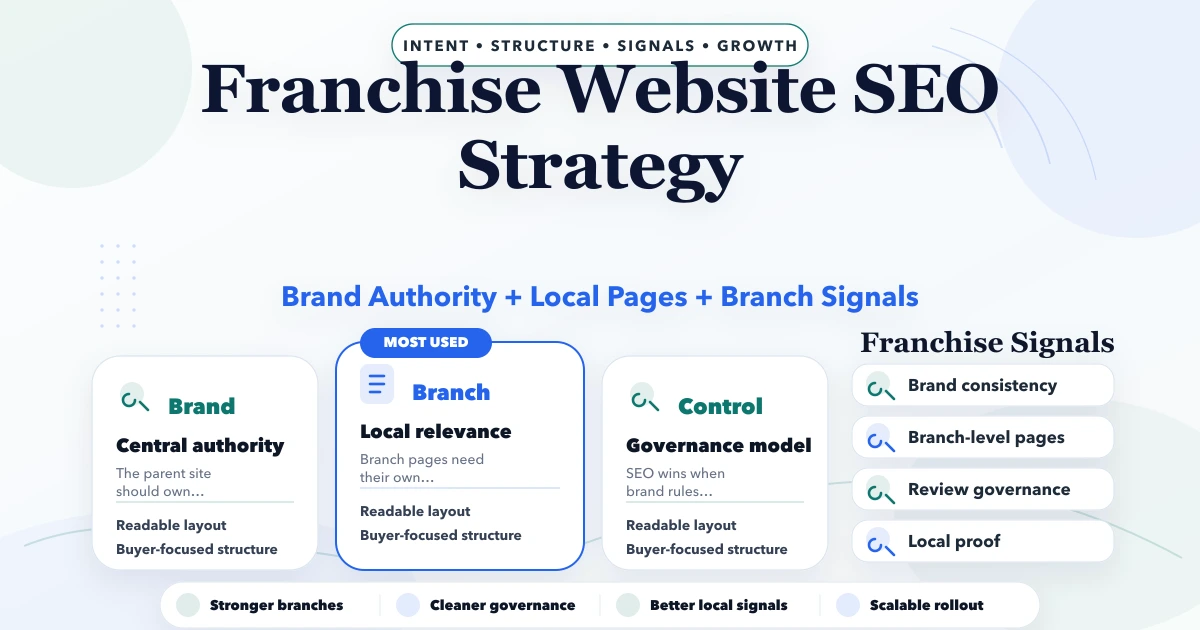
A franchise website SEO strategy is for multi-branch brands, education centres, food chains, retail franchises, and service networks that need both central brand authority and local branch visibility. The challenge is not getting one page to rank. The challenge is helping the brand site, branch pages, and local signals work together without becoming disorganised or spammy.
Franchise SEO fails when every branch behaves like a separate website without structure. It also fails when the parent site tries to own every local keyword without giving branches enough trust signals. The right strategy creates brand-level control and branch-level relevance at the same time.
By Tushar C. (Founder, VASUYASHII). Reviewed by VASUYASHII Editorial for practical scope, pricing, implementation clarity, and local business relevance.
For most businesses, the right approach is not to overbuild the first release. The stronger move is to define a clear first phase, remove the biggest friction points, and launch with proof, structure, and tracking in place. That keeps scope realistic, improves adoption, and makes later SEO or conversion work far easier.
| Scope | Price range | Timeline | | --- | --- | --- | | Franchise SEO audit | ₹35,000 to ₹90,000 | 1 to 2 weeks | | Branch-page structure rollout | ₹90,000 to ₹2.8 lakh | 3 to 8 weeks | | Franchise SEO system + reporting | ₹2.8 lakh to ₹6 lakh+ | 8 to 16 weeks |
Franchise brands need clearer governance than single-location businesses. Branch managers often want local visibility quickly, while the brand team wants consistency, trust, and central control. If the website is not structured for both, the SEO setup becomes fragmented.
The business impact is real. Poor branch-page structure weakens enquiry quality, creates duplicate content, and makes reviews, calls, and form leads harder to route properly. A cleaner structure improves visibility, buyer trust, and operational clarity together.
Good execution here usually improves both SEO and conversion because the website stops behaving like a brochure and starts behaving like a serious business asset. The biggest improvement usually comes from clarity: clear messaging, clear proof, clear routing, and clear review discipline.
Pricing changes based on how much structure, proof, tracking, content work, and post-launch refinement the business actually needs. Two websites or SEO projects can sound similar at the title level but involve very different effort once page quality, stakeholder review, tracking, and content depth are included.
| Scope | Price range | Timeline | | --- | --- | --- | | Franchise SEO audit | ₹35,000 to ₹90,000 | 1 to 2 weeks | | Branch-page structure rollout | ₹90,000 to ₹2.8 lakh | 3 to 8 weeks | | Franchise SEO system + reporting | ₹2.8 lakh to ₹6 lakh+ | 8 to 16 weeks |
The practical way to budget is phase-wise. Define what must go live first, what supports SEO later, and what should only be built once real user behaviour gives better input.
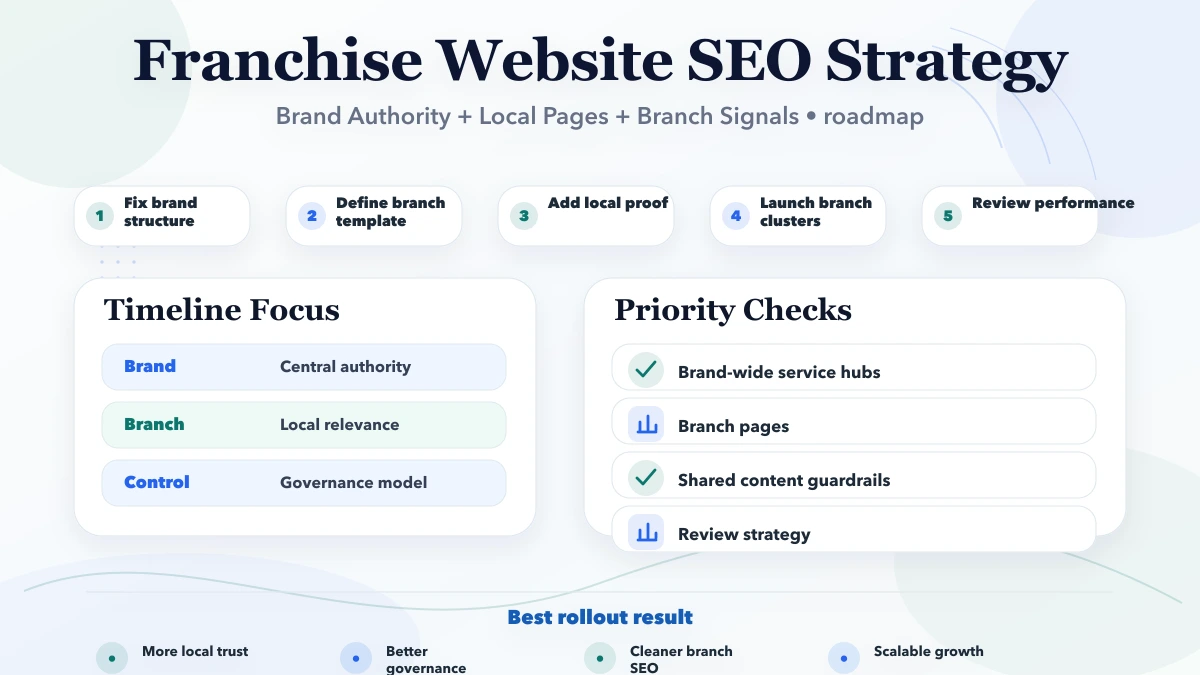
A rollout becomes smoother when every phase has one owner, one measurable output, and one review point. When implementation runs without those anchors, even good design or development work starts feeling slow and expensive because the real issue is scope drift.
The stack should serve clarity, measurement, and future scale. In most business projects, data structure, content structure, and event visibility matter more than chasing a fashionable tool choice.
If these drivers are defined early, quoting becomes more honest and launch risk drops. If they are ignored, the project usually becomes cheap only on paper and expensive in revision cycles, weak results, or later cleanup.
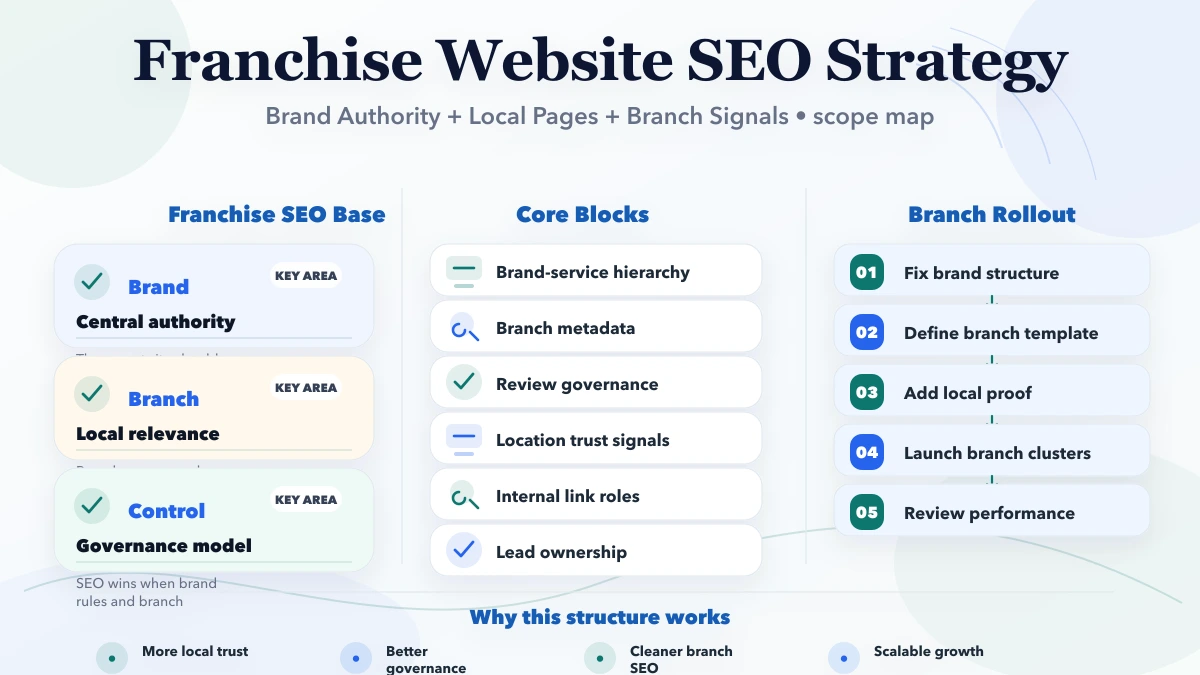
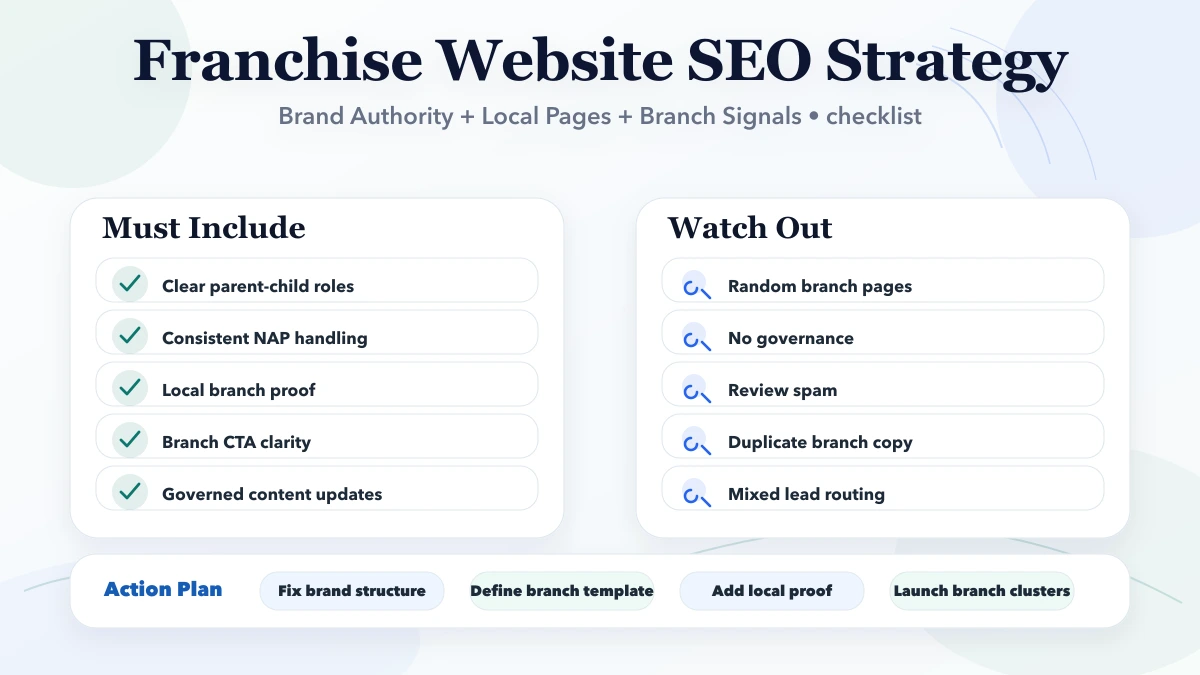
Franchise SEO works best when the brand controls the framework and branches contribute real local signals. The brand should own service definitions, template quality, and technical standards. Branches should provide local proof, reviews, team credibility, and accurate delivery context.
If branches publish random content without governance, quality collapses. If the brand blocks all local variation, branch pages feel generic. The strategy should solve both problems at once.
A branch page does not need long filler text. It needs the right information in the right order: branch relevance, service fit, review or proof, contact path, FAQs, and internal links back to service hubs or nearby relevant pages.
That gives the branch page a clear role for both search engines and users. It becomes easier to rank, easier to trust, and easier to route into the correct branch-level conversation.
We serve businesses across India from our Delhi NCR base and plan, build, and refine websites with a practical focus on clarity, trust, SEO structure, and lead quality.
If you are comparing vendors or deciding whether this scope is worth doing now, compare the real structure: page quality, proof depth, CTA logic, tracking, and how the plan expands later without rebuilding from scratch.
These mistakes usually hurt twice. They reduce user trust in the short term and weaken SEO or lead quality over time. Avoiding them is often more valuable than adding one more shiny section or feature.
Usually yes, if the branch is active and commercially relevant. But the page should only go live when there is enough useful content, proof, and lead-routing clarity.
It can rank for broad brand or service intent, but branch pages help capture location-specific searches and improve local conversion.
Reviews strengthen local trust, but they should be collected and displayed under a governance model so no risky or fake-looking patterns emerge.
Yes, where possible. Unique objections, delivery notes, and local queries make the page more useful and reduce duplication.
Launch and optimise the strongest branches first. Weaker branches can follow once the template and governance model are proven.
Yes, if the content model is structured properly. The key is governance, not just the CMS itself.
Yes. Many multi-location brands manage SEO centrally while serving customers across India. The structure matters more than physical HQ location.
If you want a practical plan instead of vague website promises, share your requirement and we will map the first version, realistic pricing, timeline, and the sections needed to support SEO plus qualified enquiries.
Related Articles
May 1, 2026
Multi-location business website structure for SEO: city-page architecture, internal links, canonicals, content rules, and rollout plan for 2026.
Read article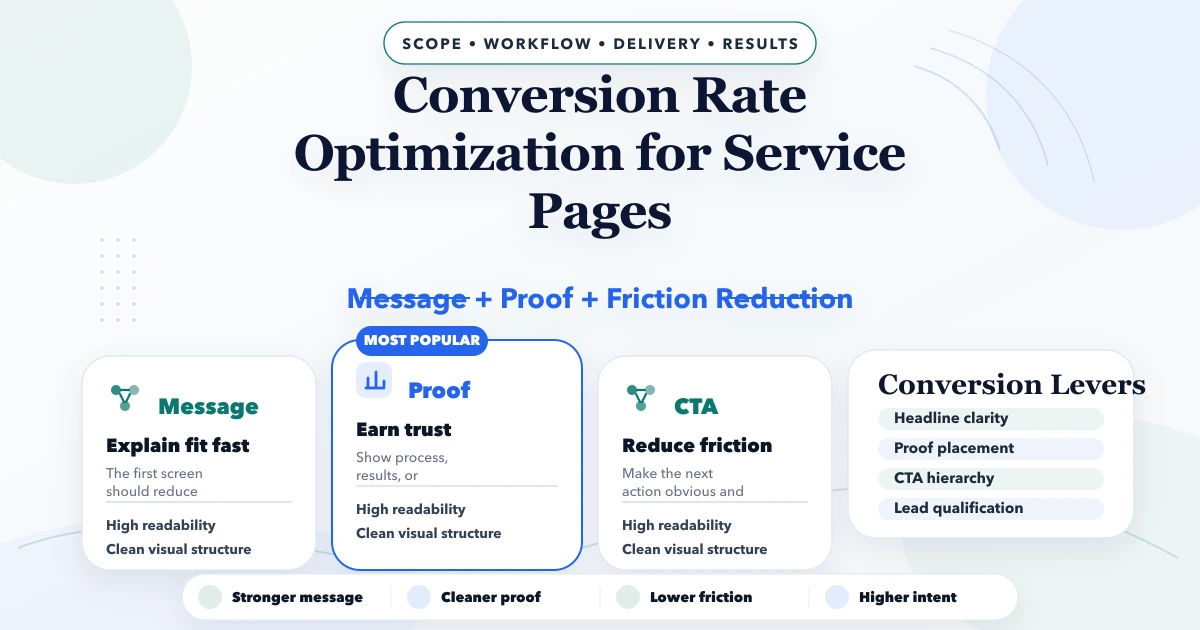
April 30, 2026
Conversion rate optimization for service pages with copy, UX, trust, CTA, pricing, and implementation guidance for better leads in 2026.
Read article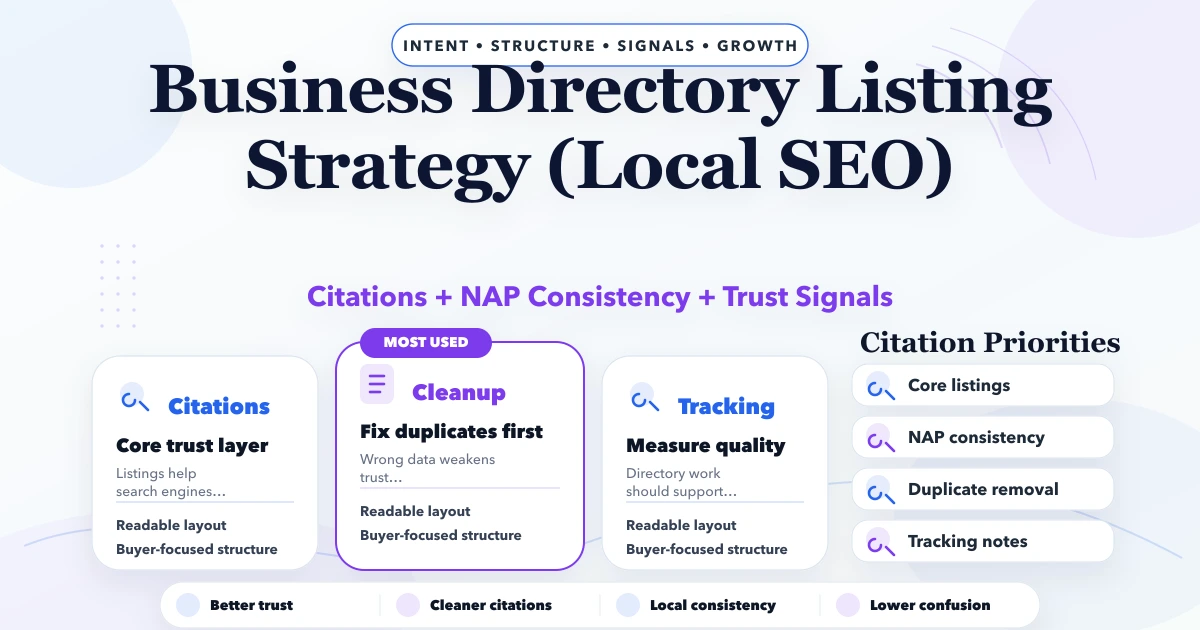
May 2, 2026
Business directory listing strategy for local SEO: citations, NAP consistency, duplicate cleanup, tracking, and rollout priorities for 2026.
Read article