
April 18, 2026
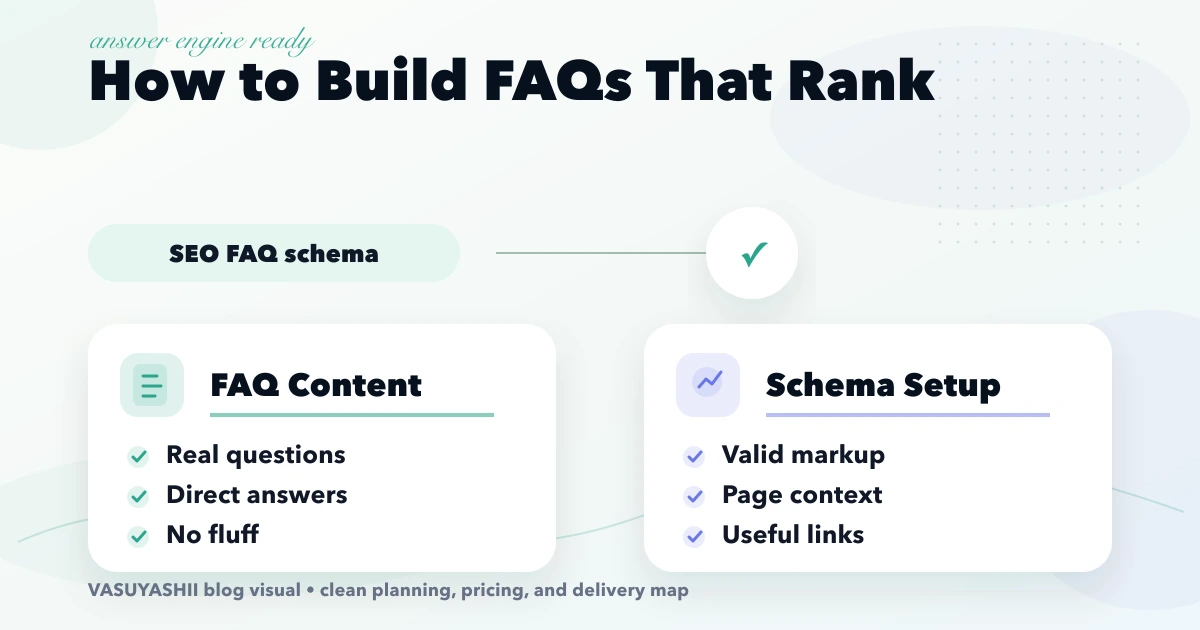
How to build FAQs that rank (SEO FAQ schema)
How to build FAQs that rank (SEO FAQ schema): practical guide with pricing, timeline, features, experience notes, FAQs, and next steps for Indian SMBs.
Read articleApril 8, 2026
SEO content QA checklist to avoid spam: people-first review steps, duplication checks, internal links, and common quality mistakes in 2026.
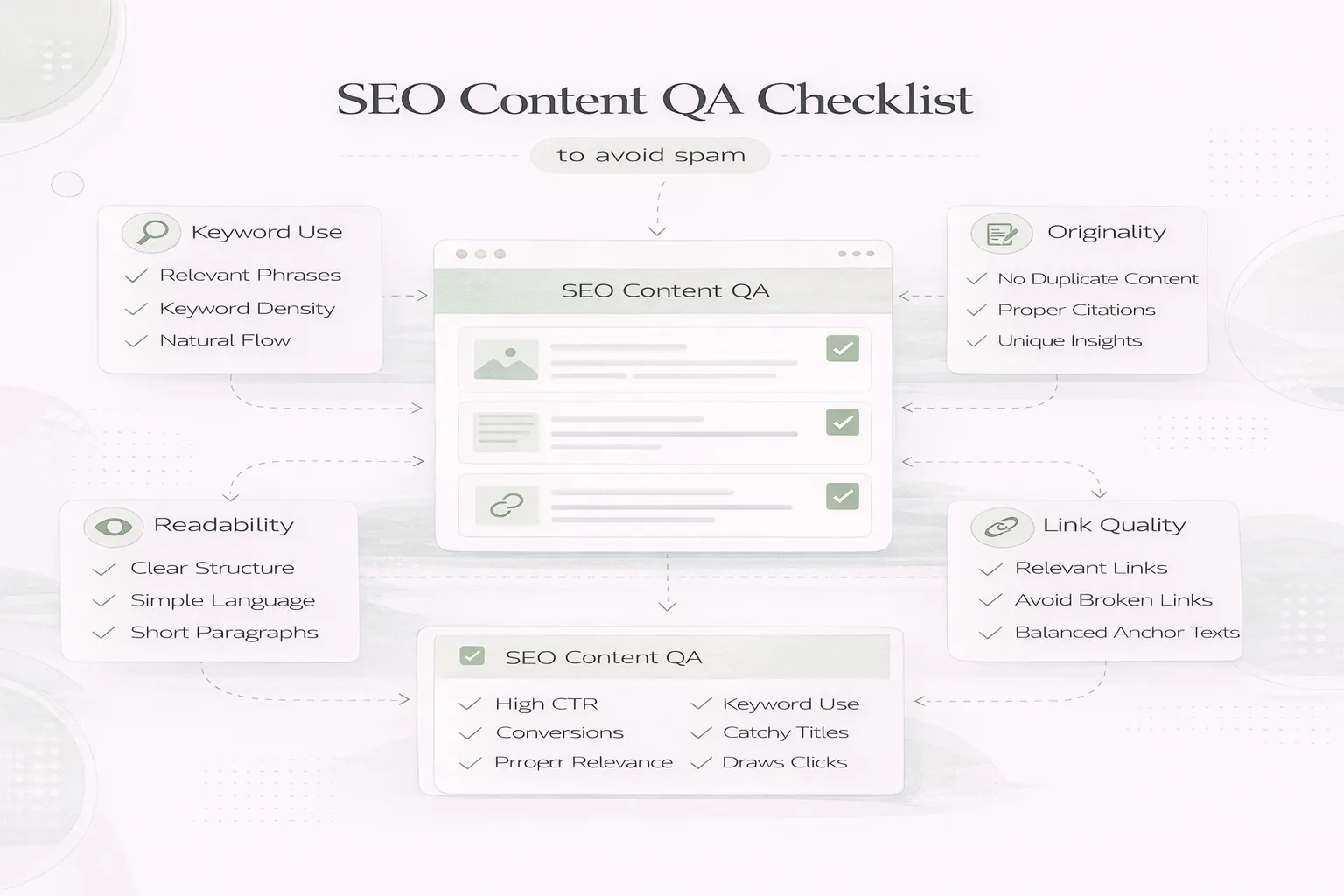
Publishing more content does not automatically create more SEO value. In fact, weak content operations often create the opposite result: near-duplicate pages, thin city pages, weak summaries, poor internal links, and content written more for volume than usefulness.
That is why content QA matters. A good QA checklist protects the site from low-value publishing habits before they become a scale problem.
This guide explains a practical SEO content QA checklist for 2026, with a focus on avoiding spam signals, improving usefulness, and keeping publishing quality consistent.
Google’s helpful content guidance says people-first content is created primarily for people, not to manipulate rankings. Its documentation also warns against creating search-engine-first content, including producing lots of content on many topics just hoping some of it performs.
That means a strong SEO QA checklist should verify:
QA is not about grammar only. It is about protecting search quality and user usefulness together.
Before publishing, ask:
Google’s people-first guidance frames these as core self-check questions. That is why quality review should happen before publication, not after traffic drops.
Confirm:
If the page tries to serve too many intents, it usually becomes vague.
Check whether the page adds:
If it only rephrases what others already said, it is weak.
Confirm the page has:
Add links to:
The CTA should fit the page intent. Informational content should not jump straight into hard-sell language without context.
Google’s spam policies explicitly warn about scaled content abuse and doorway abuse.
Check whether the content looks like:
Check whether the page:
Also review:
After publishing:
Do not assume a page is done just because it was published.
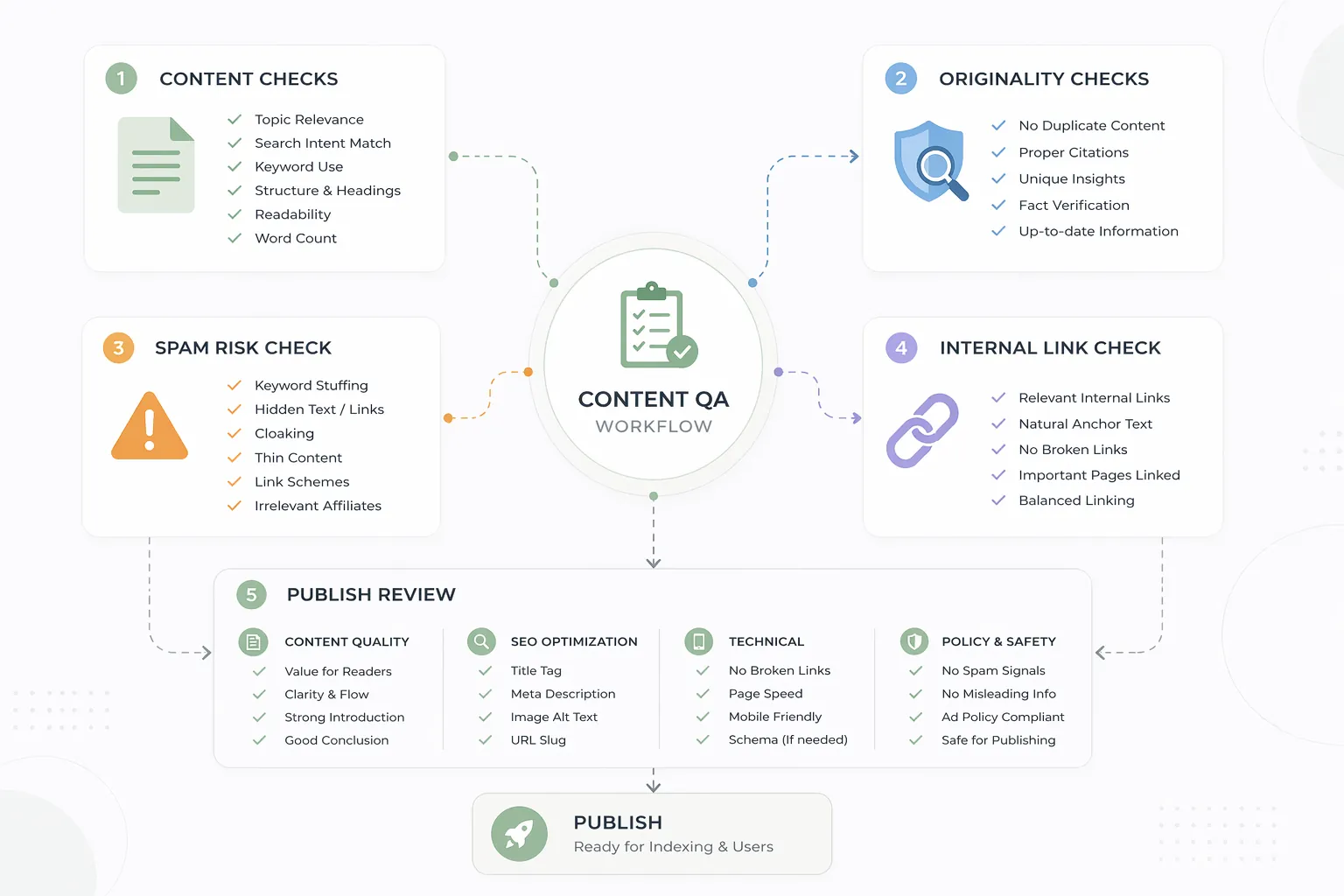
A practical content QA workflow:
This extra layer saves much more cleanup later.
Typical content QA cost:
₹5,000 to ₹15,000 monthly₹15,000 to ₹45,000₹45,000+If your content pipeline is growing, QA becomes a ranking-protection system, not an optional editing step. It keeps publishing aligned with usefulness before the site accumulates weak pages.
No. SEO QA must review value, intent, duplication, links, and usefulness.
Yes, especially when many pages sit in the same topic cluster.
Publishing lots of weak or repetitive pages just to increase count.
No. The problem is low-value output, not the tool alone.
Yes, if they are near-duplicates without real local value.
Regularly, especially when clusters grow or rankings shift.
Weak internal linking and intent overlap between similar pages.
Only as a result of depth. Google’s documentation does not recommend writing to an arbitrary preferred word count.
If your site is growing fast, the right QA process should check audience fit, originality, internal links, overlap, and spam risk before pages go live at scale.
Related Articles
April 18, 2026
How to build FAQs that rank (SEO FAQ schema): practical guide with pricing, timeline, features, experience notes, FAQs, and next steps for Indian SMBs.
Read article
April 8, 2026
How to build landing pages for local SEO in 2026 without thin city spam: page structure, proof, internal links, and conversion essentials.
Read article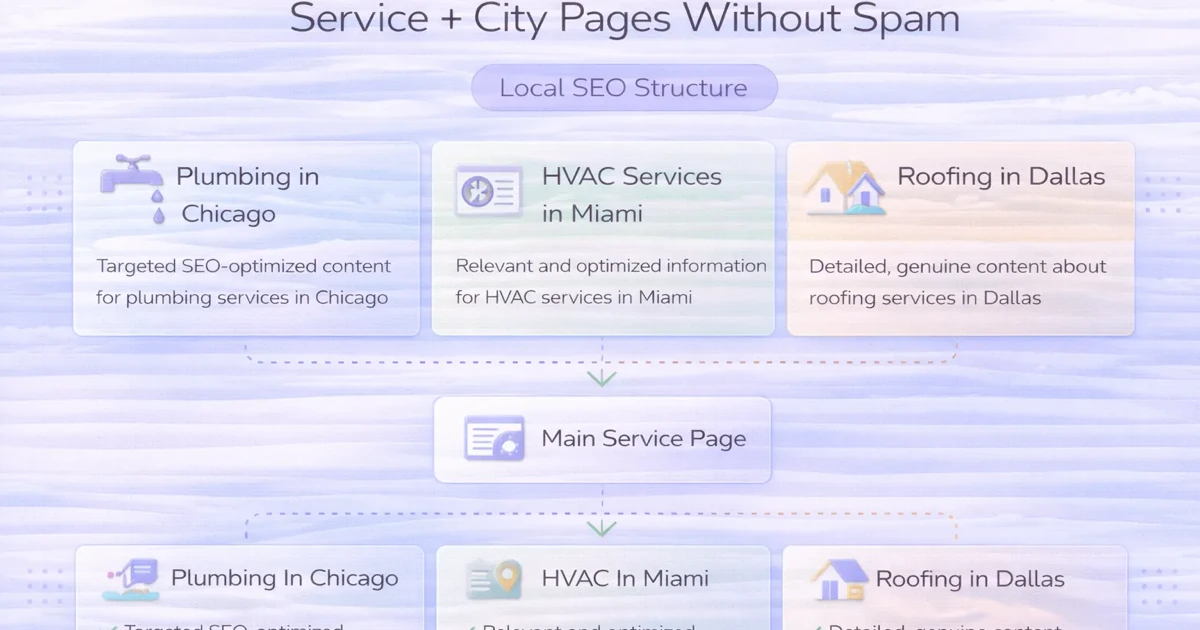
April 4, 2026
How to create service plus city pages without spam: avoid doorway abuse, build real local value, and structure pages safely in 2026.
Read article