

March 28, 2026
How to Write a Service Page That Ranks (SEO + Conversion)
How to write a service page that ranks: SEO and conversion structure, page sections, proof blocks, internal links, and mistakes to avoid.
Read articleMarch 29, 2026
How to create SEO topic clusters for software companies: keyword mapping, cluster structure, internal links, publishing plan, and examples.
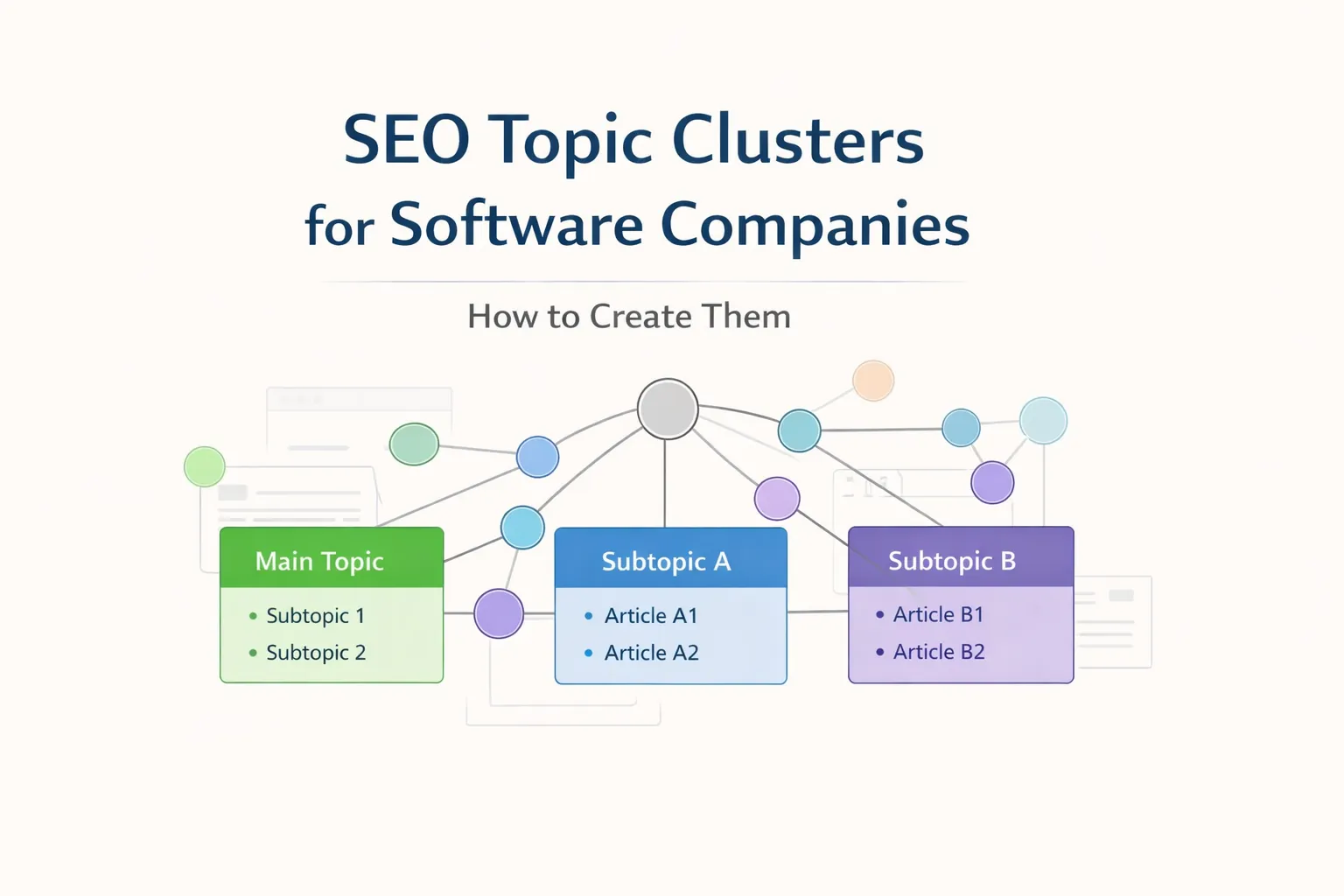
Software company websites often publish blogs one by one without a real content system behind them. One post talks about web development cost, another about CRM, another about SEO, then a random comparison article gets added. The site grows, but topical authority stays weak because the content is not clustered intentionally.
Topic clusters solve that problem. They help search engines understand what your company actually knows, and they help users move from one useful page to the next without getting lost.
This guide explains how software companies should create SEO topic clusters, including cluster planning, pillar pages, supporting content, internal links, and publishing workflow.
A topic cluster is a content system built around one strong subject area. For software companies, a cluster might be built around:
Each cluster usually includes:
A topic cluster is not just a group of related blogs. It is a deliberate content structure where a main page and multiple supporting pages reinforce the same subject from different angles.
Software buyers search in journeys, not isolated keywords. They may start with cost, then compare options, then check process, then look for proof or implementation detail.
Clustered content makes your website useful across that journey.
Start with real service lines or business themes like CRM development, app development, admin dashboards, or software integrations.
The pillar page should be the broad, high-value page around the topic.
Support content should answer buyer questions such as:
Some posts are informational. Some are commercial. Some are comparison-heavy. Mixing intent carelessly weakens the cluster.
Here is a simple software-company example.
Support posts:
Support posts:
Support posts:
Related reading:
Internal links make clusters work. Without them, the structure is incomplete.
If a software company outsources cluster planning and execution, the cost depends on depth.
₹15,000 to ₹40,000₹40,000 to ₹1 lakh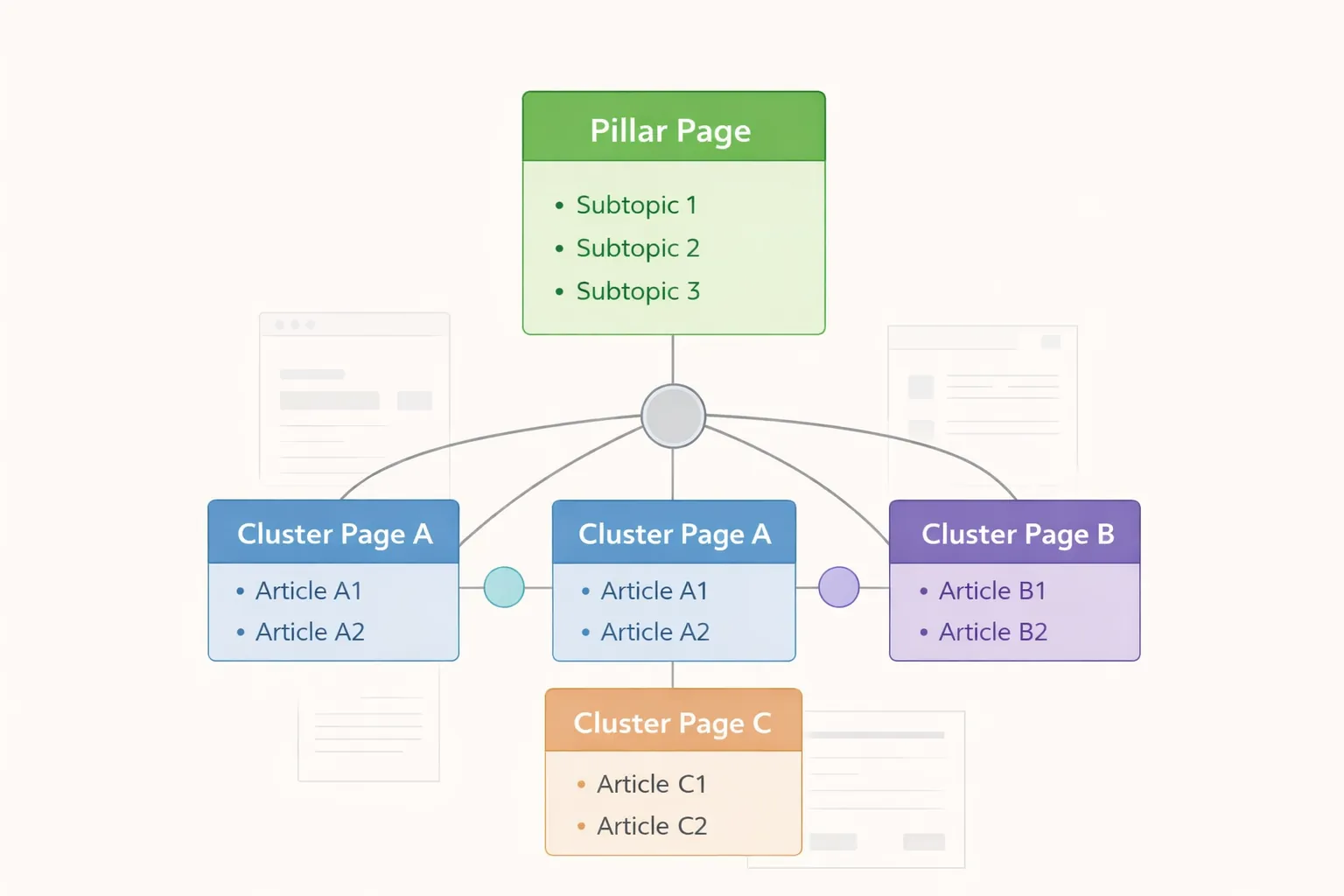
Good clusters are not built in one day, but the planning can be done quickly.
The faster the company can decide on service priorities, the better the cluster quality.
If your software blog feels active but not connected, it probably means you need cluster logic, not just more random article ideas.
It is a structured group of related pages built around one core subject and connected through internal linking.
Because software buying journeys involve many questions across cost, comparison, process, and implementation.
There is no fixed number, but 5 to 15 strong related pages is a practical start for many clusters.
Publishing many related blogs without pillar logic or internal link discipline.
Sometimes yes, especially when local service intent is important.
Yes. They help visitors move deeper into relevant commercial content.
Not immediately. Start with the most commercially important services first.
No. Even smaller software company websites benefit from clearer content architecture.
If you want your content to build topical authority instead of just increasing blog count, the next step is to map pillars, support posts, and internal links around real service intent.
Related Articles
March 28, 2026
How to write a service page that ranks: SEO and conversion structure, page sections, proof blocks, internal links, and mistakes to avoid.
Read article
March 18, 2026
SEO friendly website development guide for 2026: site structure, URLs, technical SEO, speed, schema, internal linking, content strategy, and checklists to rank on Google.
Read article
March 30, 2026
Best hosting for business websites in India in 2026: shared vs managed cloud, pricing ranges, practical advice, and what small businesses should choose.
Read article