
April 5, 2026
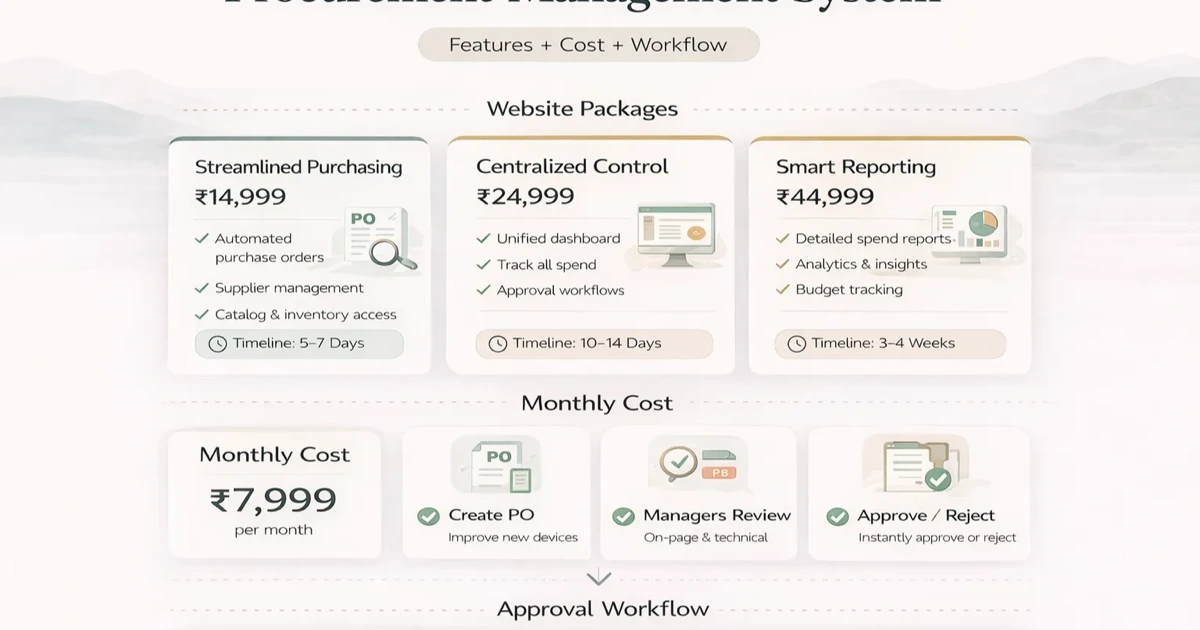
Procurement Management System: Features + Cost + Workflow
Procurement management system guide with features, cost, workflow, and rollout advice for SMEs in 2026.
Read articleApril 6, 2026
Vendor portal system guide with features, pricing, workflow, and rollout advice for supplier coordination in 2026.
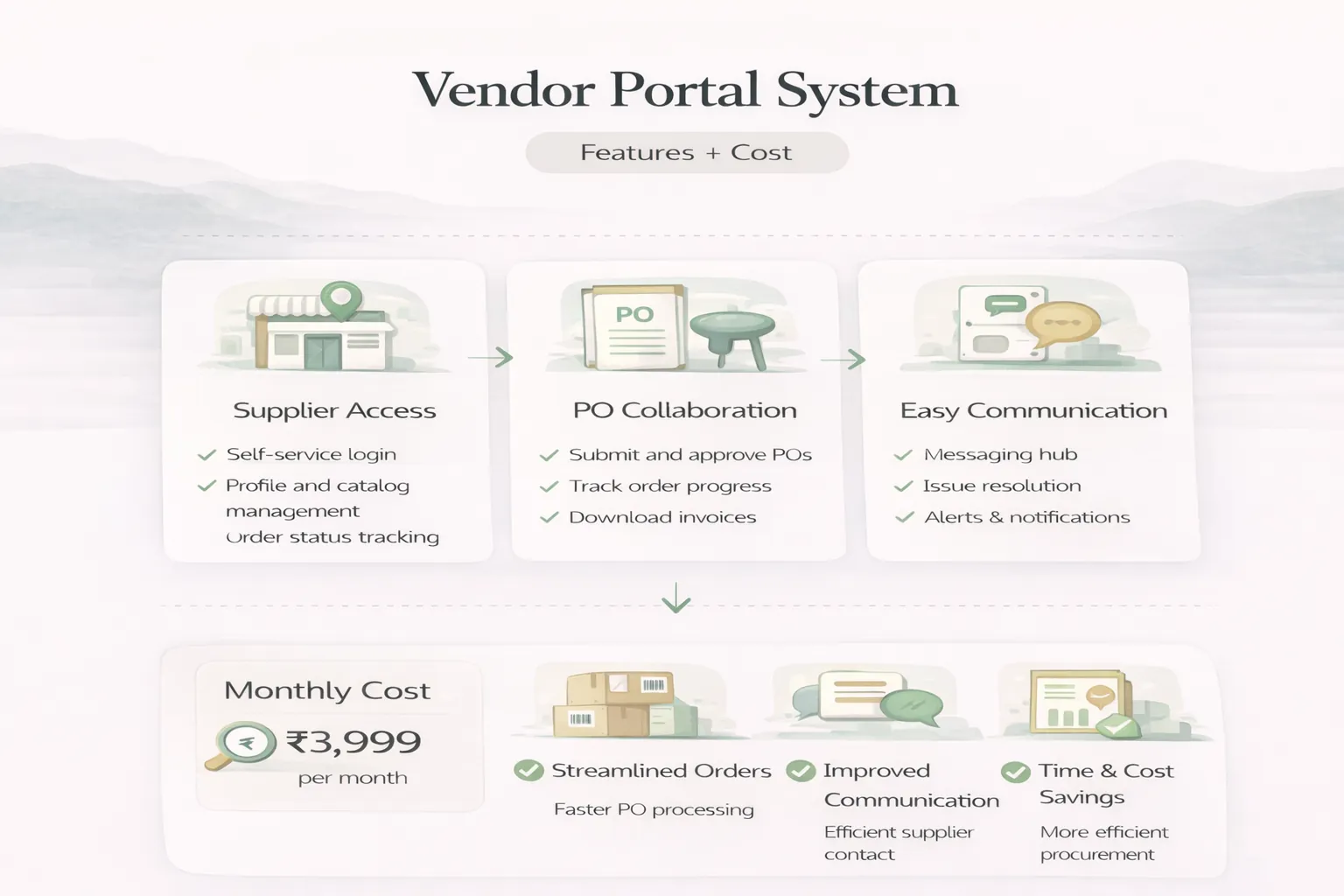
As procurement grows, vendor communication becomes harder to manage through email chains and shared files. Quotation requests, PO status, document exchange, delivery updates, and issue handling become scattered. That slows down procurement and increases follow-up work.
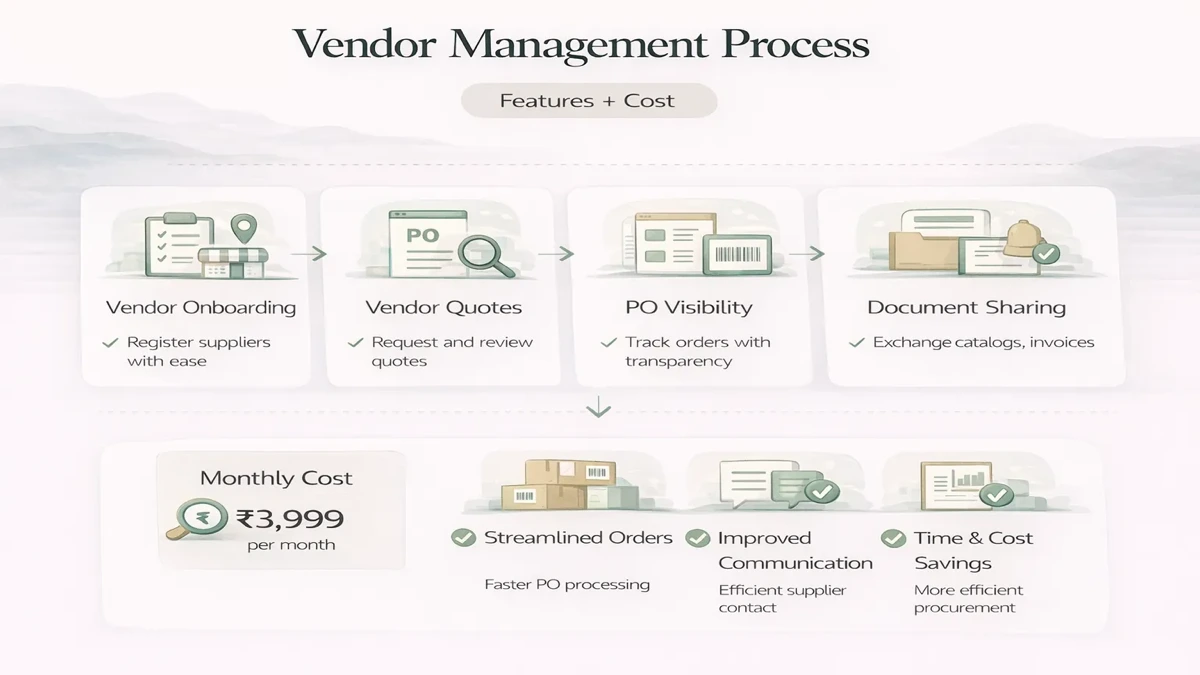
A vendor portal system solves that by giving suppliers a structured interface to interact with the business. The goal is not to replace internal procurement software. The goal is to reduce friction between your team and vendors.
This guide explains what a practical vendor portal should include, what it costs, and when it is worth building for SMEs.
A useful vendor portal can help with:
Typical custom pricing:
₹1 lakh to ₹2 lakh₹2 lakh to ₹4.5 lakh₹4.5 lakh to ₹9 lakh+The best use case is when supplier coordination is repetitive enough that structured self-service saves internal time.
You likely need it when:
Related reading:
₹1 lakh to ₹2 lakhUsually includes:
₹2 lakh to ₹4.5 lakhUsually includes:
₹4.5 lakh to ₹9 lakh+Usually includes:
Typical rollout:
2 to 4 weeks: basic portal4 to 7 weeks: growth portal7 to 10 weeks: advanced integrated setupTimeline depends on:
A practical vendor portal stack:
Next.js frontendNode.js backendPostgreSQL for vendor, PO, and document recordsThe portal should be simple for vendors to use. Internal complexity should stay behind the scenes.
The main cost drivers are:
A common mistake is making the vendor portal too heavy. Vendors need clarity and speed, not a complex admin app.
Yes, when supplier coordination is repetitive enough that self-service saves procurement time.
No. It usually works as a supplier-facing layer connected to procurement workflow.
If vendor quotations are frequent, yes. It creates strong value.
Yes. Document sharing is one of the most useful modules.
A basic version can often launch in 2 to 4 weeks if scope is clear.
Yes. Different vendor and internal users may need different visibility.
Reducing follow-up work and making PO and document visibility clearer usually creates the fastest value.
Treating it like a full internal admin panel instead of a focused vendor experience.
If you want a portal that improves supplier coordination, start with the exact vendor actions that happen repeatedly today and build around those first.
Related Articles
April 5, 2026
Procurement management system guide with features, cost, workflow, and rollout advice for SMEs in 2026.
Read article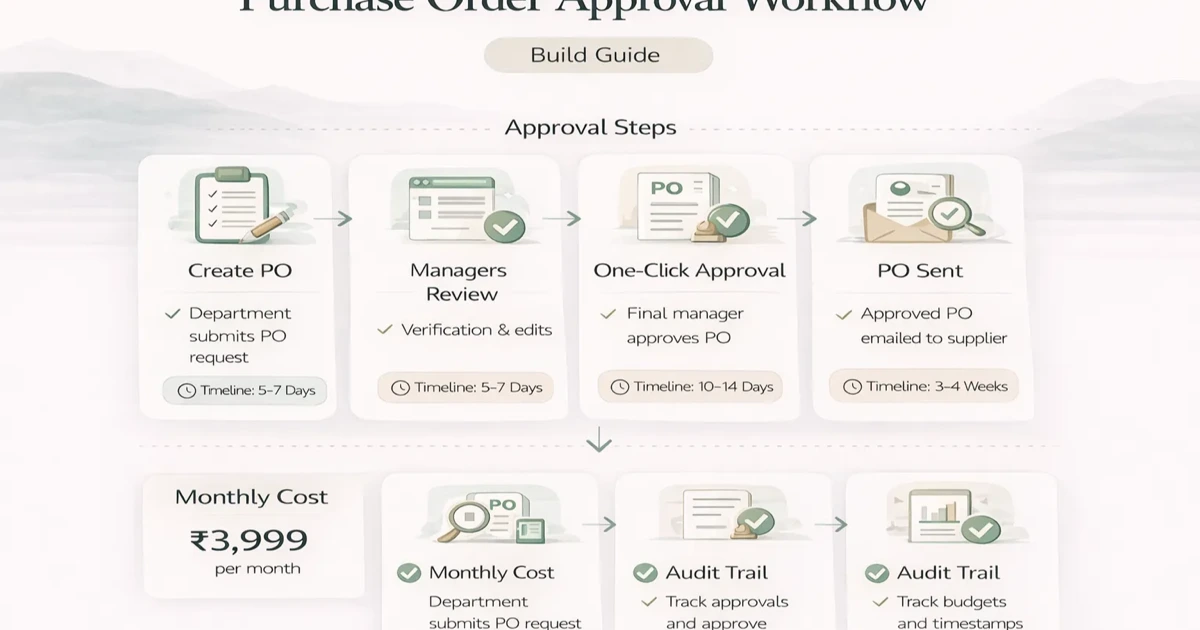
April 5, 2026
Purchase order approval workflow guide with build scope, pricing, roles, and rollout advice for SME operations in 2026.
Read article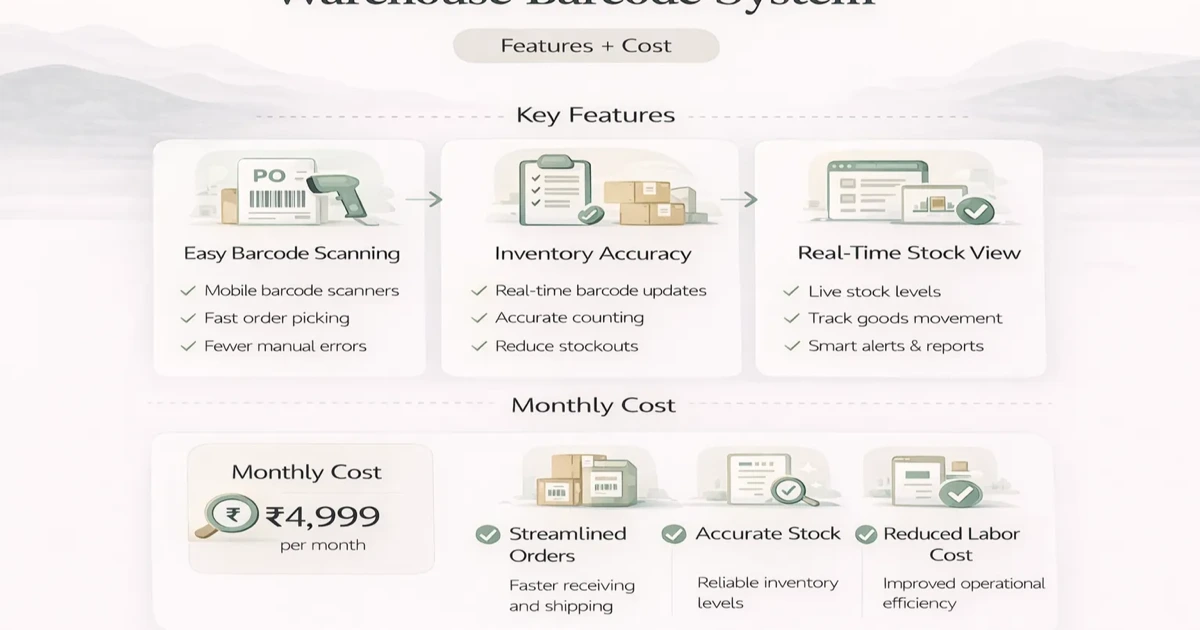
April 6, 2026
Warehouse barcode system guide with features, pricing, workflow, and rollout advice for stock accuracy and faster operations in 2026.
Read article