
April 6, 2026
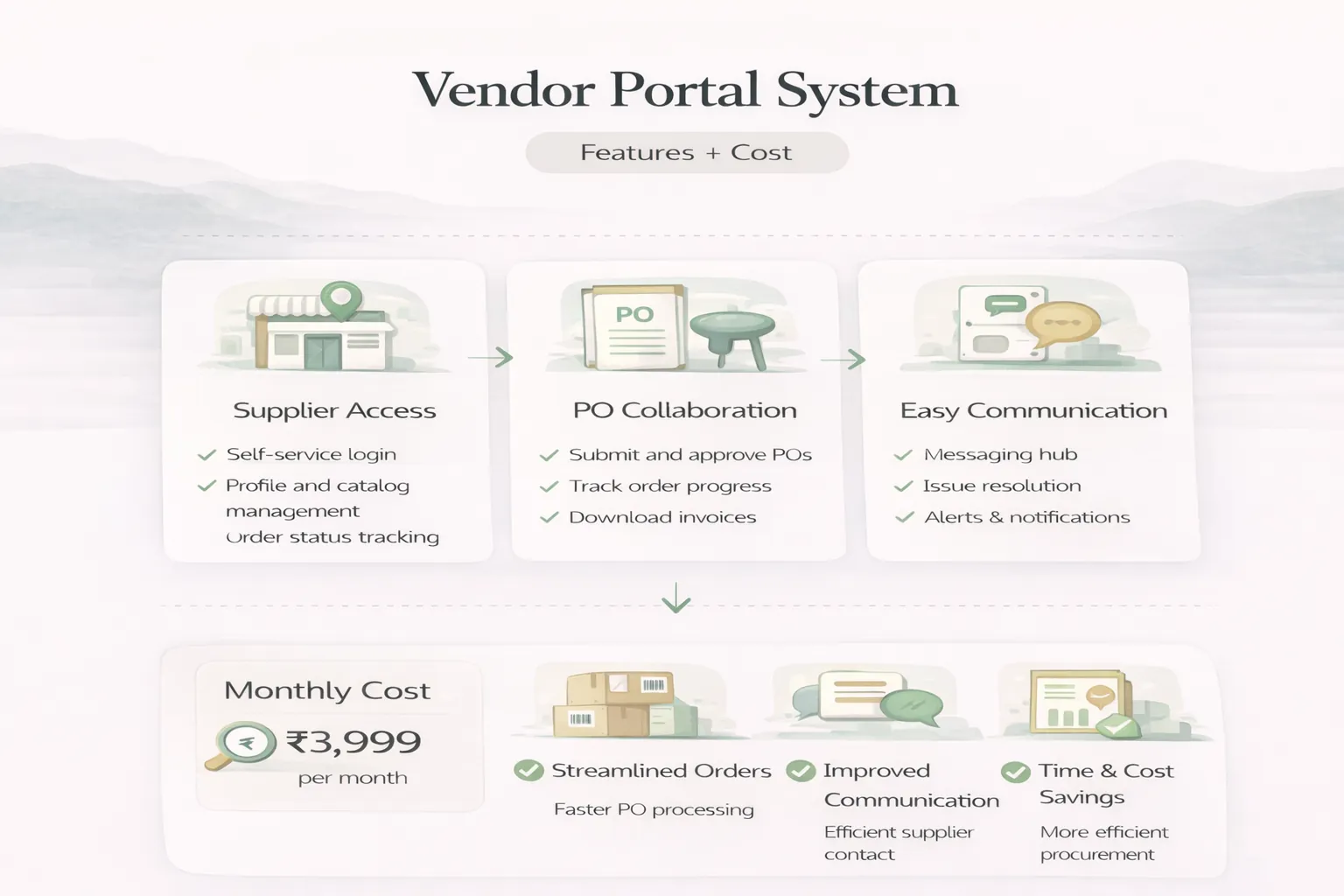
Vendor Portal System: Features + Cost
Vendor portal system guide with features, pricing, workflow, and rollout advice for supplier coordination in 2026.
Read articleApril 6, 2026
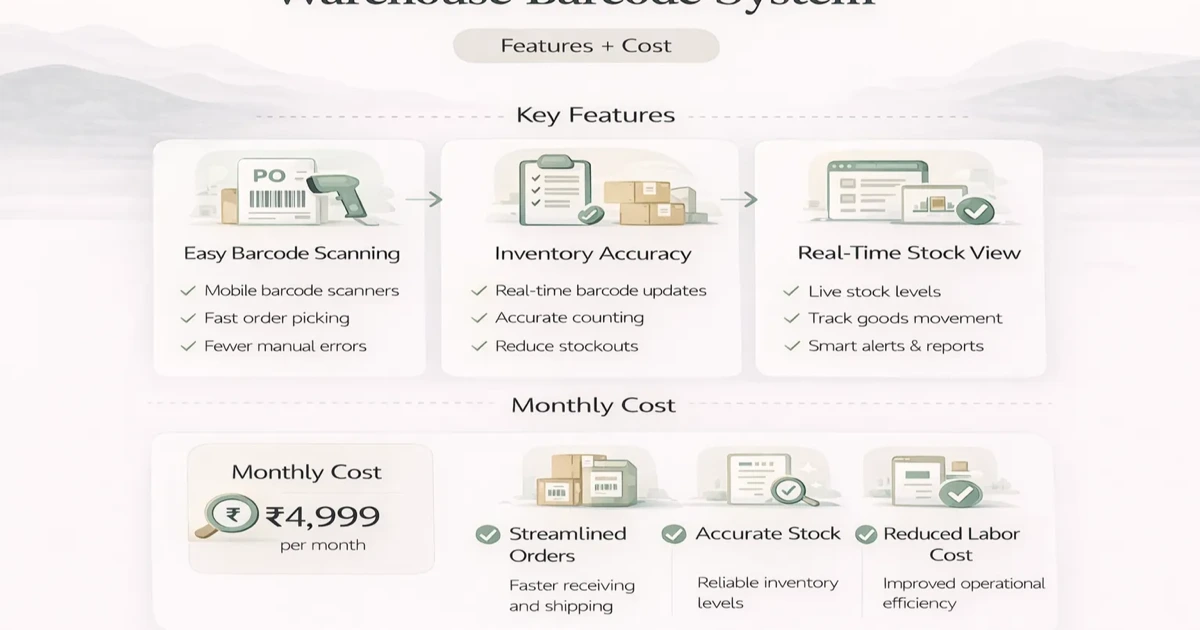
Warehouse barcode system guide with features, pricing, workflow, and rollout advice for stock accuracy and faster operations in 2026.
Warehouse operations slow down very quickly when stock movement is recorded manually. Picking mistakes increase, inward and outward updates get delayed, and physical stock starts drifting away from system stock. That is usually the point when barcode-based workflow becomes necessary.
A warehouse barcode system is not just about printing labels. It is about making stock movement faster, more accurate, and easier to audit. When scanning is tied properly to item master, receipt, movement, pick, and dispatch flow, warehouse reliability improves significantly.
This guide explains what a practical warehouse barcode system should include, how much it costs, and how to roll it out in a way that improves real warehouse work instead of just adding more screens.
A useful warehouse barcode system should cover:
Typical custom pricing:
₹1 lakh to ₹2 lakh₹2 lakh to ₹4.5 lakh₹4.5 lakh to ₹9 lakh+The biggest win usually comes from better stock accuracy and faster warehouse execution.
You likely need it when:
Related reading:
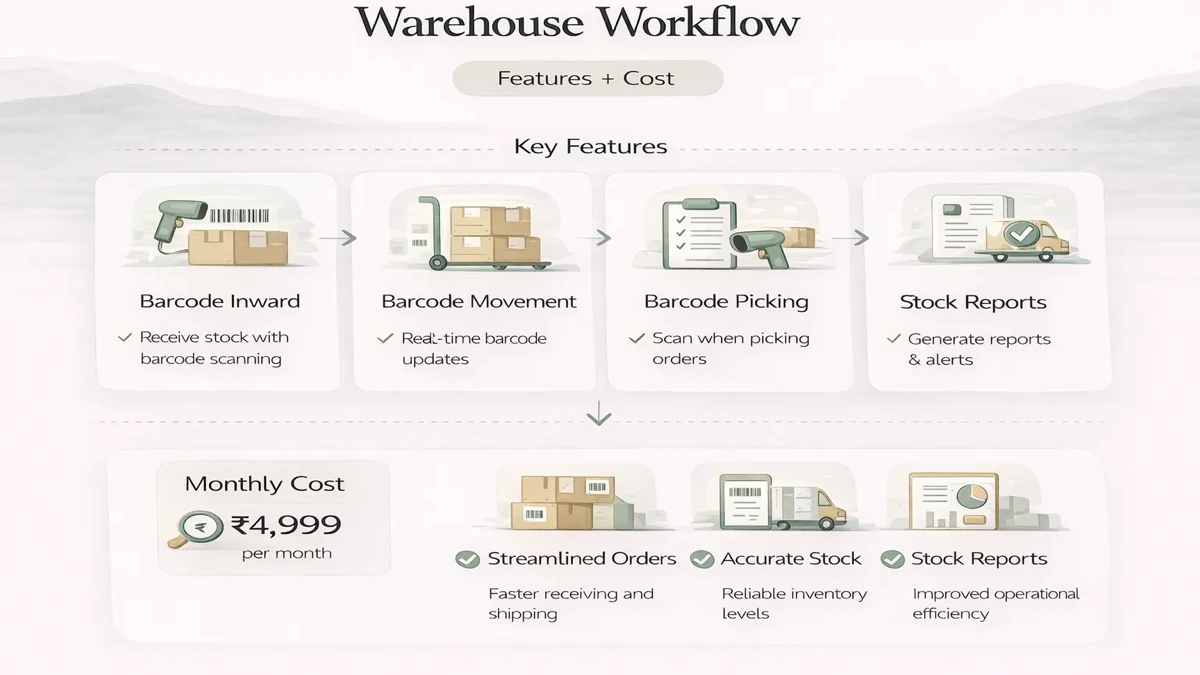
Typical barcode-enabled warehouse flow:
The system should reduce warehouse effort, not make operators type more.
₹1 lakh to ₹2 lakhUsually includes:
₹2 lakh to ₹4.5 lakhUsually includes:
₹4.5 lakh to ₹9 lakh+Usually includes:
Typical rollout:
2 to 4 weeks: starter system4 to 7 weeks: growth system7 to 10 weeks: advanced barcode plus WMS layerTimeline depends on:
A practical stack for warehouse barcode systems:
Next.js dashboard frontendNode.js backendPostgreSQL for item, stock, and movement dataThe workflow design and stock model matter more than stack branding.
For some businesses yes. A barcode layer alone can already improve stock accuracy a lot.
Not always. It depends on operational scale and workflow design.
Yes. That should usually be part of the same workflow.
A usable starter version can often launch in 2 to 4 weeks if item master is ready.
Yes. Barcode scanning improves counting speed and trust in stock records.
No. Even smaller warehouses benefit once manual updates cause mistakes.
Lower stock mismatch and better dispatch accuracy usually create the fastest return.
Ignoring master-data cleanup and physical workflow realities before software rollout.
If you want barcode software that actually works in warehouse conditions, start with the physical stock flow, location logic, and scan checkpoints before choosing the final feature set.
Related Articles
April 6, 2026
Vendor portal system guide with features, pricing, workflow, and rollout advice for supplier coordination in 2026.
Read article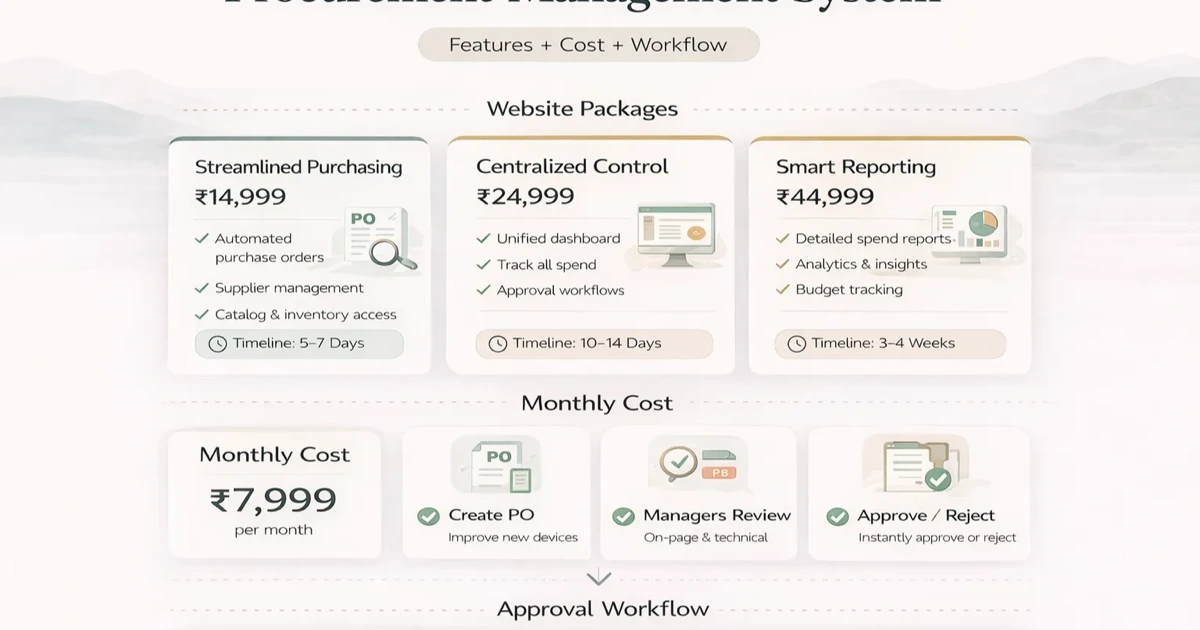
April 5, 2026
Procurement management system guide with features, cost, workflow, and rollout advice for SMEs in 2026.
Read article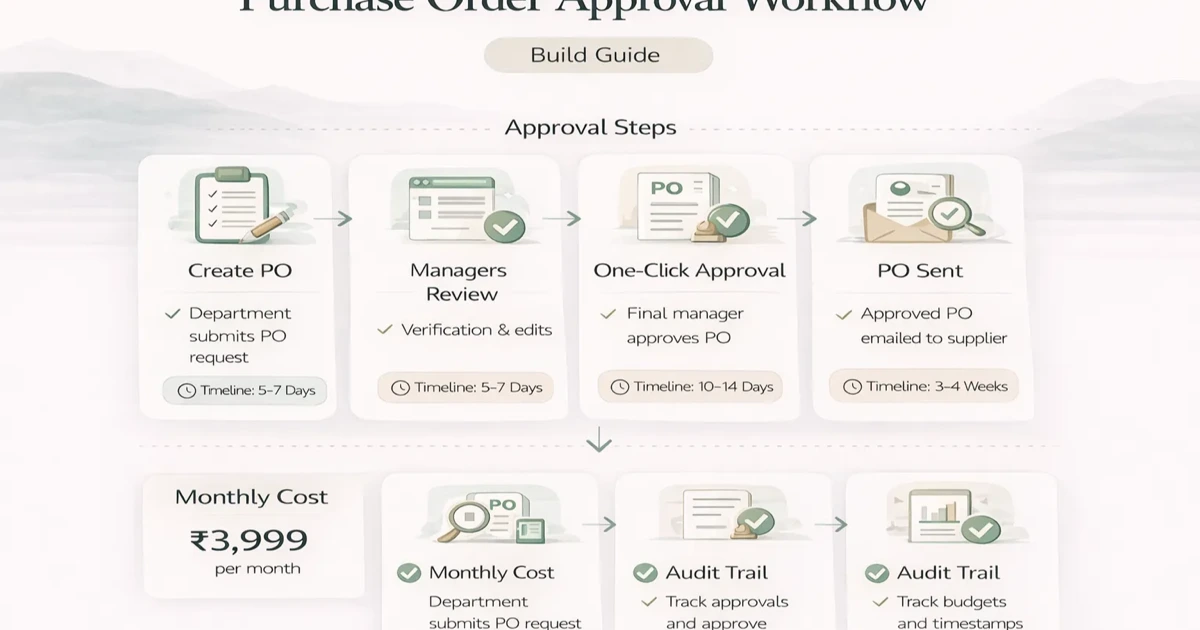
April 5, 2026
Purchase order approval workflow guide with build scope, pricing, roles, and rollout advice for SME operations in 2026.
Read article