
May 9, 2026
ERP developer near me
ERP developer near me: pricing, checklist, FAQs, trust signals, and practical SEO steps for Indian SMB owners.
Read articleMay 9, 2026
inventory system developer near me: pricing, checklist, FAQs, trust signals, and practical SEO steps for Indian SMB owners.
A inventory system developer near me search usually means the buyer is close to action. This guide is for retail shops, distributors, warehouses, restaurants, small manufacturers, and operations teams that want reliable stock visibility. It explains what to check, what to avoid, how much to budget in INR, and how to judge whether a vendor or strategy is actually suitable for your business.
The goal is not to stuff keywords into a page. The goal is to answer the real local intent: who can help, what will it cost, what proof should you ask for, what risks matter, and what next step is safe.
By Tushar C. (Founder, VASUYASHII). Reviewed by VASUYASHII Editorial for field experience, buyer clarity, SEO usefulness, and practical implementation relevance.
For Delhi NCR businesses, local trust means more than adding a city name. Buyers want to know whether the team understands fast comparison behaviour, WhatsApp-first enquiries, owner-led decisions, and practical post-launch support. That is why this guide keeps the focus on proof, pricing clarity, rollout quality, and contact paths. Serving Delhi NCR: Ghaziabad, Noida, Delhi, Gurugram, Faridabad, and nearby business markets.
Hire an inventory system developer when Excel or manual stock tracking cannot show accurate stock, low-stock alerts, purchase history, sales movement, or item-level reports. The first version should focus on products, stock movements, purchases, sales links, alerts, and owner visibility.
| Scope | Practical price range | Typical timeline | | --- | --- | --- | | Basic inventory tracker | ₹80,000 to ₹2.5 lakh | 3 to 6 weeks | | Inventory + purchase/sales workflow | ₹2.5 lakh to ₹7 lakh | 6 to 12 weeks | | Warehouse, barcode, roles, and reports | ₹7 lakh to ₹18 lakh+ | 12 to 24 weeks |
This experience matters because local buyers are not only reading content. They are deciding whether to message, call, shortlist, or leave. A page or proposal that does not explain proof, pricing, scope, and next steps clearly usually loses the lead even if the technical work is possible.
Inventory software affects cash flow. If stock is wrong, purchasing decisions become wrong, customer promises become risky, and money gets stuck in dead inventory. A nearby developer helps only if they understand operational detail, not just screens.
In local SEO and local service buying, trust builds in layers. The first layer is search visibility. The second layer is page quality. The third layer is proof. The fourth layer is easy contact. If any layer is weak, rankings alone do not turn into business.
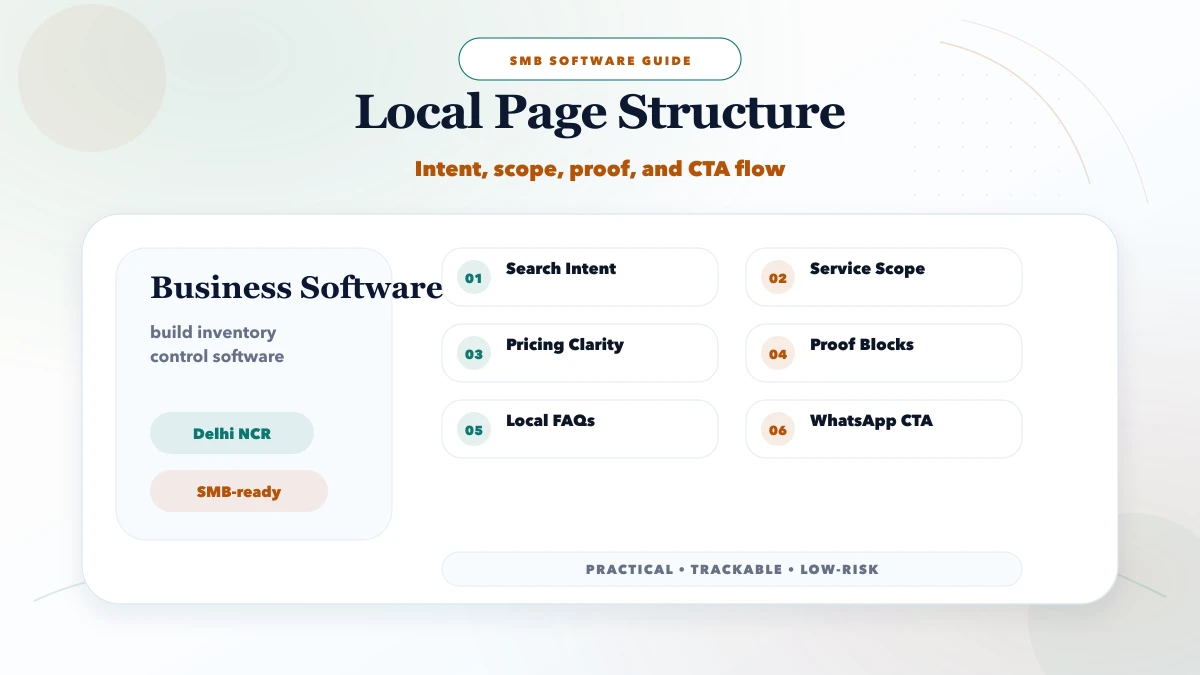
The practical test is simple: after reading the page or proposal, a business owner should know what is included, what is not included, what will happen first, who owns the next action, and how success will be measured. If those points are unclear, the project or SEO campaign is not ready.
Inventory systems fail when stock movement rules are unclear. The software should not only show available stock. It should explain why stock changed, who changed it, what document created the movement, and whether the owner can audit the change later.
Good execution also keeps the first phase controlled. A near-me buyer often wants speed, but rushed work becomes expensive when tracking, content, ownership, or support is missing. The safer approach is to launch the right first version, measure it, and then improve based on real behaviour.
For VASUYASHII-style projects, we prefer clear discovery, written scope, visible proof, simple communication, and a direct CTA path through WhatsApp, form, or call. That combination makes the work easier to evaluate and easier to improve.
Pricing depends on scope, content depth, technical complexity, integrations, review cycles, and support expectations. Use the table below as a planning range, not as a blind quote.
| Scope | Practical price range | Typical timeline | | --- | --- | --- | | Basic inventory tracker | ₹80,000 to ₹2.5 lakh | 3 to 6 weeks | | Inventory + purchase/sales workflow | ₹2.5 lakh to ₹7 lakh | 6 to 12 weeks | | Warehouse, barcode, roles, and reports | ₹7 lakh to ₹18 lakh+ | 12 to 24 weeks |
A low price can be good if the scope is clear and small. It becomes risky when the price hides missing content, weak handover, no tracking, no support, or unclear ownership. For serious local SEO and software work, clarity is more valuable than a vague discount.
The timeline becomes smoother when one person owns approvals and the first release has a clear success signal. For local pages, that signal may be indexing, impressions, clicks, and enquiries. For software, it may be adoption, data accuracy, task completion, or fewer manual follow-ups.
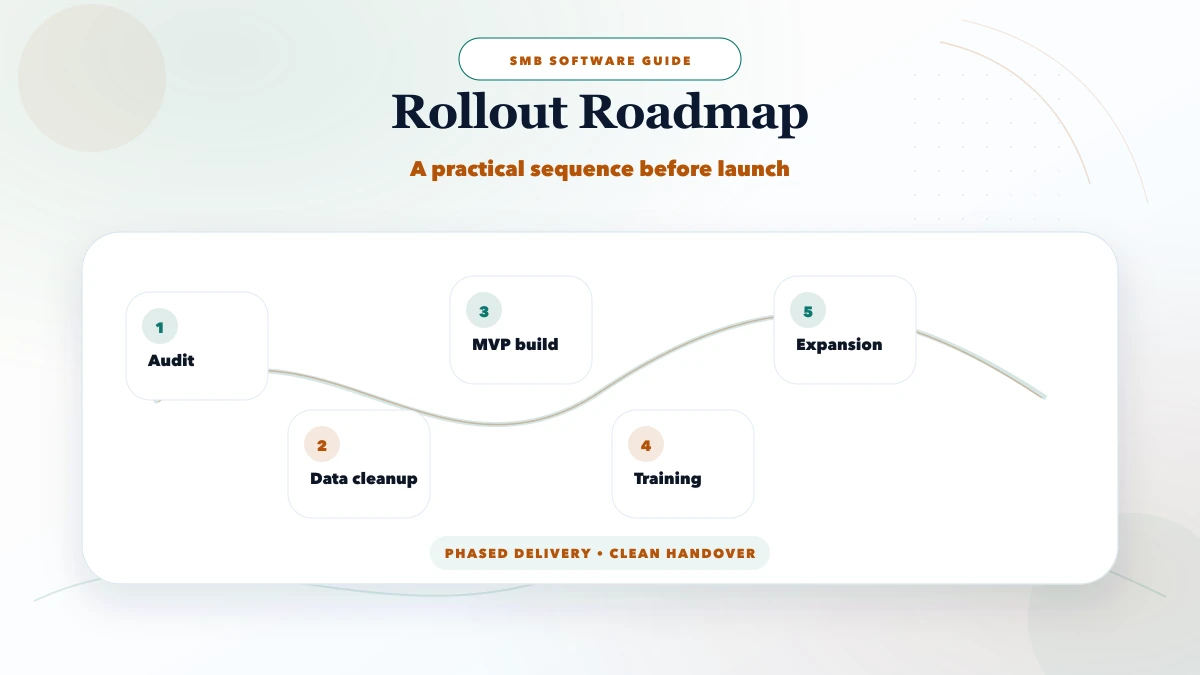
The setup should match the business stage. A small service business may need a fast website and clean WhatsApp tracking. A distributor may need inventory, billing, and purchase data. A local SEO project may need content QA, internal linking, and Search Console monitoring. The right setup is the one your team can actually maintain.
These drivers should be discussed before work starts. When they are ignored, teams often publish quickly and then spend more time fixing content, tracking, forms, duplicate pages, or workflow gaps after launch.
If you are comparing vendors or planning a local SEO page set, start with a clear phase-one scope. A smaller but well-measured launch is better than a large unclear plan.
A basic tracker may start around ₹80,000 to ₹2.5 lakh. A deeper system with purchase, sales, returns, barcode, roles, and reports costs more.
Yes, but only if product data is cleaned and staff follow stock movement rules. A messy Excel file should be fixed before migration.
Not always. Barcode helps when product volume and scanning discipline are ready. Many SMBs should first stabilise product and stock rules.
Yes. Billing and inventory integration is often the best long-term setup because sales invoices can reduce stock automatically.
Low stock, current stock value, fast-moving items, dead stock, purchase due, and stock corrections.
Incorrect opening stock and weak staff training. If those are wrong, users stop trusting the system.
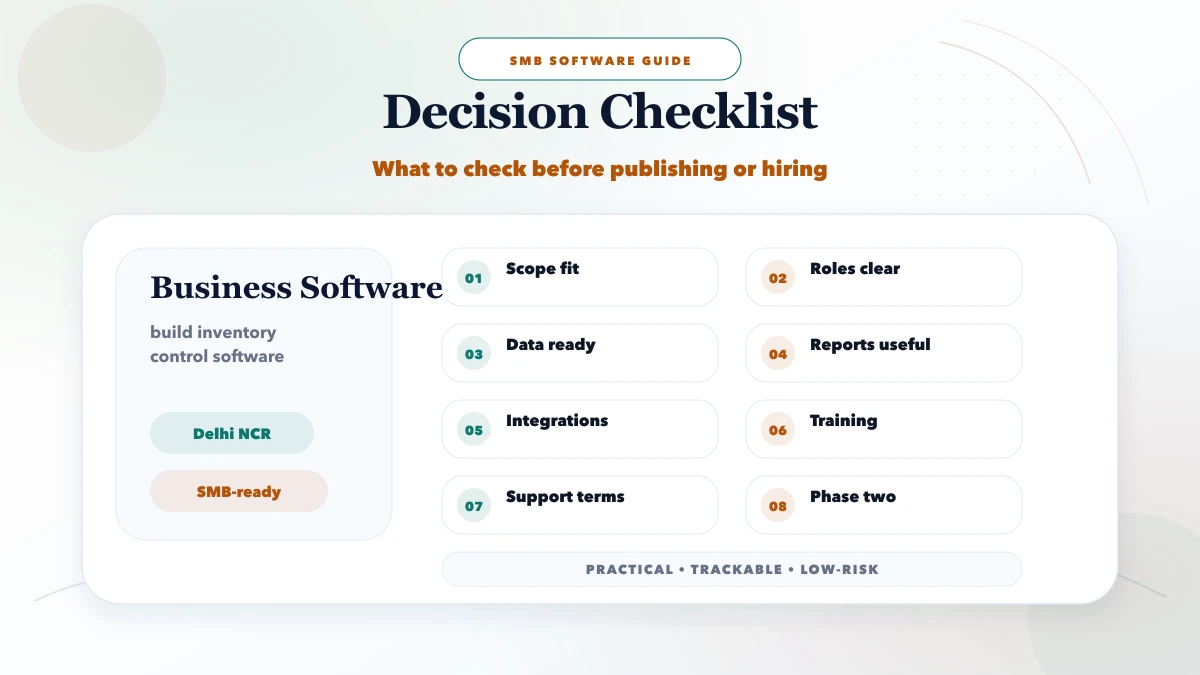
If you want practical scope, local SEO clarity, pricing guidance, or a clean build plan, VASUYASHII can help you map the right first version before money is wasted on unclear execution.
Related Articles
May 9, 2026
ERP developer near me: pricing, checklist, FAQs, trust signals, and practical SEO steps for Indian SMB owners.
Read article
March 26, 2026
Inventory management software development guide: features, pricing in India, tech stack, timeline, and cost drivers for small business stock control today.
Read article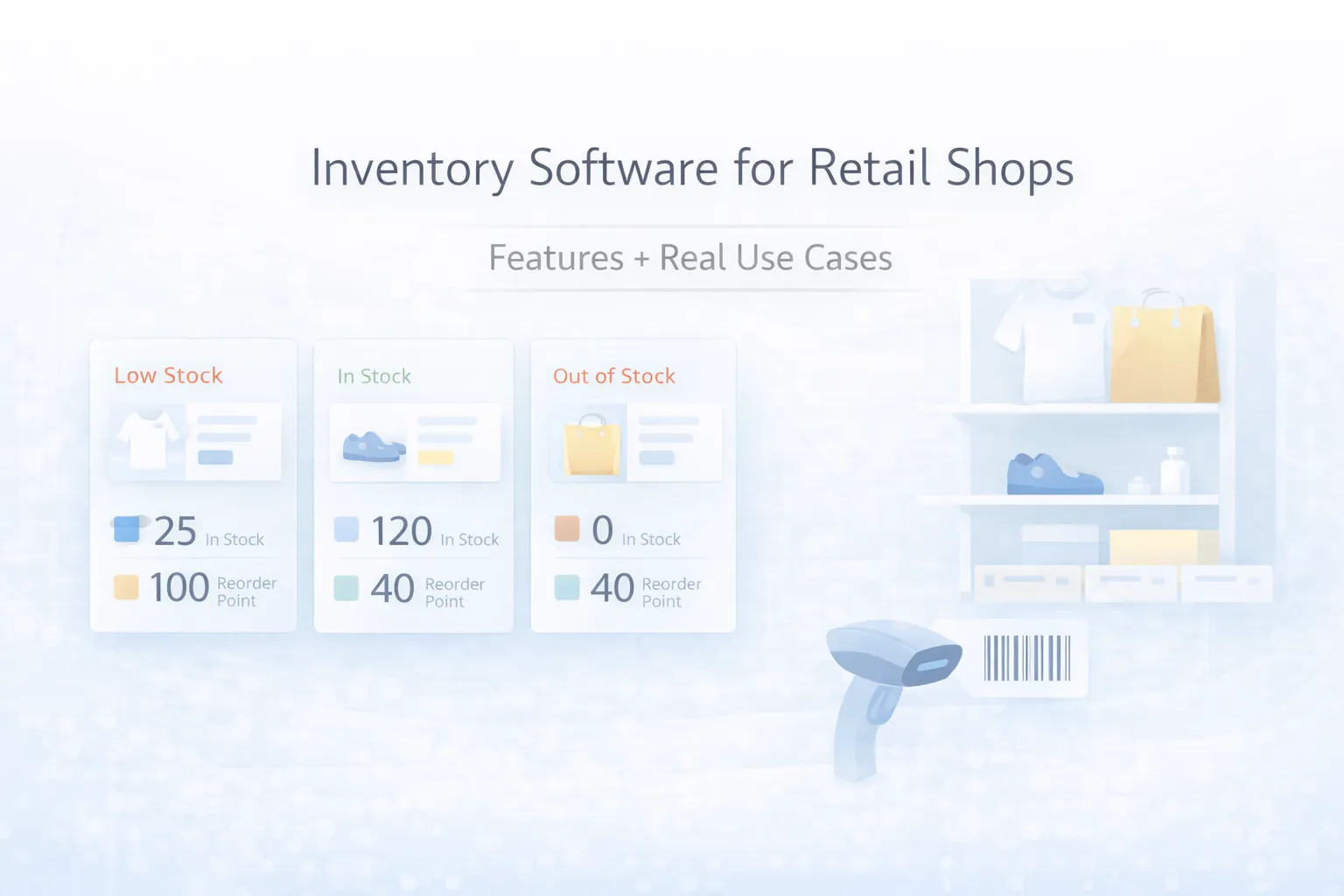
March 28, 2026
Inventory software for retail shops: features, real use cases, pricing, rollout plan, and what retailers should digitize first in 2026.
Read article