
March 30, 2026
Restaurant Billing Software: Features, Cost, and Setup Guide
Restaurant billing software guide covering features, pricing, GST-ready setup, billing flow, and rollout advice for restaurants in 2026.
Read articleMarch 27, 2026
QR code menu website for restaurants: cost, timeline, features, tech stack, and rollout advice for cafes, dine-in outlets, and modern brands in India today.
A QR code menu website is one of the easiest restaurant technology upgrades to explain and one of the easiest to scope badly. Some restaurants only need a clean digital menu with categories, item details, and table QR codes. Others actually need a broader ordering system with live status, admin control, and kitchen routing.
For restaurants that want the lighter version first, a QR menu website can be a very practical upgrade. It removes menu-print dependency, supports frequent updates, improves presentation, and gives guests a faster way to browse items on their own phones.
This guide explains what a QR code menu website should include, what it usually costs in India, realistic delivery timelines, and how to decide whether you need only a digital menu or a fuller restaurant ordering product.
If your restaurant wants to replace printed menus, update items faster, and make browsing easier for guests, a QR code menu website is often the right first step. It is faster and cheaper than a full ordering platform, and it still creates a cleaner digital guest experience.
For most restaurants, a good QR menu website includes:
If you want customers to place orders from the same QR flow, restaurant ordering system development is the broader version of this topic.
QR menu websites are especially useful for cafes, casual dining outlets, bakeries, bars, lounges, and restaurants with frequent menu updates or seasonal specials. They are also a strong fit for businesses that want a better guest experience without changing the whole order-taking workflow on day one.
This approach works well when the restaurant wants to digitize the menu first, gather usage confidence, and then decide whether to add direct ordering, feedback, or admin-heavy modules later. It is often the lowest-friction starting point for hospitality software adoption.
Printed menus create small but constant operational issues. They become outdated, expensive to reprint, hard to update during promotions, and inconvenient when items sell out mid-service.
A good QR menu website gives the restaurant live control over its menu presentation. It also reduces repeated staff explanation for standard items and creates a more polished dine-in experience, especially for modern cafes and urban restaurant brands.
The website should do more than open a PDF.
Categories should be easy to browse, items should load quickly, and the layout should feel clear on mobile devices. Restaurants often underestimate how much good categorization improves user behavior.
Each item should clearly show name, description, price, photo if used, veg or non-veg marking, spice indicator, add-ons, or tags like bestseller or chef special.
Different tables or outlets may need different QR codes, but the same menu base can often serve them with controlled variations.
The real value of a digital menu comes from easy maintenance. If item updates still require a developer for every small change, the system is too rigid.
If your restaurant also needs owner-side visibility and stronger operational control, restaurant admin dashboard features is the next layer worth considering.
A QR menu website looks simple, but the project gets much better when the restaurant answers a few practical questions early.
If the restaurant knows ordering will be added later, the menu structure should be planned with item variants, availability logic, and table mapping in mind from the start. That does not mean building ordering immediately. It means avoiding a weak foundation.
This is one of the biggest adoption questions. If the owner, manager, or designer cannot update items easily, the digital menu becomes stale quickly. The admin side should reflect the real team that will maintain it.
Some restaurants benefit from full descriptions and multiple photos. Others do better with tight naming, price clarity, and selective imagery. The right decision depends on the brand, cuisine style, and customer behavior.
If pricing, availability, or category mix differs by outlet, that should be planned up front. It is much easier to design outlet variation early than to retrofit it later after content has grown.
These features usually matter most in a QR menu website build.
Restaurants often add direct ordering, bill call, waiter call, feedback flow, or table-based checkout after the menu website is stable and staff is comfortable with the digital layer.
If your restaurant wants to modernize the menu without jumping into a full software rollout immediately, a QR menu website is often the cleanest first move.
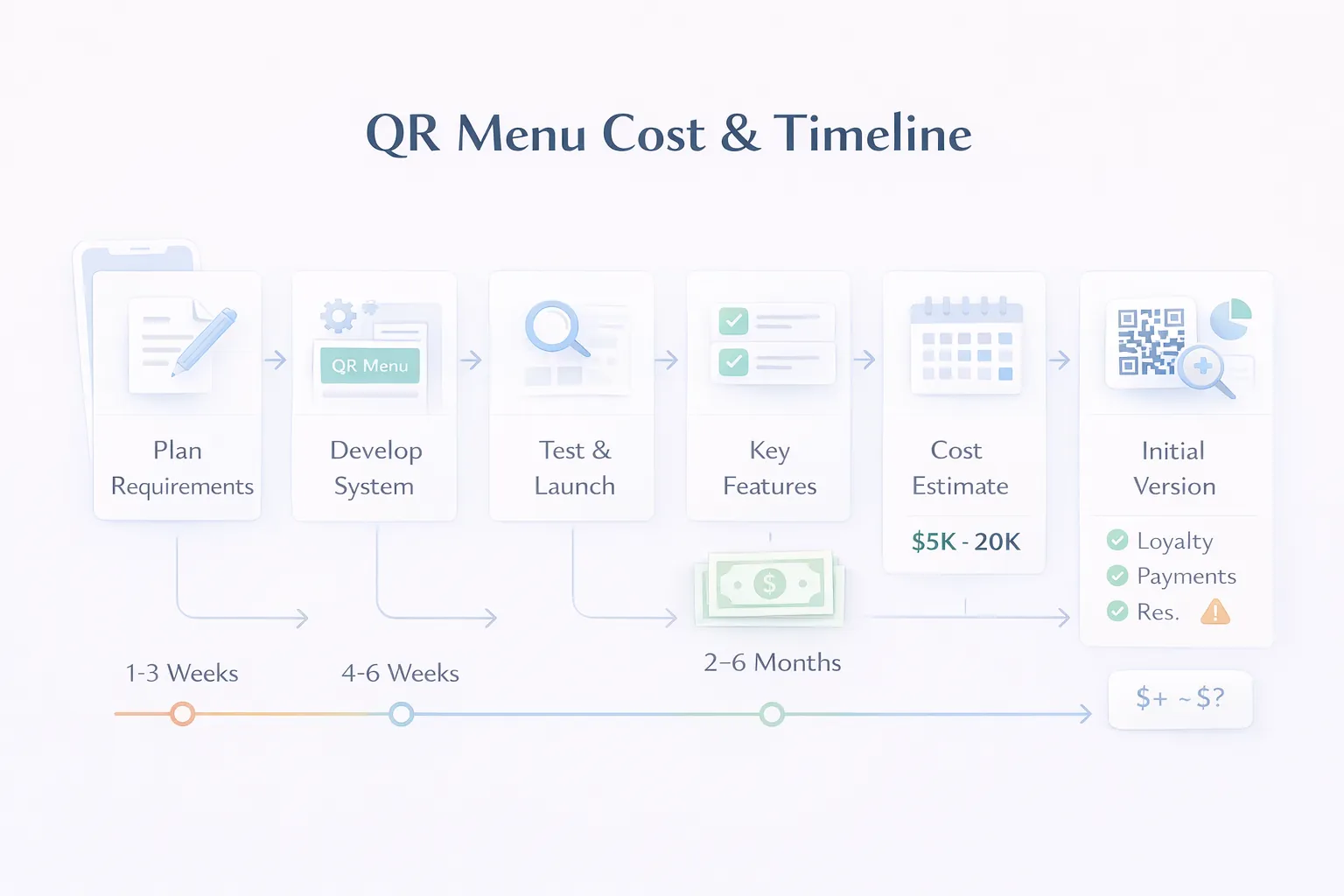
QR menu website cost is usually lower than a full ordering system, but it depends on how polished and controllable the admin side needs to be.
₹65,000 to ₹1.2 lakhIncludes category pages, item pages, QR links, and responsive design.
₹1.25 lakh to ₹2.2 lakhIncludes admin panel, live availability, richer item structure, and better UI polish.
₹2.25 lakh to ₹3.75 lakhIncludes outlet-specific menus, analytics, promotional sections, and future ordering readiness.
For most cafes and dine-in restaurants, the ₹1.25 lakh to ₹2.2 lakh range is the right balance. It gives the owner real control and a strong front-end experience without overbuilding a full ordering product prematurely.
Cost rises with multi-outlet support, deep item metadata, custom animations, multilingual menus, integrated ordering, or heavy admin logic. Those may be worth it, but only if the restaurant will actually use them.
QR menu websites should feel lightweight and visually clean while staying easy to update.
Next.js for fast mobile menu pages, SEO-friendly structure, and responsive performance.PostgreSQL or structured CMS storage for menu records and item metadata.Most QR menu website projects take about 2 to 5 weeks depending on menu quality and admin depth.
Timeline depends heavily on whether the restaurant already has clean digital item names, descriptions, and images. Content readiness often matters more than code here.
These are the factors that usually change budget:
The right QR menu website should feel calm, clear, and easy to maintain. If updating one item is still a headache, the system has not been scoped properly.
To keep the launch practical:
This gives the restaurant immediate value without creating unnecessary operational dependency.
That is not enough. A useful QR menu website should be live, structured, and easy to update.
Restaurants need the menu to be readable quickly on mobile. Fancy visuals should not reduce clarity.
If the owner cannot update pricing or hide items easily, the whole point of going digital gets weakened.
Availability control is one of the most practical daily benefits of a QR menu system.
If ordering or feedback may be added later, the menu structure should be built with that in mind.
It commonly starts around ₹65,000 and often lands between ₹1.25 lakh and ₹2.2 lakh for a good restaurant-ready build.
No. A QR menu website focuses on browsing. A QR ordering system adds direct order placement and operational workflows.
Yes, if the admin or CMS is designed correctly. That is one of the core benefits.
Yes. Small cafes often benefit quickly because menu updates and mobile browsing are simple but valuable improvements.
Yes, but outlet-specific menus or pricing will increase scope slightly.
A focused project usually takes 2 to 5 weeks depending on content and admin needs.
Not always. Some restaurant brands do better with selective imagery and cleaner typography.
Treating QR menu as a one-time design job instead of an actively managed digital menu system.
If your printed menu is slowing updates and your current digital setup is weak, a structured QR menu website is one of the simplest restaurant tech wins you can launch this year.
Related Articles
March 30, 2026
Restaurant billing software guide covering features, pricing, GST-ready setup, billing flow, and rollout advice for restaurants in 2026.
Read article
March 27, 2026
Kitchen display system explained for restaurants with features, pricing in India, tech stack, timeline, and build considerations for faster kitchen flow.
Read article
March 27, 2026
Restaurant admin dashboard features guide with owner-panel reports, pricing in India, tech stack, timeline, and cost drivers for restaurant software today.
Read article