SaaS Onboarding Flow: Steps + UI + Conversion
A lot of SaaS products lose users before the product is even judged fairly. The issue is not always pricing, traffic, or features. The issue is that new users sign up and then do not know what to do next. That is an onboarding problem.
Good onboarding does not mean showing a long product tour. It means helping the user reach meaningful value fast, with the least confusion possible. That is where conversion improves.
This guide explains how SaaS onboarding should be structured, what UI patterns help, and how to design onboarding around activation instead of cosmetic checklists.
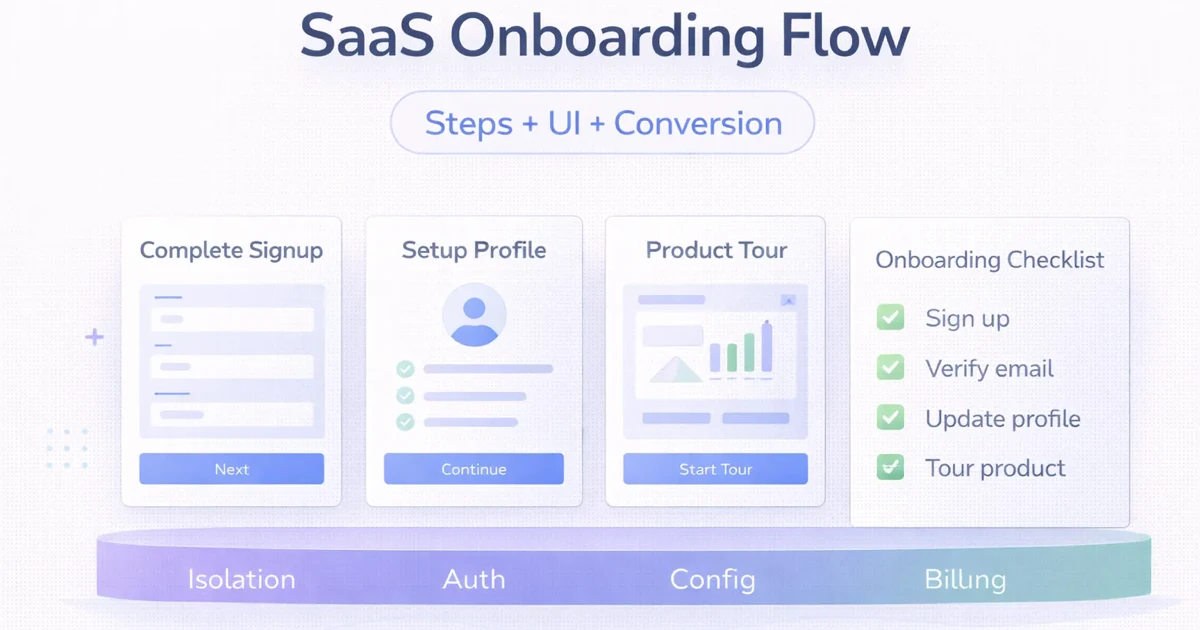
Table of Contents
- Quick answer
- Core onboarding steps
- UI patterns that help
- Conversion levers
- Build scope
- Timeline
- FAQs
Quick Answer
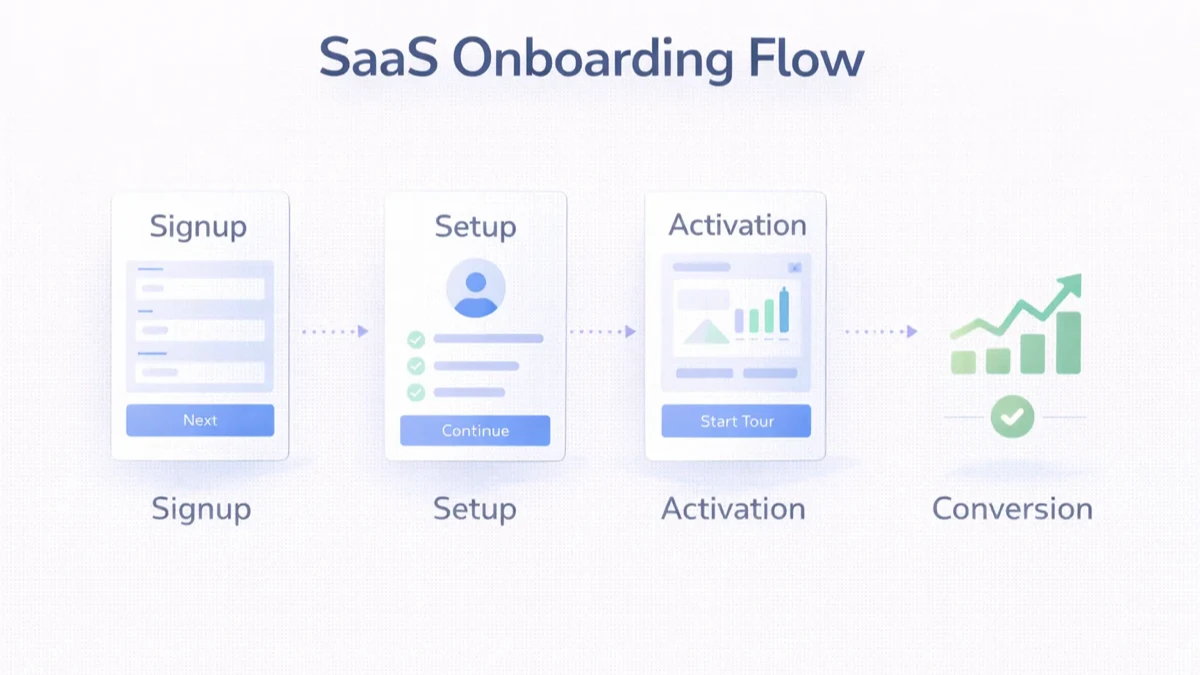
Strong SaaS onboarding usually follows this path:
- signup with low friction
- role or use-case capture
- first-value setup
- guided activation
- habit and return loop
The goal is not to explain everything. The goal is to get the user to a meaningful first success as quickly as possible.
Core Onboarding Steps
1. Signup
Keep the first form lean. Every extra field should earn its place.
2. Context capture
Ask only what helps personalize the next step:
- team size
- use case
- role
- product goal
3. Guided setup
Help the user finish the minimum required setup to reach value.
4. Activation event
Define a real activation milestone such as:
- first project created
- first lead imported
- first invoice sent
- first team member invited
5. Return loop
Emails, in-app nudges, and useful reminders should pull the user back toward the next important action.
Related reading:
UI Patterns That Help
Progress framing
Show users where they are and how many steps remain, but keep it honest and lightweight.
Empty states with direction
An empty dashboard should not look dead. It should tell users what the next best action is.
Contextual hints
Use hints where users need them, not in a giant intro modal.
Checklists only when useful
Checklists help if they guide real activation. They hurt if they create busywork.
Sample data carefully
Sample content can reduce friction, but it should not confuse real setup.
Conversion Levers
- reduce signup friction
- shorten time to first value
- personalize early steps
- remove non-essential setup
- trigger helpful nudges based on user state
- track activation, not only signup count
Build Scope
Typical build effort:
- lightweight onboarding flow:
₹1.5 lakh to ₹3 lakh - stronger guided onboarding with analytics:
₹3 lakh to ₹6 lakh - richer onboarding with multi-role logic:
₹6 lakh to ₹10 lakh+
Timeline
- 2 to 3 weeks: lean onboarding MVP
- 3 to 6 weeks: richer guided setup and event tracking
- 6 to 8 weeks: deeper role-based or lifecycle-based onboarding
Soft CTA
If users sign up but do not activate, the issue may be onboarding logic, not marketing. Start by defining the first valuable action clearly.
FAQs
What is the main goal of SaaS onboarding?
To move users from signup to meaningful product value quickly.
Should onboarding show every feature?
No. It should show what helps activation first.
Are checklists always good?
Only when they guide users toward real value, not fake completion.
What should I measure?
Activation rate, time to first value, completion of key setup steps, and early retention.
Is email part of onboarding?
Yes. Email often helps bring users back to unfinished setup.
Should different user roles see different flows?
Often yes, especially in B2B SaaS products.
Can a short onboarding beat a detailed one?
Yes, if it gets users to value faster.
What is the biggest onboarding mistake?
Making users learn the whole product before they get any result.
Related Reading
Need an Onboarding Flow That Improves Activation, Not Just UI Polish?
If you want more users to reach product value faster, the next step is to map signup, setup, activation, and return triggers together instead of treating onboarding as only a design task.