
March 31, 2026
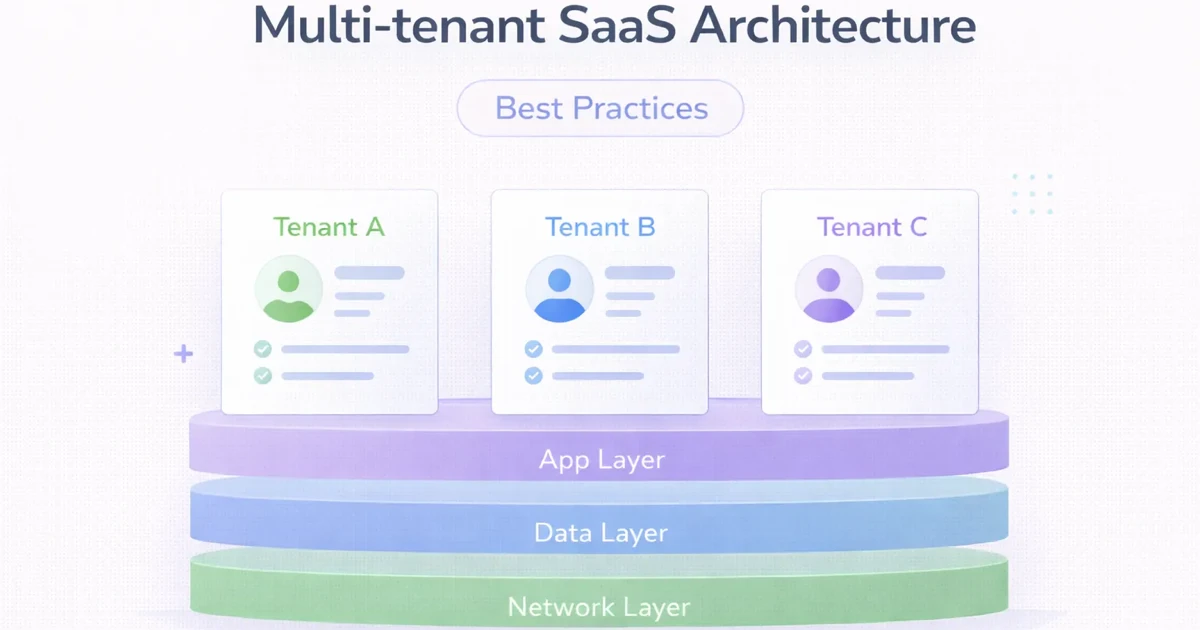
Multi-tenant SaaS Architecture: Best Practices (2026)
Multi-tenant SaaS architecture best practices for 2026: tenancy models, isolation, billing, observability, and what to decide early.
Read articleMarch 31, 2026
SaaS pricing models explained for India: trial vs freemium vs paid, plus flat-rate, seat-based, and usage pricing advice for founders.
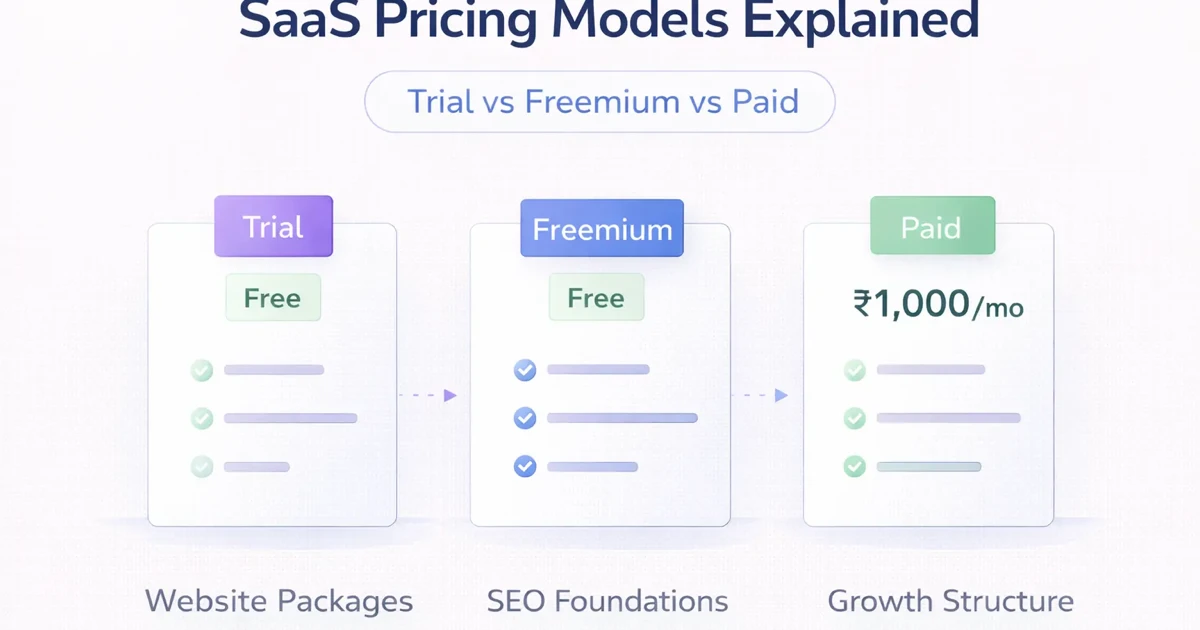
Many SaaS founders spend months building product features and only later realise they still have not made a clean pricing decision. That usually hurts conversion, sales conversations, onboarding, and revenue quality at the same time.
Pricing is not just a number. It shapes who signs up, how serious users are, what support load you create, and how fast the product can move from experimentation to sustainable growth.
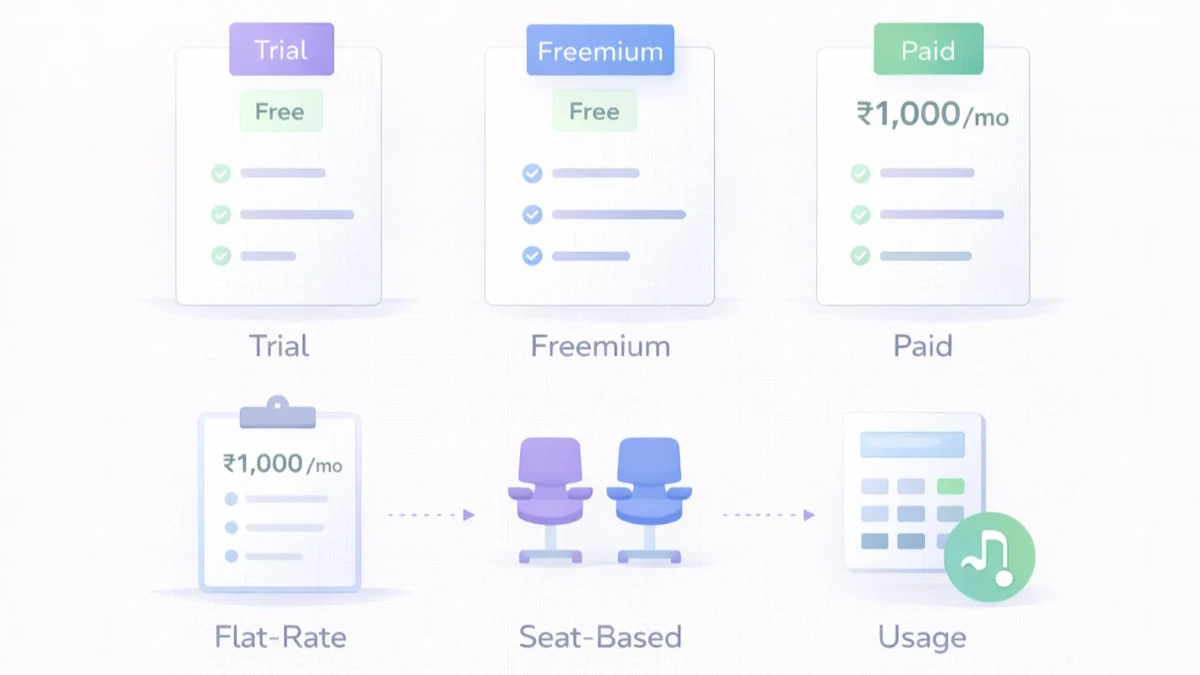
This guide explains the three common acquisition models, trial, freemium, and paid, and then shows how they connect to practical SaaS pricing structures such as flat-rate, per-seat, tiered, and usage-based billing.
There is no universal best SaaS pricing model. The right model depends on:
In simple terms:
Best when:
Pros:
Risk:
If onboarding is weak, users run out of trial before understanding the product.
Best when:
Pros:
Risk:
Many teams collect inactive users, not qualified customers.
Best when:
Pros:
Risk:
If trust and value clarity are weak, conversion suffers badly.
Related reading:
According to Stripe's subscription documentation, recurring SaaS pricing commonly uses patterns such as flat-rate, per-seat, tiered, and usage-based billing. That is the pricing engine layer. Trial, freemium, and paid are the acquisition layer. Both decisions must fit together.
Good for:
Good for:
Good for:
Good for:
For Indian SaaS buyers, especially SMB and mid-market teams, pricing clarity matters more than clever packaging.
Practical patterns that usually work:
If your SaaS pricing feels confusing, the real issue is often not the number. It is the mismatch between acquisition model, onboarding depth, and value delivery speed.
No. It works only when free-user economics and upgrade logic are healthy.
When product value is quick to show and support cost is not worth carrying indefinitely for free users.
No. Paid-first can work very well for high-value B2B tools.
Usually flat-rate or simple tiered pricing.
When usage maps directly to delivered value or infrastructure cost.
Yes. It is often one of the clearest models for team software.
Usually two to three clean choices are enough.
Both matter, but weak onboarding can kill even a strong pricing model.
If you want a pricing model that filters better users, reduces confusion, and supports long-term revenue, the next step is to align pricing, onboarding, and billing logic together instead of treating them separately.
Related Articles
March 31, 2026
Multi-tenant SaaS architecture best practices for 2026: tenancy models, isolation, billing, observability, and what to decide early.
Read article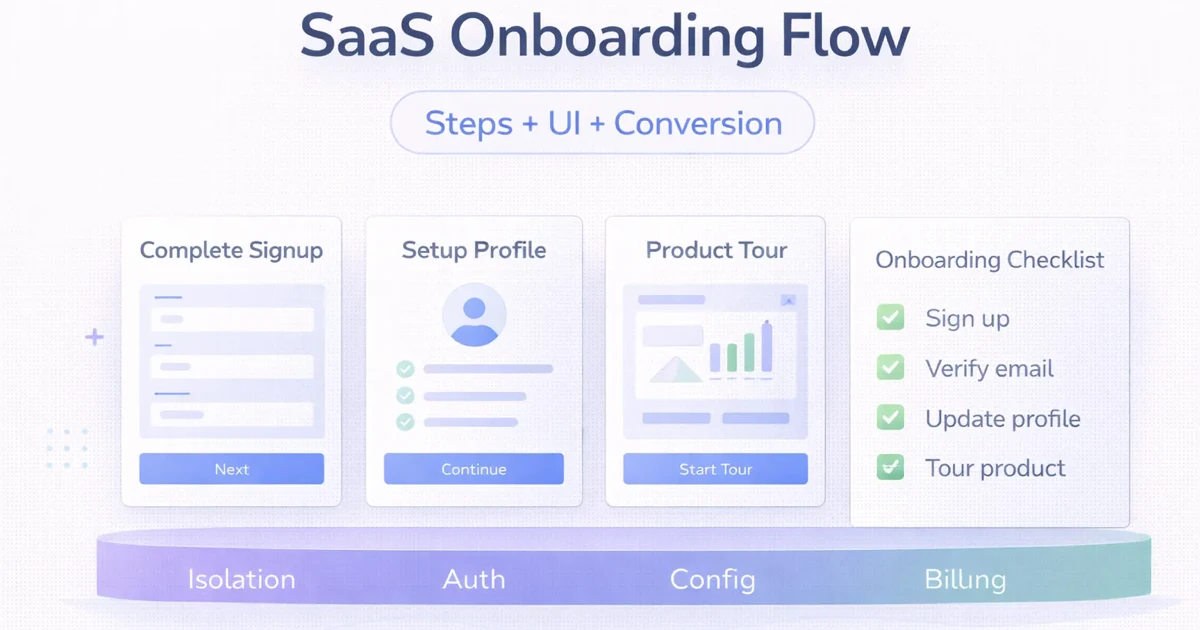
March 31, 2026
SaaS onboarding flow guide covering steps, UI patterns, activation logic, and how to improve conversion without overwhelming new users.
Read article
March 31, 2026
Cold start SEO guide for new domains: indexing, structure, publishing order, and how to go from zero traffic to early rankings cleanly.
Read article