Lead Management System (LMS) for SMEs: Features + Cost
Many SMEs lose leads for very basic reasons. Enquiries come from the website, WhatsApp, calls, referrals, or ads, but nobody has one clean place to capture, assign, follow up, and report on them. The result is predictable: missed leads, duplicate follow-ups, weak reporting, and slow sales action.
A lead management system solves that problem. Not by adding complexity, but by creating a simple operating layer for the sales process. You know where each lead came from, who owns it, what stage it is in, and what should happen next.
This guide explains what a practical LMS should include, what it costs for SMEs in India, what the timeline looks like, and where custom software makes more sense than patching spreadsheets plus WhatsApp.
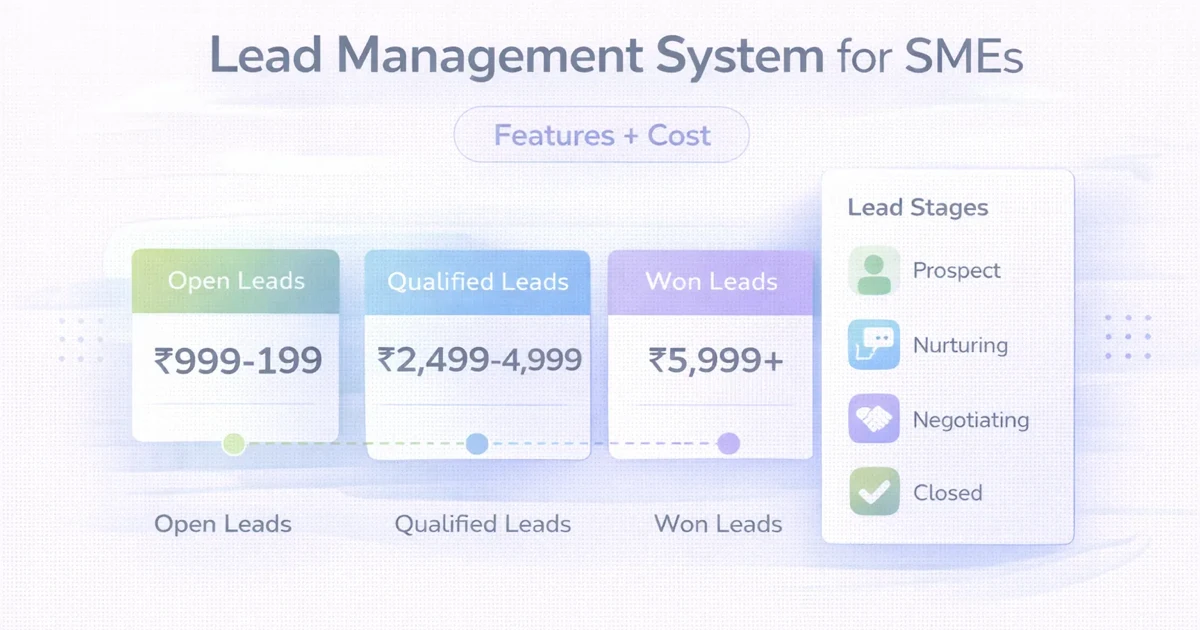
Table of Contents
- Quick answer
- Who should build an LMS
- Features
- Pricing
- Timeline
- Tech stack
- Cost drivers
- FAQs
Quick Answer
For most SMEs, a practical lead management system should do six things well:
- capture leads from multiple sources
- assign leads to the right person
- track stage movement
- schedule follow-ups
- show source and conversion reports
- reduce manual coordination
Typical custom LMS pricing:
- starter LMS:
₹45,000 to ₹90,000 - growth LMS with automation:
₹90,000 to ₹2.2 lakh - advanced LMS with integrations and dashboards:
₹2.2 lakh to ₹5 lakh+
If your business is still managing leads across sheets, email, and personal WhatsApp threads, even a basic LMS can create immediate operational clarity.
Who Should Build an LMS
An LMS is useful when:
- multiple people handle enquiries
- leads come from more than one source
- follow-ups are inconsistent
- management wants cleaner reporting
- conversion depends on fast response
Typical use cases:
- service companies
- real estate teams
- coaching and education businesses
- B2B sales teams
- local multi-branch businesses
If you only get a few leads per week, a light CRM may be enough. But once volume, team size, or follow-up complexity increases, an LMS becomes more practical.
Related reading:
Features
Lead capture
- website form capture
- call and manual lead entry
- WhatsApp or campaign source tagging
- CSV import
This is the first layer. If capture is messy, everything after that stays messy too.
Lead assignment
- manual assignment
- round-robin assignment
- branch or role-based assignment
- reassignment history
This stops leads from getting lost in "someone will call back" mode.
Stage management
- new
- contacted
- qualified
- proposal sent
- won
- lost
Stage tracking should be simple. Too many stages slow teams down.
Follow-up management
- next follow-up date
- reminders
- notes and call logs
- priority flags
This is where many SMEs see the biggest improvement.
Reporting
- source-wise lead volume
- salesperson performance
- conversion by stage
- ageing and pending follow-up reports
Management does not need fancy charts first. It needs usable visibility.
Access control
- admin roles
- sales roles
- branch roles
- view and edit restrictions
Without roles, data discipline usually breaks.
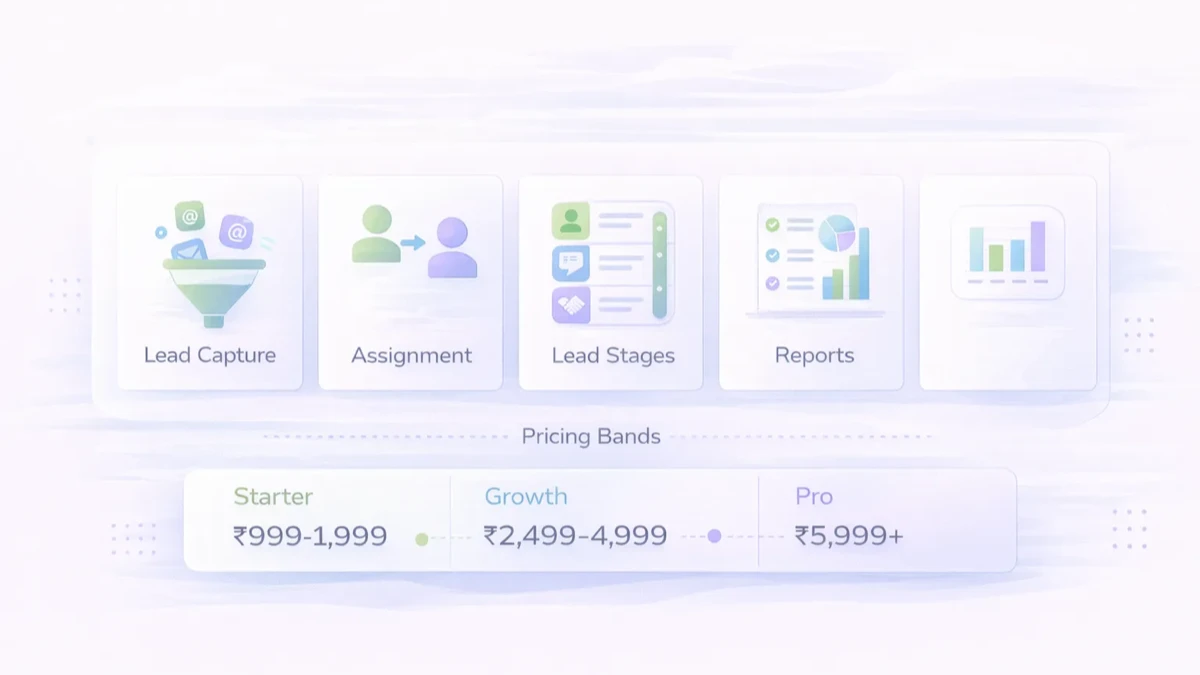
Pricing
Starter LMS: ₹45,000 to ₹90,000
Usually includes:
- lead capture
- manual assignment
- core stages
- follow-up reminders
- basic reports
Growth LMS: ₹90,000 to ₹2.2 lakh
Usually includes:
- custom stages
- role-based workflows
- source tracking
- better dashboards
- import/export
- notification logic
Advanced LMS: ₹2.2 lakh to ₹5 lakh+
Usually includes:
- CRM or ERP integrations
- branch-level controls
- automation rules
- advanced reporting
- audit logs
- API support
For many SMEs, the sweet spot is the growth LMS. It is strong enough to improve process without becoming heavy enterprise software.
Timeline
Typical implementation timelines:
2 to 3 weeks: starter LMS4 to 6 weeks: growth LMS6 to 10 weeks: advanced LMS with integrations
Timeline depends on:
- clarity of stages
- reporting requirements
- user-role complexity
- integrations
If scope is clear, the first usable version can launch fast.
Tech Stack
A practical stack for custom LMS development:
Next.js or React-based frontendNode.js backendPostgreSQL database- authentication with role controls
- WhatsApp, email, or API integration where needed
- analytics and audit logs for reporting
The right stack should support fast daily use, not just development speed.
Cost Drivers
The biggest LMS cost drivers are:
- number of roles and branches
- custom stages and workflows
- follow-up automation
- report complexity
- integrations with website, ads, or CRM
- import and migration needs
Many businesses ask for automation too early. First make the flow clean. Then automate the parts that repeat.
Soft CTA
If your sales team is still tracking leads in spreadsheets and personal chat threads, the right first move is not more reminders. It is one structured system with clear capture, ownership, and reporting.
FAQs
Is an LMS different from a CRM?
Yes. An LMS focuses more tightly on lead capture, follow-up, and conversion flow. A CRM may include broader account and relationship management.
What is the minimum useful LMS scope?
Lead capture, assignment, stages, follow-up reminders, and basic reporting are the minimum practical modules.
Can it connect with my website?
Yes. Website forms can directly push leads into the LMS.
Can WhatsApp leads be tracked too?
Yes. At minimum, source tracking and click data can be tied into the system. Deeper automation depends on setup.
Should SMEs buy SaaS or build custom?
If your process is standard, SaaS may work. If roles, reporting, or workflows are specific, custom often makes more sense.
How quickly can a basic LMS launch?
If scope is clear, a starter version can often launch in 2 to 3 weeks.
Do I need mobile access?
For many sales teams, yes. Even if the full system is desktop-first, mobile-friendly follow-up access helps.
What improves ROI the fastest?
Better follow-up discipline and clear owner-based reporting usually create the fastest gains.
Related Reading
Need a Simple LMS That Fits Your Sales Process Instead of Fighting It?
If you want a lead system built around your sources, stages, team roles, and reporting needs, start with the minimum workflow that sales and management will actually use every day.